

 English
 Español

Grainy texture in the finished product. Batches that feel different from the last run for no obvious reason. A mouthfeel that should be smooth but never quite settles regardless of how long the mixing stage runs. These are the signals that tell a production team the particle size is not under control — and they usually surface well before a formal quality check confirms it. For confectionery manufacturers where texture consistency is a production standard rather than a preference, the problem calls for a mechanical answer. A Chocolate Ball Mill works at the process level, using controlled grinding to bring particle size into a range where chocolate paste becomes genuinely smooth and stable across every batch.
Content
- 1 Why Uneven Particle Size Causes Quality Problems
- 2 What Is a Chocolate Ball Mill?
- 3 The Mechanism Behind Uniform Particle Size
- 4 How Does Ball Milling Compare to Other Refining Methods?
- 5 Factors That Influence Ball Mill Performance
- 6 How Does Particle Size Affect Downstream Processing?
- 7 Key Production Benefits of Using a Chocolate Ball Mill
- 8 What Production Problems Does Correct Ball Mill Operation Solve?
- 9 Selecting a Chocolate Ball Mill for Your Production Line
- 10 Why Does the Manufacturer Behind the Equipment Matter?
Why Uneven Particle Size Causes Quality Problems
The Link Between Particle Size and Mouthfeel
The tongue is a surprisingly precise instrument. When particles in chocolate remain above a certain size, it registers them individually — producing that rough, sandy sensation that tells you the refinement wasn't thorough enough. Drop below that threshold and the paste feels smooth, because the particles are simply too small to distinguish.
The harder problem is inconsistency. A wide distribution — some particles fine, others still coarse — creates texture that feels uneven in patches even when the average looks acceptable on paper. What actually produces consistent mouthfeel is a narrow distribution, where the full population of particles sits within a close range from piece to piece and batch to batch.
Why Mixing Alone Cannot Fix It
Mixing moves material through a vessel. It does not make particles smaller. Cocoa mass, sugar, and milk solids enter the mixing stage carrying their original dimensions and leave with roughly the same ones. A mixer distributes what is already there — it does not change what is there. Without a dedicated grinding stage, the particle size problem persists regardless of how thoroughly the mix is blended.
What Is a Chocolate Ball Mill?
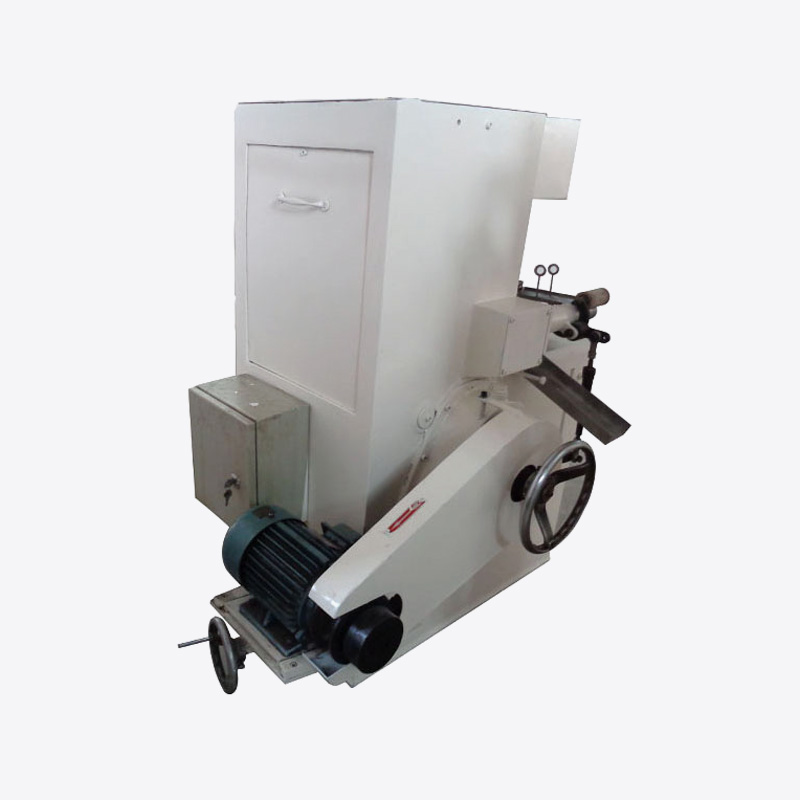
A Chocolate Ball Mill is a grinding machine built specifically for refining chocolate paste to a fine, uniform particle distribution. Chocolate mass circulates through a chamber packed with steel or ceramic balls. As those balls move against each other and the chamber walls, they generate friction and impact that progressively break down particles in the passing mass.
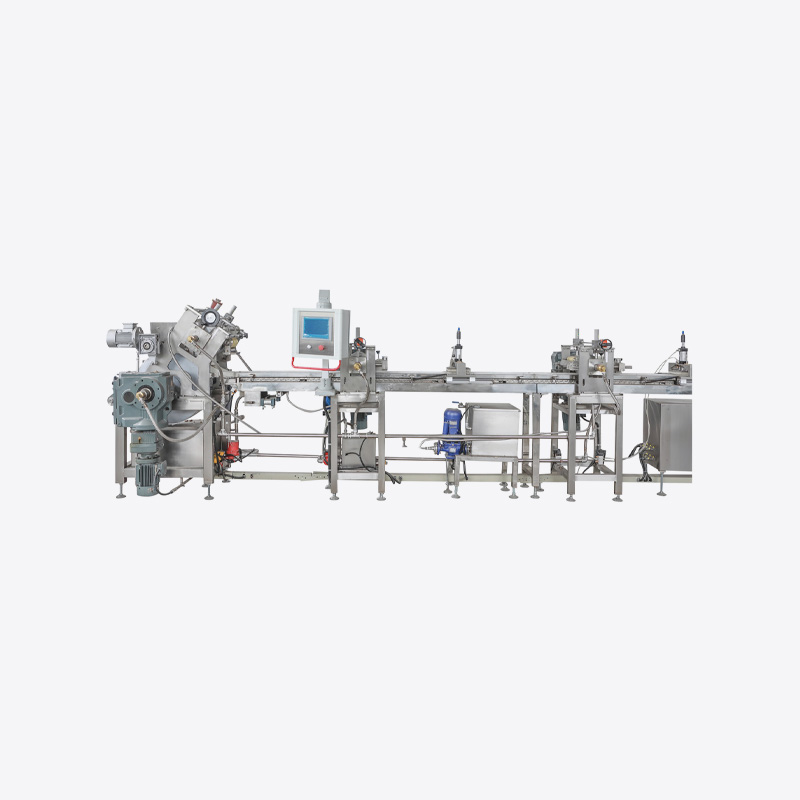
The key components work together as a system:
- Grinding chamber — a sealed vessel holding the balls and chocolate mass through the cycle
- Agitator shaft — drives ball movement and keeps collisions happening continuously
- Recirculation system — pumps chocolate from a holding tank through the grinding chamber and back in a loop
- Temperature control jacket — holds the mass within the processing range so it flows properly and doesn't overheat
Unlike batch refining, the process runs continuously — grinding intensity and time in the chamber can be adjusted independently to hit a target fineness without pushing the material through unnecessarily.
The Mechanism Behind Uniform Particle Size
How the Grinding Actually Works
Inside the chamber, the agitator sets the steel balls in motion. Chocolate particles pass through the gaps between balls and get caught between two balls as they come together — compressed and sheared in that contact zone. This happens repeatedly as the mass keeps circulating.
The size reduction builds with each pass:
- Coarser particles get broken down in the early cycles
- Medium particles continue reducing as circulation continues
- The recirculation loop makes sure nothing stays unprocessed — all material keeps passing through the active zone
- Grinding runs until the target distribution is reached across the full batch
Why Ball Milling Produces a Narrow Distribution
There are no sheltered spots in the grinding chamber where coarse particles can avoid processing. The collision pattern is effectively random, meaning particles of all sizes get exposed to grinding forces throughout the cycle. Pair that with a recirculation system that keeps returning material to the active zone, and the process naturally converges on a tight distribution — not just a lower average, but a narrower spread where coarse outliers get progressively worked down.
How Does Ball Milling Compare to Other Refining Methods?
Each refining approach has its own particle size outcome and production logic. Where a ball mill fits depends on what the line is actually trying to achieve.
| Method | Particle Size Control | Batch vs Continuous | Typical Application |
|---|---|---|---|
| Chocolate Ball Mill | Narrow distribution, precise control | Continuous | Industrial chocolate refining |
| Three-roll Refiner | Good but requires multiple passes | Batch | Specialty and compound chocolate |
| Conche | Limited — primarily for flavor development | Batch | Flavor and aroma refinement |
| Pre-mixer Only | No reduction — distributes existing particles | Batch | Pre-processing before refining |
Ball milling is the natural fit for continuous production where repeatability matters. It does not replace conching — that stage is about flavor, not particle size. But for lines where texture consistency across high throughput is the goal, a ball mill offers a level of precision that batch methods struggle to match at scale.
Factors That Influence Ball Mill Performance
Ball Size and How the Chamber Is Loaded
The size of the grinding media shapes how fine the output can get. Smaller balls create more contact points per unit of volume, which drives finer grinding. Larger balls carry more impact force for breaking down coarser incoming material. Many lines use a mix of ball sizes to handle both ends of that range within a single chamber.
Fill level matters too. A chamber that is underfilled loses grinding efficiency because contacts happen less frequently. One that is overfilled restricts how freely the chocolate mass moves through. Getting the fill level right is part of the commissioning process and worth revisiting if performance drifts over time.
Speed and How Long the Mass Circulates
Agitator speed sets how often balls collide. Running faster raises grinding intensity and can cut the time needed to reach target fineness — but it also generates more heat and accelerates wear on the balls and chamber lining. There is a working balance to find for each product.
Residence time — how long the chocolate mass actually spends in the grinding system — determines how many passes through the active zone it completes. Longer time at moderate speed generally produces a tighter distribution than a short, aggressive run. The right balance depends on the incoming particle size and the target specification.
Temperature During Processing
Ball mills are built to run within a specific temperature window. Chocolate that runs too cool becomes thick and resists circulation. Chocolate that runs too warm can separate or lose characteristics the downstream process depends on. The temperature jacket on the chamber holds the mass in the right range throughout.
In extended production runs, heat from grinding accumulates. Effective cooling keeps that heat from drifting the mass temperature upward and shifting the viscosity in ways that affect how the grinding actually performs.
How Does Particle Size Affect Downstream Processing?
What It Does to Tempering
Tempering is where fat crystallization happens, and that process is sensitive to surface area. A uniform, fine particle distribution gives the fat consistent crystallization sites across the mass. When particle size is uneven, crystallization becomes patchy — and that instability shows up downstream as bloom, uneven sheen, or texture defects in the finished product.
Enrobing and Coating
Chocolate for enrobing needs to flow predictably at processing temperatures. Viscosity is tied to particle size — finer, more uniform particles produce more consistent flow for a given temperature and fat level. Coarser or unevenly refined particles introduce viscosity variation that makes coating thickness harder to control across a run.
Molded Chocolate
In molding, how the chocolate flows into detail and how it pulls away from the mold during cooling both depend on particle size consistency. A narrow distribution produces cleaner surface definition and more reliable release. Uneven particle size can mean some areas of the mold fill well while others don't — showing up as surface defects or inconsistent product weight.
Key Production Benefits of Using a Chocolate Ball Mill
For operations weighing whether a ball mill belongs in their line, the case goes beyond particle size:
- Run-to-run consistency — automated recirculation and continuous grinding remove the operator-dependent variation that batch processes carry
- Scalability — systems can run in parallel or series to match volume without changing the core process parameters
- Fewer handling steps — reaching target fineness in a continuous pass cuts the multi-feed cycles that batch refiners require
- Energy spread across the run — continuous operation distributes energy input evenly rather than spiking it in short intensive batch cycles
- Closed system hygiene — the sealed design limits how much the chocolate mass is exposed to the environment during processing
What Production Problems Does Correct Ball Mill Operation Solve?
Quality problems that keep showing up despite consistent raw materials are often a refining process issue, not a recipe issue. A ball mill, properly set up and run, addresses several of the recurring ones:
Sandy or gritty texture — particle size is above the threshold where the palate registers individual pieces. Continuous grinding brings the full distribution down consistently, not just the average.
Texture that shifts between batches — usually a residence time or temperature consistency issue. Controlled recirculation and thermal management tighten this up significantly.
Poor ingredient dispersion — sugar and cocoa particles that haven't been refined enough tend to cluster in the fat phase rather than dispersing through it. Fine, even grinding changes how well those ingredients integrate.
Unpredictable viscosity — uneven particle size makes the chocolate behave differently at different points in a run. Narrowing the distribution stabilizes viscosity at a given processing temperature, which makes downstream handling more predictable.
Selecting a Chocolate Ball Mill for Your Production Line
Capacity and Room to Grow
Ball mill systems come in a range of throughput sizes. Sizing decisions should account for where production volume is headed, not just where it is now — and for the possibility that the same system will run more than one product type. Undersizing creates a bottleneck; oversizing at low throughput can reduce residence time precision.
Fitting Into the Line
A ball mill works on material that has already been pre-mixed and brought to processing consistency. Its output feeds into tempering, storage, or further processing depending on the line layout. Inlet and outlet connections, control interfaces, and how the system communicates with surrounding equipment all need to be confirmed before specification is locked.
Cleaning and Ongoing Maintenance
Food production lines need equipment that cleans thoroughly between runs. Designs that allow the grinding chamber to drain, flush, and be inspected without full disassembly save time and support planned maintenance schedules. Before committing to a supplier, confirm that replacement grinding media and wear components are available and have reasonable lead times.
Why Does the Manufacturer Behind the Equipment Matter?
A Chocolate Ball Mill only delivers on its potential when it is correctly specified, well integrated into the line, and supported across its working life. Equipment built specifically for chocolate processing carries design decisions — around temperature sensitivity, flow behavior, and hygiene — that general industrial grinding equipment does not. That difference shows up in how the machine handles chocolate under real production conditions, not just in a spec sheet comparison.
Gusu specializes in food processing machinery for the confectionery sector, with a product range covering chocolate refining and ball mill systems built for industrial environments. Technical documentation, capacity options, and integration details are available before any purchase commitment is made. If persistent particle size inconsistency, batch-to-batch texture variation, or a refining bottleneck is the current problem, the answer starts with getting the equipment specification right. Gusu Food Processing Machinery Suzhou Co.,Ltd. provides engineering support to help production teams identify the right configuration for their specific requirements, and can take projects from initial specification through to installation and commissioning.