

 English
 Español

Content
- 1 How Modern Grinding Practices Turn Chocolate Refining into a Predictable, Efficient Process
- 2 Why get refining right: the downstream consequences
- 3 What variables truly change particle size — and how to tune them
- 4 How to measure what matters — not just particle size
- 5 What simple equipment upgrades yield big returns
- 6 How to design a testing plan that actually changes results
- 7 Practical maintenance that keeps your mill predictable
- 8 How much energy can you realistically save
- 9 Real-world examples (anonymized and practical)
- 10 How to approach automation and data without overcomplicating things
- 11 Common pitfalls and how to avoid them
- 12 Quick, practical checklist you can implement in the next 30 days
- 13 Incremental improvement wins
How Modern Grinding Practices Turn Chocolate Refining into a Predictable, Efficient Process
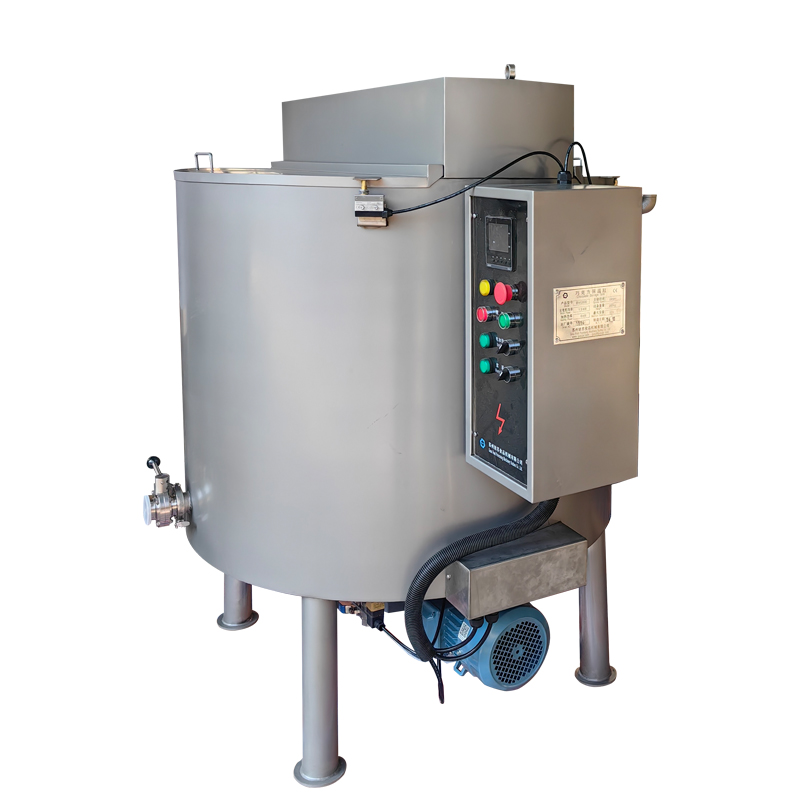
Chocolate Ball Mill is where a lot of chocolate's character is decided: it's the step that turns gritty or coarse paste into a product with the smooth mouthfeel consumers expect. But grinding is more than swapping machines. It's a combination of sensible equipment selection, careful process control, recipe awareness, and a maintenance culture that stops small problems becoming line-halting failures.
Why get refining right: the downstream consequences
It's tempting to think of grinding as a technicality, but the refiners set up everything that follows. If particle size is unstable, tempering gets finicky, mould fills vary, and coated products can show mottling or bloom. Small differences in micron distribution change how sugar crystals and fat interact with the cocoa solids, which in turn affects viscosity, snap, gloss, and shelf behaviour.
Put differently: inconsistent grinding is invisible until it isn't — then it's painful. You'll see it in increased packaging rejects, customer complaints, or production stops while teams chase the cause. That's why the focus is not just on achieving a fine grind, but on keeping that fineness consistent batch after batch.
What variables truly change particle size — and how to tune them
Several interacting variables control how quickly and how finely material is reduced. Treat them like dials on a soundboard: small moves produce measurable differences.
Grinding media composition and sizing
Choose media sizes with intent. A mix of large and small beads often outperforms a single size because large beads take care of chunks and small beads finish the fine work. Monitor wear: as media erodes, impact energy declines and grind time increases.
Practical check: measure a small media sample every month for diameter distribution and mass loss. Replace in stages rather than all at once to maintain a balanced profile.
Rotational speed and power input
Higher speed = higher impact energy, but also more heat. If you increase RPM to speed up grind, watch temperature and viscosity closely. Sometimes slowing slightly and accepting a modest increase in time reduces energy spikes and improves repeatability.
Practical rule: log power draw and correlate it with particle size over several runs. If power per tonne drifts upward for the same PSD target, suspect media wear or increased friction.
Fill ratio and media load
The proportion of media to chamber volume affects contact probability. Too low and particles escape; too high and the mill becomes inefficient due to media cushioning. Manufacturers typically recommend a starting point, but your feed characteristics might push that number up or down.
How to optimize: perform a controlled trial where you adjust media load in 5% steps while keeping other variables constant. Chart throughput versus energy per micron reduced.
Feed viscosity and recipe factors
High solids, high sugar crystal loading, or low fat levels bump viscosity up and slow refining. Emulsifiers (like lecithin) and fat adjustments can improve flow dramatically. Don't treat formulation and equipment as separate problems: better recipes can save hours on the mill.
Actionable tip: parallel testing of small recipe tweaks in a lab-scale mill will reveal how much mixing or emulsifier level affects required grind time. Use those insights before changing full-scale runs.
Temperature management
Heat is the unglamorous enemy of grind stability. Too hot and you risk fat separation or volatile loss; too cold and the mix stiffens, restricting circulation. The most successful refiners run with a tight temperature window and automated cooling control.
Small change with big effect: add more temperature sensors at inlet, midpoint and outlet. Use those readings to adjust a closed-loop cooling control rather than relying on a single gauge.
How to measure what matters — not just particle size
Measuring particle size distribution (PSD) is essential, but it's only part of the picture. Here are complementary metrics that reveal the process health:
- Viscosity at defined shear rates: many downstream processes care about how the chocolate flows in real conditions. Monitor viscosity alongside PSD.
- Temperature profile across the mill: constant logging helps you spot gradual problems before they cause defects.
- Throughput consistency: standard deviation of hourly output over a shift. Higher variation implies upstream or grinder issues.
- Rework rate: percentage of product needing additional grinding or rejection.
Combine these into a simple dashboard. You don't need fancy software to start — a spreadsheet fed with logged values from the control panel can reveal trends in weeks that were invisible month-to-month.
What simple equipment upgrades yield big returns
You don't always need a new machine to improve results. Consider these targeted upgrades first.
Improved cooling jackets and flow control
Better heat extraction means you can run at the sweet spot of impact energy without letting temperature drift. Even modest increases in heat transfer area or improving coolant flow rate yield noticeable benefits.
Automated dosing and feed control
Many process variations start at feeding. Dosing that's steady prevents overloaded or starved conditions, which in turn stabilizes PSD.
Online particle analyzers for spot checks
These aren't a replacement for lab work, but they let you see if a run is trending off target quickly enough to adjust and avoid rework.
How to design a testing plan that actually changes results
It's common to run a few tweaks, see little change, and give up. The key is controlled, repeatable tests.
- Pick one variable at a time — change only media load, or only RPM, never both.
- Run enough cycles — single runs are noisy; run at least three repeats to build confidence.
- Keep a baseline — return to the original settings periodically to check for drift.
- Record everything — not just PSD but temperature, power, ambient conditions, and any personnel actions.
When you follow this method you'll find actionable relationships rather than guessing.
Practical maintenance that keeps your mill predictable
Maintenance is not glamorous, but consistent output dies without it. Here's a practical checklist that prevents most surprises.
Daily
- Visual inspection of seals and piping for leaks.
- Check oil levels and basic bearing temperature.
- Note any unusual sounds or vibration.
Weekly
- Clean inlet/outlet ports and filters.
- Check and record coolant flow and inlet/outlet temps.
- Inspect the media feed system for foreign objects.
Monthly
- Measure a sample of media wear and calculate the average diameter loss.
- Verify alignment of couplings and drive components.
- Examine liner wear and plan replacements before they hit minimum safe thickness.
Quarterly / Bi-annual
- Replace seals and perform bearing health checks.
- Recalibrate key sensors (flow, temperature, speed).
- Comprehensive lubricant change and cleanliness audit.
Document each task. A simple maintenance log reduces finger-pointing when issues appear, and it becomes a valuable dataset for continuous improvement.
How much energy can you realistically save
People expect dramatic savings from equipment alone, but the truth is that optimizing operations and preventing reprocessing often yields the largest returns.
- Stop over-grinding: cutting unnecessary grind time is the lowest-hanging fruit. Even a 10–15% cut in average grinding time across months can reduce energy use noticeably.
- Improve media strategy: using the right mix reduces process time; less time means less energy.
- Reduce rework: each reworked batch consumes 100% or more of the initial energy for nearly zero added value.
Real-world examples (anonymized and practical)
Two short examples illustrate the kind of gains you can see.
Case A: Mid-sized factory with variable output
Problem: hourly throughput fluctuated, leading to packaging jams.
Fixes implemented: better feeder control, online temperature logging, and media refresh strategy.
Result: throughput becomes steady within a week; rejected packs due to dimension variance drop by 18%; operators report fewer manual interventions.
Case B: Small craft producer with high energy bills
Problem: small runs resulted in frequent regrinding and inconsistent mouthfeel.
Fixes implemented: recipe adjustment (small increase in lecithin), lowered RPM slighty and added a simple cooling loop.
Result: grind time reduced by 22%; energy per kg fell; finished bars had better gloss and fewer customer complaints.
Both examples show that the most impactful work is often process-focused rather than hardware-spend focused.
How to approach automation and data without overcomplicating things
Automation pays, but it's easy to overcommit. Begin with these realistic steps:
- Get reliable sensors — temperature, motor power, vibration. Without trustworthy inputs, automation misleads.
- Automate simple loops first — for example, closed-loop control of cooling based on outlet temperature.
- Use alarms, not complete control, at first — raise flags for operators to intervene until you're confident in the control logic.
- Log everything — even if you don't analyze it in real time, the history is gold for troubleshooting and seeing slow trends.
Small wins build confidence: an automated cooling loop that keeps temperature within ±1°C saves more grief than an ambitious, but poorly tuned, PID cascade.
Common pitfalls and how to avoid them
A few recurring mistakes trip up otherwise capable teams:
- Changing multiple variables at once — then you can't tell which change helped or hurt. Test one variable at a time.
- Ignoring feedstock variability — seasonal ingredient differences matter. Treat incoming raw material checks as part of process control.
- Deferring maintenance — a worn bearing or clogged filter shows up as variable PSD or odd power curves.
- Chasing lower cycle time at the expense of stability — faster is good, but not if it increases rework.
Mitigating these is about discipline: clear SOPs, logbooks, and simple acceptance criteria for each batch.
Quick, practical checklist you can implement in the next 30 days
If you can take one week to implement focused changes, here's a high-impact checklist:
Week 1: Baseline and sensors
Begin logging, viscosity, inlet/outlet temp.
Add at least one extra temperature sensor if you can.
Week 2: Feed and recipe checks
Verify feeder setpoint stability for three 8-hour shifts.
Run a lab recipe tweak to test a 0.2–0.5% change in emulsifier.
Week 3: Media and cooling
Inspect media and top up to target distribution.
Validate coolant flow rates and clean strainers.
Week 4: Process adjustment
Run a controlled trial adjusting RPM or media load and compare energy per tonne.
Document results and decide on permanent setpoints.
If you repeat this cycle quarterly, each loop reveals a little more efficiency.
Incremental improvement wins
Refining is a confluence of chemistry, mechanics, and controls. There's no single "silver bullet." But incremental, data-driven adjustments deliver compound benefits. Fewer complaints, less rework, lower energy spend, and more predictable lines: these are all realistic outcomes.
Treat the refining step as part of a whole system. Invest in the right measurements, keep your maintenance program honest, and use small, repeatable trials to discover what really changes your process. Over time, these modest steps accumulate into meaningful operational resilience — and that's the outcome that keeps both engineers and account managers satisfied.