

 English
 Español

Chocolate residue left inside a ball mill does not simply disappear between production runs. It hardens, oxidizes, and clings to grinding media, inner walls, and discharge components in ways that affect the next batch before the first kilogram is even processed. For facilities that switch between recipes, run multiple flavor profiles, or operate under food safety certification requirements, cleaning the Chocolate Ball Mill thoroughly — not just adequately — is a production necessity.
Content
- 1 Why Residue Forms and Where It Concentrates
- 2 Before You Start: Preparation and Safety Steps
- 3 Phase One: Flushing with a Cleaning Mass
- 4 Phase Two: Manual Cleaning of Accessible Components
- 5 Phase Three: Addressing the Grinding Media
- 6 Preventing Residue: Practices That Reduce Cleaning Effort
- 7 Verification Before Returning to Production
- 8 Equipment Support and Sourcing Considerations
- 9 Take the Next Step
Why Residue Forms and Where It Concentrates
Chocolate Behavior During and After Processing
Chocolate is not a simple liquid. It is a suspension of solid particles — cocoa, sugar, milk solids — in a continuous fat phase. During grinding in a Chocolate Ball Mill, the fat remains fluid because the machine is operating at elevated temperature. When the machine stops and temperature drops, that fat phase solidifies and binds the remaining solids to every surface it contacts.
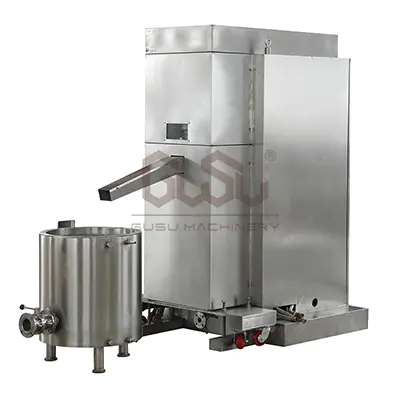
The thicker the residual layer at shutdown, the harder the cleanup. Residue that cools slowly and evenly is generally easier to remove than residue that has been sitting for an extended period or has been exposed to repeated heating and cooling cycles.
Where Residue Accumulates in a Chocolate Ball Mill
Certain areas of the machine hold chocolate more tenaciously than others:
- The inner cylinder wall — chocolate coats the surface during operation and clings after shutdown
- Grinding media (balls) — the spaces between balls trap chocolate paste that solidifies into compact deposits
- The discharge screen or outlet — residue compacts at the transition point where processed material exits
- Agitator arms and shaft — geometry creates zones where flow is restricted and chocolate accumulates
- Seals and gaskets — chocolate works into gaps during operation and is difficult to fully flush out
Understanding where residue concentrates helps prioritize cleaning effort and identify where shortcuts are more likely to cause problems.
What Happens When Cleaning Is Incomplete
Residue left in the machine does not stay inert. Fat undergoes oxidation over time, which generates off-flavors that carry into subsequent batches. Old chocolate mixed into new production changes the rheological profile of the batch in ways that may not be immediately obvious but affect tempering behavior and final product texture.
In facilities running allergen management programs — common in chocolate processing — cross-contamination from residue is a formal food safety risk, not just a quality concern. Cleaning verification is part of the compliance record.
Before You Start: Preparation and Safety Steps
Cool Down in a Controlled Way — But Not Completely
The timing of shutdown relative to cleaning matters. Chocolate that has cooled to room temperature is significantly harder to remove than chocolate that is still warm and partially fluid. Where the production schedule allows, initiating the cleaning sequence while the machine is still warm — not at operating temperature, but before full cooldown — reduces the mechanical effort required and cuts cleaning time.
If the machine has already cooled fully, a controlled warm-up cycle using the machine's own heating system to bring the interior back to a workable temperature is a practical first step before attempting to clear residue.
Drain and Discharge Residual Product
Before any cleaning agent or flushing material enters the machine, all recoverable product should be discharged:
- Run the agitator at low speed to encourage remaining chocolate toward the outlet
- Open the discharge valve fully and allow material to flow out under gravity and agitation
- Use a food-grade scraper on accessible internal surfaces to push residual material toward the outlet
- Collect discharged material — depending on its condition, it may be reworkable or will need to be discarded
Do not move to the cleaning phase until the bulk of the product has been removed. Cleaning agents or flushing material mixed into a large volume of recoverable product wastes both material and time.
Verify Isolation and Safety Before Opening the Machine
Before any inspection or manual cleaning begins:
- Confirm that the machine is de-energized and locked out according to your facility's lockout/tagout procedure
- Allow sufficient cool-down time before personnel contact internal surfaces
- Wear appropriate PPE — heat-resistant gloves if surfaces are still warm, and eye protection during any flushing step
- Check that the discharge valve is in a position that will not release material unexpectedly if agitation is resumed
These steps apply regardless of how routine the cleaning cycle is. The machine's enclosed geometry and elevated operating temperatures create specific hazards that manual cleaning exposes.
Phase One: Flushing with a Cleaning Mass
Why a Chocolate Ball Mill Is Not Cleaned with Water
Water and chocolate do not mix in a useful way during equipment cleaning. Water causes chocolate to seize — the fat and solids bind together into a stiff, unworkable mass rather than releasing from surfaces. Introducing water into a Chocolate Ball Mill before fat-based cleaning is complete creates a residue problem that is harder to resolve than the original one.
The standard approach for chocolate equipment cleaning uses a fat-based flushing material — typically cocoa butter or a purpose-formulated cleaning mass — that is compatible with the chocolate residue and can carry it out of the machine in solution rather than compacting it further.
Running a Cocoa Butter Flush
A cocoa butter flush works by introducing warm cocoa butter into the machine and running the agitator at normal or slightly reduced speed. The cocoa butter softens and dilutes the residual chocolate, which then discharges through the outlet along with the flushing material.
Steps for a cocoa butter flush:
- Bring the machine to a temperature where cocoa butter will remain fluid throughout the cycle
- Introduce the flushing cocoa butter through the inlet
- Run the agitator for a sufficient period to allow the flushing material to contact all internal surfaces
- Discharge the flushing material fully, collecting it for disposal or separate use
- Inspect the discharged material — if it carries significant chocolate load, a second flush may be needed
The number of flush cycles needed depends on how much residue was present at the start and how effectively the initial product drain removed bulk material.
When to Use a Purpose-Formulated Cleaning Mass
Cleaning masses formulated specifically for chocolate equipment are available from food ingredient suppliers. These are typically fat-based with added emulsifiers or flow improvers that increase their ability to carry residue out of the machine compared to plain cocoa butter.
Purpose-formulated cleaning masses are particularly useful when:
- Switching between significantly different recipes (dark to white, nut-containing to nut-free)
- The machine has not been cleaned for an extended production run and residue is heavy
- Allergen clearance documentation is required and a more thorough cleaning record is needed
The process for running a formulated cleaning mass is essentially the same as a cocoa butter flush, but the material cost is higher, so facilities typically reserve it for allergen changeovers or scheduled deep cleaning.
Phase Two: Manual Cleaning of Accessible Components
Inspecting and Cleaning the Discharge Screen
The discharge screen or outlet filter is a point of concentrated residue and one of the areas that a flushing cycle alone will not fully clean. After the flush is complete and the machine has been safely isolated:
- Remove the screen or filter assembly according to the manufacturer's procedure
- Inspect the screen for compacted residue, particularly in the apertures
- Use a soft brush and warm water (if the screen is fully removed from the machine and residue has been pre-softened with fat) to clear blocked apertures
- Verify that no water contacts the interior of the machine at this stage
- Reinstall the clean screen before any subsequent cleaning steps that involve running the machine
A blocked or partially blocked discharge screen affects both cleaning effectiveness and normal production performance. It is worth inspecting at every cleaning cycle, not just periodic deep cleans.
Cleaning the Agitator Shaft and Arms
With the machine safely isolated and cooled to a safe handling temperature, the agitator shaft and arms can be inspected and manually cleaned. These components develop a layer of chocolate residue during operation that the flushing cycle partially removes but rarely eliminates completely.
Use a food-grade scraper or stiff food-safe brush to remove residue from the shaft and arm surfaces. Pay particular attention to:
- Junctions between the arms and the shaft, where chocolate accumulates in the geometry
- The underside of horizontal arms, which do not drain as readily as upper surfaces
- Any fasteners or connection points where residue compacts in gaps
If the machine design allows arm removal, cleaning them outside the machine is more thorough than in-situ cleaning.
Inspecting Seals and Gaskets
Seals and gaskets are points where chocolate residue works into gaps during operation. They are also points where incomplete cleaning leaves residue that is genuinely difficult to detect without deliberate inspection.
At each cleaning cycle:
- Check that seals are seated correctly and show no signs of residue buildup on their contact faces
- Where accessible, clean the seal face and its seating area with a food-safe cloth or brush
- If seals show significant chocolate penetration or are damaged, replace them before the next production run
Seal condition affects both cleaning effectiveness and hygienic performance during production. A degraded seal allows chocolate to migrate into areas that the cleaning cycle cannot reach.
Phase Three: Addressing the Grinding Media
Why the Grinding Balls Need Attention
The steel or ceramic balls in a Chocolate Ball Mill are in continuous contact with chocolate during processing. They develop a film of chocolate on their surfaces, and in the spaces between balls, residue can compact into deposits that are difficult to remove through flushing alone.
Cleaning the grinding media thoroughly matters for two reasons. First, residue on the ball surfaces carries over into the next batch. Second, compacted deposits between balls reduce the effective grinding volume over time, which affects processing performance independent of product quality concerns.
Cleaning the Grinding Media In Situ
For routine production cleaning cycles, the grinding media are cleaned in place through the flushing process supplemented by agitator action. Running the agitator during the flush cycle creates relative movement between balls that helps dislodge residue from inter-ball spaces.
To improve in-situ cleaning effectiveness:
- Run the agitator at a speed that creates active ball movement during the flush
- Vary the agitator speed during the flush cycle — alternating between lower and higher speeds creates different flow patterns that reach different areas
- Allow the flush material sufficient time to penetrate between balls before discharging
For routine production cleaning where recipe changeover is not involved and no allergen clearance is required, thorough in-situ flushing with agitation is generally sufficient.
When to Remove and Clean the Grinding Media Separately
For periodic deep cleaning, allergen changeovers, or when in-situ cleaning has not achieved the required result, removing the grinding media for separate cleaning is the more thorough option.
This involves:
- Draining the machine as fully as possible before media removal
- Removing the media according to the machine's procedure, collecting them in food-safe containers
- Cleaning the balls individually or in batches using warm water and food-safe detergent if the material allows, or fat-based flushing if the machine's cleaning protocol specifies it
- Inspecting the inner cylinder wall directly while the media is removed
- Reinstalling clean, dry media before the next production cycle
Media removal is time-consuming, which is why facilities typically reserve it for scheduled maintenance intervals rather than every cleaning cycle.
Preventing Residue: Practices That Reduce Cleaning Effort
Temperature Management at Shutdown
How the machine is shut down has a direct effect on how difficult the subsequent cleaning will be. Running the machine at a slightly lower temperature for the final period before shutdown — still within the range where chocolate is fluid — reduces the viscosity of the residual material and improves its ability to drain toward the outlet.
A controlled cooldown procedure that specifies the shutdown temperature and the sequence of steps from end-of-batch to machine-off is a straightforward way to standardize this aspect of cleaning preparation.
Minimizing Dead Zones During Production
Some residue accumulation is inherent to how a Chocolate Ball Mill operates, but operating practices affect how much residue develops in areas that are difficult to clean. Running the machine at consistent throughput rather than with extended idle periods reduces the time that chocolate spends stationary on surfaces at temperature — a condition that promotes surface adhesion and oxidation.
Where production scheduling creates unavoidable idle periods, maintaining temperature and agitation during those periods keeps the chocolate fluid and prevents the adhesion that makes cleaning harder.
Keeping a Cleaning Log
A cleaning log that records the date, method, flushing material used, and the result of post-cleaning inspection creates a traceable record that supports food safety audits and helps identify patterns — such as areas that consistently show residue after the standard cleaning cycle, which may indicate a need to adjust the procedure.
Verification Before Returning to Production
Visual Inspection Is the Starting Point
After cleaning is complete and the machine has been reassembled, a visual inspection of accessible internal surfaces — using adequate lighting — provides the first verification that the cleaning cycle has been effective. Look for:
- Any visible chocolate residue on the agitator, shaft, walls, or outlet
- Residue around seal areas or fastener points
- Discharge screen apertures that appear blocked or discolored
If any of these are found, the relevant cleaning step should be repeated before the machine goes back into service.
Running a Verification Flush for Allergen Changeovers
Where allergen management requires documented clearance, a verification flush using the same fat-based material as the cleaning flush — and collecting the discharge for inspection or testing — provides a record of cleaning effectiveness. If the discharged material shows no visible trace of the previous product, the cleaning is recorded as complete.
Some facilities use swab testing of internal surfaces to verify allergen clearance. This is a more rigorous approach that requires analytical testing capability but provides a stronger evidence base for the compliance record.
Equipment Support and Sourcing Considerations
Effective cleaning of a Chocolate Ball Mill depends partly on the machine's design — how accessible the internal components are, whether the discharge system is easy to clear, and whether the grinding media can be removed without specialized tools. Facilities specifying or replacing chocolate processing equipment should consider cleaning access alongside processing performance when evaluating options.
A manufacturer of Chocolate Ball Mills and related confectionery processing equipment should be able to support inquiries about machine specifications, cleaning compatibility, and maintenance access as part of the evaluation conversation. Sourcing teams and production engineers are better served by suppliers who understand both the processing and the maintenance side of the equipment.
Take the Next Step
If you are reviewing your cleaning procedures for a Chocolate Ball Mill, or evaluating equipment options where cleaning access is a factor in the decision, a conversation with an equipment supplier who understands both processing and maintenance requirements is a useful starting point. Reach out to Gusu Food Processing Machinery Suzhou Co., Ltd. to discuss equipment specifications, request product information, or explore supply arrangements suited to your production requirements.