

 English
 Español


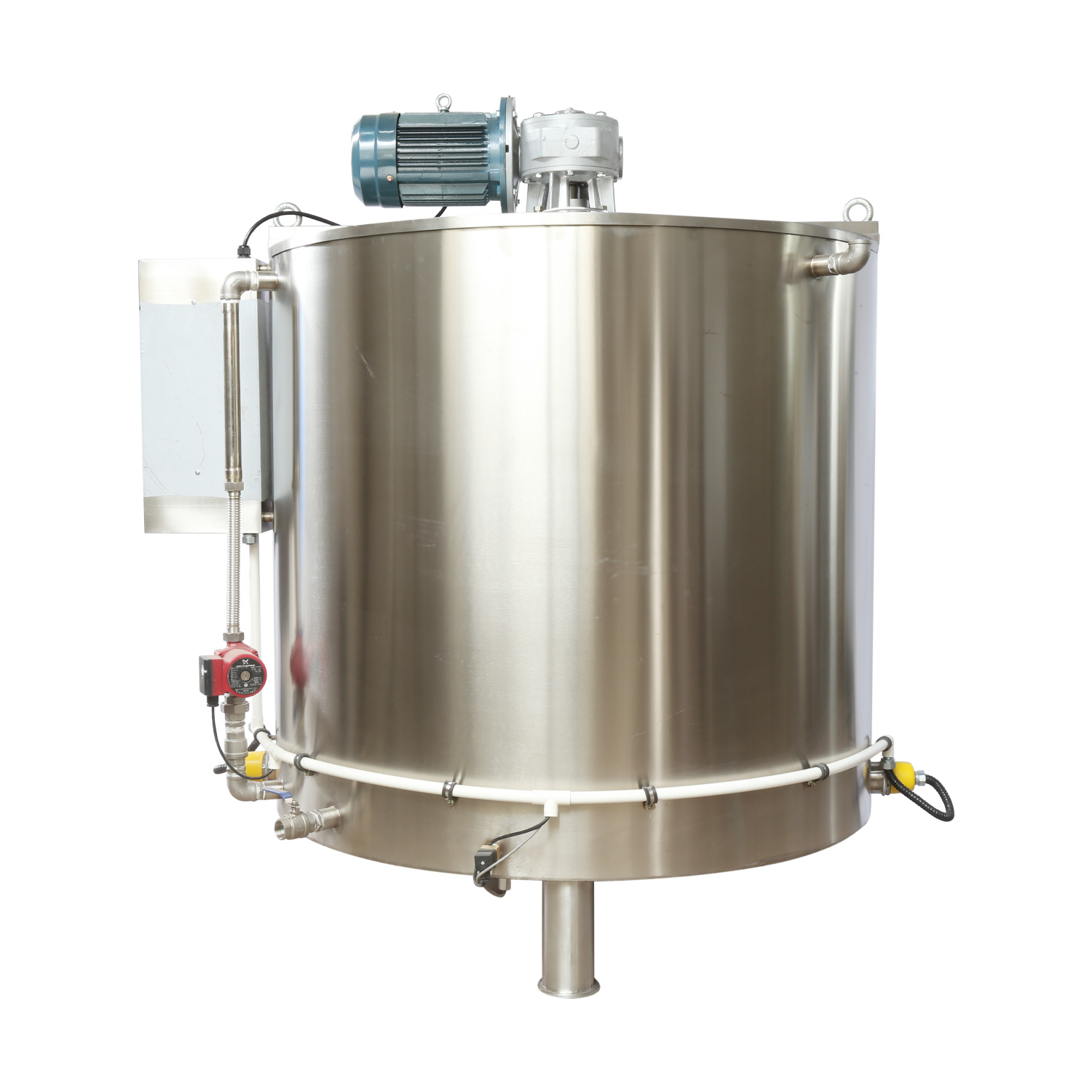
A heated mixing tank combines a closed vessel, an agitator and a controlled heat source so that liquid or semi-liquid materials can be brought to a target temperature while being kept homogeneous. Unlike an unheated vessel that only stores or blends, the heated version actively raises or maintains product temperature. Typical uses appear in food, confectionery and related process lines where viscosity or phase stability depends on heat. A Mixing Tank With Heater therefore serves as both a thermal and a mechanical processing unit when its capacity, power and agitation match the material and the duty.
Content
- 1 Core Components That Make Up the Assembly
- 2 Operation of the Heating Circuit
- 3 Interaction of Mixing with Heating
- 4 Temperature Regulation During a Batch
- 5 Sequence of a Typical Operating Cycle
- 6 Variables That Influence Overall Performance
- 7 Use of Heated Tanks in Chocolate Handling
- 8 Overview of System Elements and Operating Influences
- 9 Coordinated Action of Heat, Agitation and Control
Core Components That Make Up the Assembly
Vessel and Associated Heating Chamber
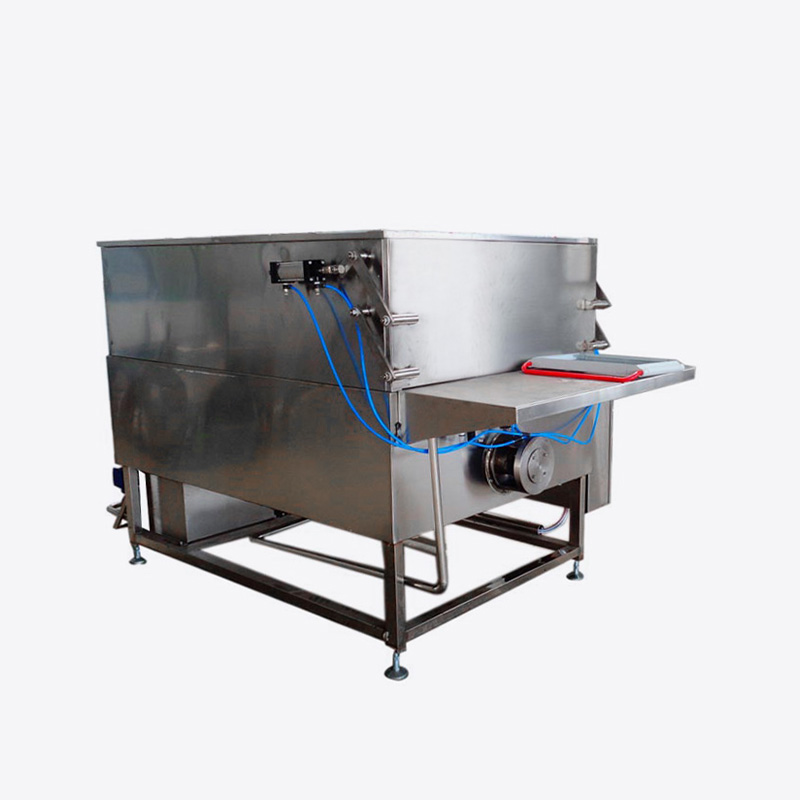
The main tank holds the batch. In many designs a jacket or an internal chamber surrounds part of the wall so that heat can transfer into the product without direct contact between the heating medium and the material. Construction is commonly stainless steel for food-contact applications, giving a smooth interior and resistance to ordinary cleaning chemicals. A Stainless Steel Liquid Mixing Tank configuration of this type provides the product-contact surface while the outer jacket carries the heating medium.
Electric Elements and Heat-Transfer Paths
Electric heating elements convert electrical energy into heat. The heat then passes through the tank wall or through a heat-transfer fluid into the product. Element placement and the design of the jacket influence how evenly the temperature rises and whether local overheating occurs at the wall.
Agitator, Shaft and Drive
A motor turns a shaft that carries one or more agitator blades. Blade shape and speed determine how the contents circulate. Continuous movement brings cooler material from the center toward the heated wall and returns warmer material to the bulk, reducing temperature gradients.
Sensors and Operator Interface
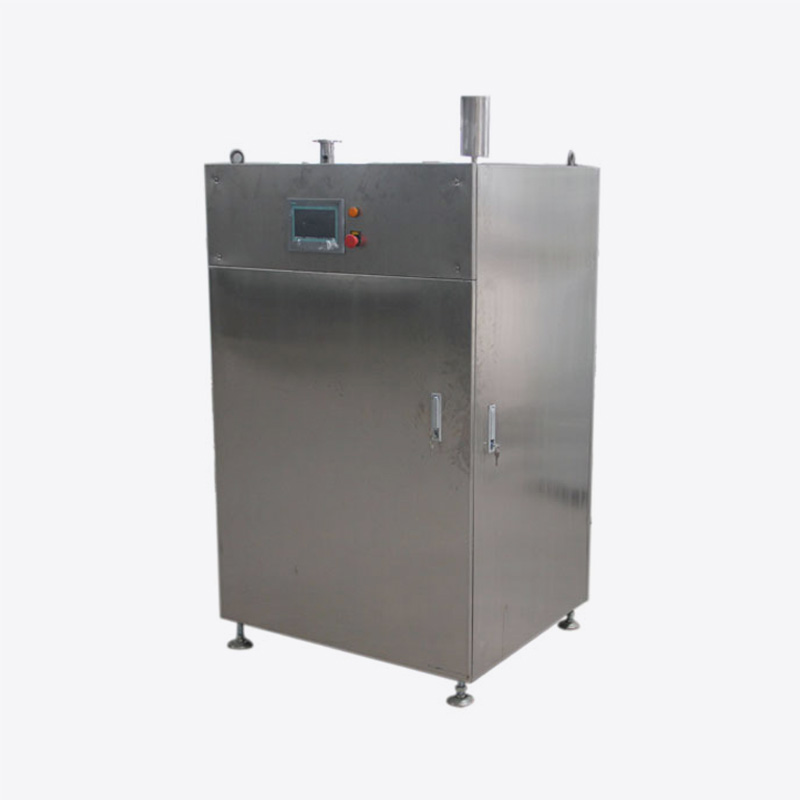
Temperature probes immersed in the product or mounted in the wall send signals to a controller. The control panel displays the measured value, accepts set-points and switches the heaters according to the programmed logic. Alarms and status indicators form part of the same interface.
Discharge Path and Electrical Controls
An outlet valve or pump connection empties the finished batch. Electrical contactors, over-temperature cut-outs and interlocks protect the heaters and the motor. All power circuits remain isolated from the product zone.
Operation of the Heating Circuit
Conversion of Electrical Energy into Thermal Energy
When current flows through the resistance elements, electrical energy appears as heat at the element surface. The rate of heat release depends on the installed power and on the proportion of that power that the controller allows at any moment.
Transfer of Heat into the Batch
Heat moves by conduction through the tank wall and then by convection into the circulating liquid. Good contact between the heating surface and the product, together with adequate agitation, shortens the time needed to reach the set temperature and keeps the temperature more uniform.
Influence of Installed Power on Temperature Rise
Higher available power reduces the time required to heat a given mass, provided the material can accept the heat flux without scorching. Power is therefore matched to both batch size and the thermal sensitivity of the product.
Variables That Affect Heating Time and Uniformity
Initial product temperature, viscosity, fill level, jacket coverage and the effectiveness of agitation all alter how quickly and how evenly the batch warms. Insulation on the outer surfaces reduces losses to the surroundings and stabilizes the final hold temperature.
Interaction of Mixing with Heating
Drive of the Agitator by the Motor
The motor supplies continuous torque to the shaft. Gear reduction or direct drive sets the rotational speed within the range suited to the agitator and the material.
Circulation Created by the Moving Blades
As the blades turn they push material along predictable paths. The resulting flow continually renews the layer next to the heated wall and distributes warmer fluid throughout the volume.
Dependence of Mixing Behavior on Viscosity
Thicker products resist flow and may require slower speeds or different blade geometries to avoid excessive shear or incomplete turnover. Thinner products circulate more readily and can tolerate higher speeds.
Combined Effect of Heat and Motion
Simultaneous heating and agitation produce a more uniform temperature field than heating alone. Local hot spots are reduced and the risk of localized overheating at the wall declines.
Temperature Regulation During a Batch
Sensing of Product Temperature
Probes placed in the liquid or in a thermowell report the current temperature to the controller. Sensor location is chosen so that the reading represents the bulk rather than a stagnant corner.
Action of the Controller on the Heaters
When the measured value lies below the set-point the controller energizes the heaters; when the value approaches or exceeds the set-point the power is reduced or cut. Proportional or on–off logic is selected according to the precision required.
Set-Points and Permitted Operating Range
The operator enters the target temperature and any allowable deviation. The system is configured so that the product remains inside the range needed for the subsequent process step.
Over-Temperature Protection and Electrical Safeguards
Independent high-limit switches or software limits interrupt power if the temperature rises beyond a safe threshold. Proper grounding, residual-current protection and locked electrical enclosures form the basic electrical safety layer.
Sequence of a Typical Operating Cycle
Inspection and Confirmation of Settings
Before loading, the vessel interior, agitator, seals and safety devices are checked. Set-points and any interlocks are verified against the batch requirements.
Loading of Material Within Rated Capacity
The product is introduced to the working level marked on the tank. Overfilling reduces freeboard and can impair agitation or cause overflow when the material expands on heating.
Simultaneous Start of Heating and Agitation
Heaters and the agitator motor are energized according to the control sequence. Agitation usually begins at once so that heat is distributed from the first moment of temperature rise.
Monitoring of Temperature and Mixing Behavior
The displayed temperature and the appearance of the circulating product are observed. Adjustments to set-point or speed are made only within the limits allowed by the process.
Discharge and Preparation for the Next Batch
Once the target condition is reached and any required hold time has elapsed, the outlet is opened and the batch is transferred. Residual product is removed and the vessel is cleaned or rinsed as required by the hygiene regime before the next load.
Variables That Influence Overall Performance
Viscosity and Starting Temperature of the Charge
Higher viscosity slows both heat transfer and bulk circulation. A colder starting temperature lengthens the heating phase.
Relationship of Tank Volume to Heating Capacity
Larger batches require correspondingly higher heat input or longer heating times. The installed power must remain matched to the working volume.
Agitator Geometry and Speed
Blade diameter, pitch and rotational speed determine the circulation pattern. An unsuitable combination leaves stagnant zones or generates unnecessary shear.
Insulation and Surrounding Air Temperature
Effective insulation reduces the power needed to hold temperature. Cold ambient conditions increase heat loss and may require continuous low-level heating.
Stability of the Electrical Supply and Control Logic
Voltage fluctuations or poorly tuned control loops produce uneven heating or nuisance trips. A stable supply and correctly configured control parameters keep the process repeatable.
Use of Heated Tanks in Chocolate Handling
Keeping Chocolate Fluid for Downstream Equipment
Chocolate must remain above a temperature at which it stays pumpable and homogeneous. A heated and agitated tank supplies that condition until the product is called forward.
Intermediate Storage Before Filling or Transfer
Between process steps the tank holds the batch at a controlled temperature, preventing partial solidification or fat separation.
Adaptation to Different Batch Sizes
Vessel volume and heating capacity are chosen to suit the scale of production. Custom Holding Tanks can be specified when standard sizes do not fit the line layout or the required hold volume.
Matching Equipment to Chocolate Type and Process Step
Viscosity, fat content and sensitivity to overheating differ among formulations. Agitator design, heating power and control precision are selected accordingly.
Overview of System Elements and Operating Influences
| Element or Factor | Function in the Process | Point to Verify |
|---|---|---|
| Vessel and heating jacket | Contains product and transfers heat | Material of construction and jacket coverage |
| Electric heating elements | Convert power into thermal energy | Installed power matched to batch size |
| Agitator and drive | Circulate product and even out temperature | Blade type and speed suited to viscosity |
| Temperature sensing and control | Maintain the required thermal condition | Sensor location and controller response |
| Insulation and ambient effects | Limit heat loss during hold periods | Insulation integrity and expected room temperature |
| Discharge and safety devices | Empty the batch and protect against overheating | Valve size, high-limit protection, interlocks |
Coordinated Action of Heat, Agitation and Control
Heating, mixing and temperature regulation work together to bring a batch to a uniform condition and to hold it there until discharge. Selection therefore requires confirmation of heating method and power, agitator characteristics, control accuracy and the presence of appropriate safety devices. Gusu Food Processing Machinery Suzhou Co.,Ltd. supplies heated mixing tanks for chocolate storage and related process duties. Review of vessel capacity, heating arrangement, agitator options, control features and safety provisions against the specific product and production rate allows selection of a configuration that maintains consistent thermal and mixing performance.