

 English
 Español

If your workshop already runs a ball mill and someone on the floor keeps asking whether a Chocolate Refiner Conche could take over that job, you are not alone in wondering. Buyers who reach this question usually have a line that works, mostly, but a texture or flavor result that never quite settles the way they want. This piece walks through what each system actually does, where they overlap, and where they genuinely diverge, so the decision in front of you gets a little clearer instead of murkier.
Content
- 1 What a Ball Mill Actually Does to Chocolate
- 2 Is a Refiner Conche Really a Different Process?
- 3 Particle Size and Texture: Where the Two Systems Diverge
- 4 Flavor Development Is Not Just About Grinding
- 5 Batch Work Versus Continuous Flow
- 6 What About Maintenance and Downtime?
- 7 Building a Full Line: More Than One Machine
- 8 Holding, Storage, and Heating Support Systems
- 9 So, Can One Replace the Other?
- 10 Choosing the Right Setup for Your Output Goals
What a Ball Mill Actually Does to Chocolate
A ball mill grinds mass by circulating it past steel beads inside a jacketed chamber. The beads collide with the particles, breaking sugar crystals and cocoa solids down to a finer size with each pass. It is a mechanical process, almost blunt in its logic: smaller particles, smoother mouthfeel, repeat until the target is hit.
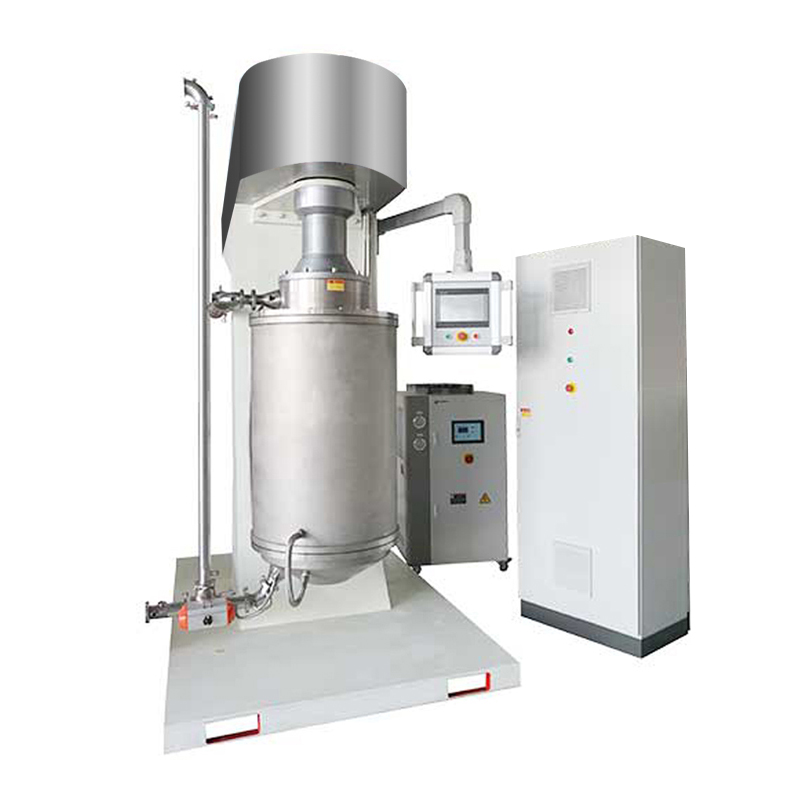
Manufacturers who run a Ball Mill Chocolate Machine tend to like it for one reason above others — consistency. Feed it the same recipe twice and you get comparable particle distribution both times. That predictability matters a great deal when a factory is producing the same bar or coating day after day.
But grinding alone does not finish chocolate. It shrinks particles; it does not chase off unwanted moisture, it does not round out sharp acidity, and it does not build the layered aroma that separates a flat-tasting batch from one with real character.
Is a Refiner Conche Really a Different Process?
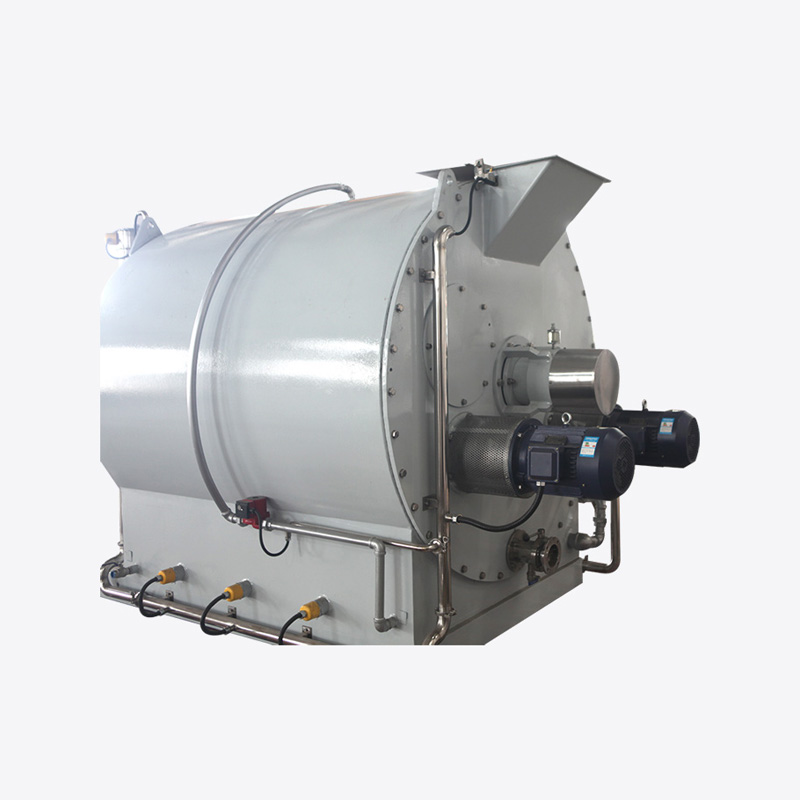
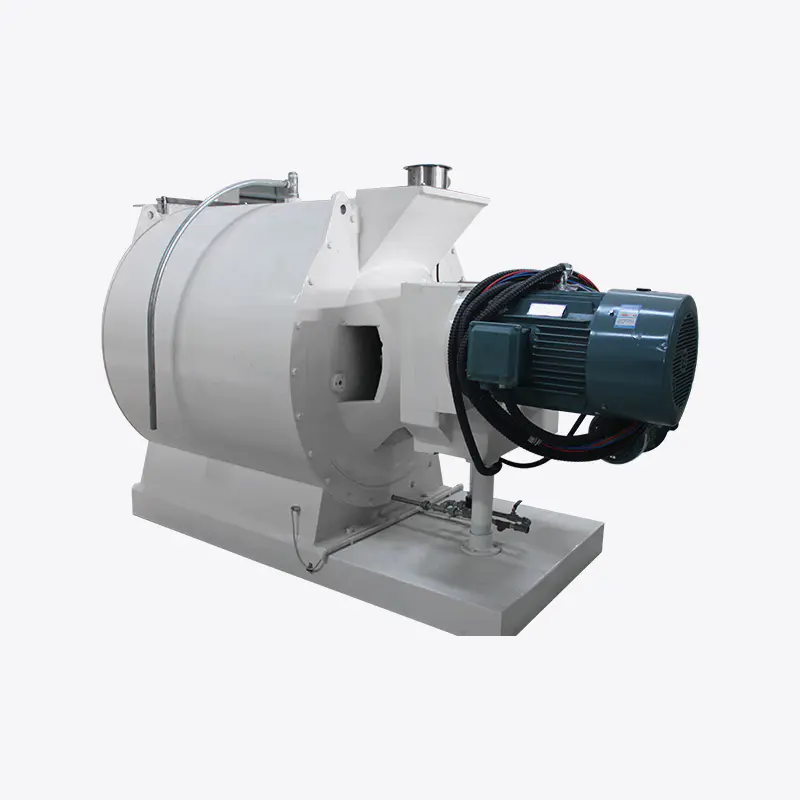
In a word, yes, though the difference is easy to underestimate if you have only ever worked with grinding equipment. A Chocolate Refiner Conche combines mechanical shearing with prolonged agitation and controlled aeration. Mass gets worked, folded, and exposed to airflow over an extended period, which drives off volatile acids and moisture while coating each particle in cocoa butter.
That coating step is where flavor rounds out. Think of it less as a grinding stage and more as a slow polishing stage — the particles were already small (often refined beforehand), and now the machine is smoothing their surface chemistry and mouthfeel behavior. A Chocolate Conching Refining Machine typically handles this in extended cycles, sometimes running for many hours depending on the recipe and the desired flavor profile.
So a ball mill and a conche are not doing the same job with different tools. They are doing different jobs that happen to sit next to each other on the same line.
Particle Size and Texture: Where the Two Systems Diverge
Here is where a lot of confusion starts. People assume conching reduces particle size the way milling does. It can contribute somewhat, but it was never built to be the primary size-reduction step.
- Ball mill for chocolate making equipment excels at driving particle size down quickly and repeatably.
- Refiner conche systems excel at flavor rounding, moisture control, and surface treatment of already-small particles.
- Relying on conching alone to fix a coarse or gritty mass usually stretches cycle time far beyond what is practical.
If your finished chocolate feels chalky or gritty on the tongue, that is usually a milling problem, not a conching problem. If it tastes sharp, sour, or underdeveloped despite a smooth mouthfeel, that points toward insufficient conching time or airflow.
Flavor Development Is Not Just About Grinding
It is worth repeating, because buyers new to chocolate processing often assume flavor is baked into the recipe alone. It is not. Roasting matters, sure, but the physical working and airing of the mass during conching genuinely changes how the finished product tastes and smells. Skipping or shortening this stage tends to show up later as customer complaints about flavor being flat or off-balance, even when the recipe itself was sound.
Batch Work Versus Continuous Flow
Ball mills, in most factory setups, run in a semi-continuous loop — mass is pumped through, circulated, and pulled off once particle size hits target. Conches, depending on design, can run in batch mode with fixed cycle durations, or in longitudinal continuous configurations for higher-volume operations.
This distinction matters for planning. A factory chasing volume with tight scheduling might find continuous milling easier to slot into a shift pattern. A smaller operation focused on flavor differentiation, small batches, or specialty products might actually prefer the flexibility a batch conche offers, since recipes and cycle times can be adjusted product by product.
Neither approach is inherently better for every buyer. It genuinely depends on what the factory is producing and how often the recipe changes.
What About Maintenance and Downtime?
This question comes up constantly, and it deserves an honest answer rather than a marketing one. Ball mills have moving beads and wear surfaces that need periodic inspection — bead wear affects particle size consistency over time, so operators check this on a routine basis. Conches have fewer high-wear internal components in most designs, but their extended run times mean any downtime affects a longer portion of the production cycle.
Neither machine is maintenance-free, and neither is dramatically harder to service than the other under normal conditions. What changes is the rhythm of upkeep: milling maintenance tends to be frequent and short, conching maintenance tends to be less frequent but tied to longer cycles.
| Factor | Ball Mill System | Refiner Conche System |
|---|---|---|
| Primary Function | Particle size reduction | Flavor development, moisture and acid reduction |
| Typical Cycle Style | Semi-continuous circulation | Batch or continuous conching |
| Texture Consistency | Strong, repeatable | Secondary benefit, not primary role |
| Flavor Rounding | Limited | Central purpose |
| Maintenance Rhythm | Frequent, shorter checks | Less frequent, tied to longer runs |
| Best Paired Role | Early-stage size reduction | Later-stage refinement and aeration |
Building a Full Line: More Than One Machine
Here is the part that buyers researching this topic sometimes miss entirely. Neither a ball mill nor a conche operates in isolation on a real production floor. Chocolate Processing Equipment for a working line typically includes support systems around both machines — feeding, holding, heating, and storage all play supporting roles that affect how well either core machine performs.
Without adequate temperature control before and after grinding or conching, even a well-matched machine pairing will underperform. Mass that arrives too cool clogs equipment; mass held too warm separates or loses texture. So the question "can one machine replace the other" often needs to expand into "does the surrounding system support either choice properly."
Holding, Storage, and Heating Support Systems
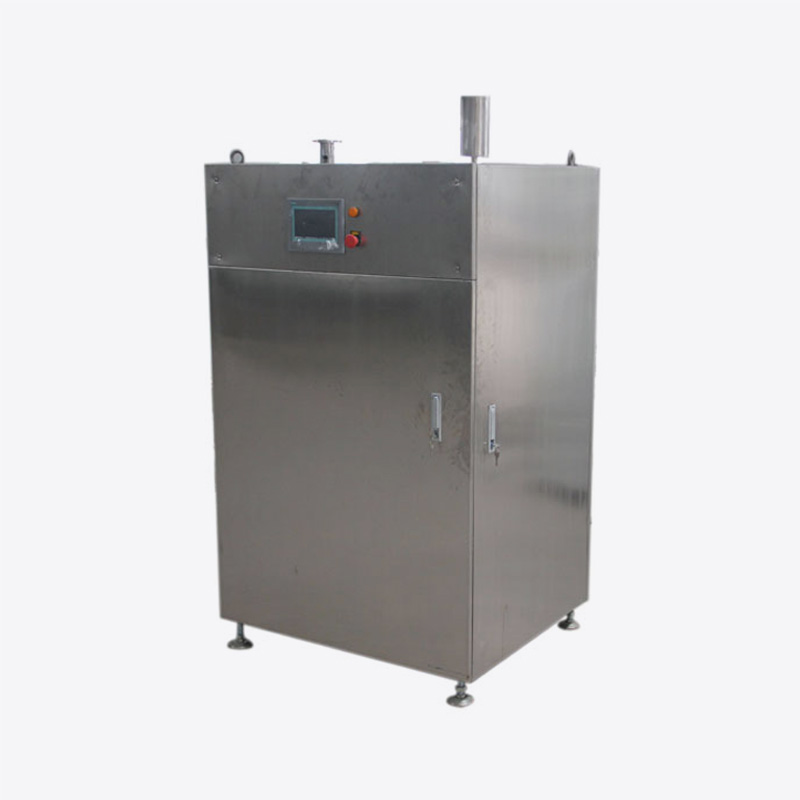
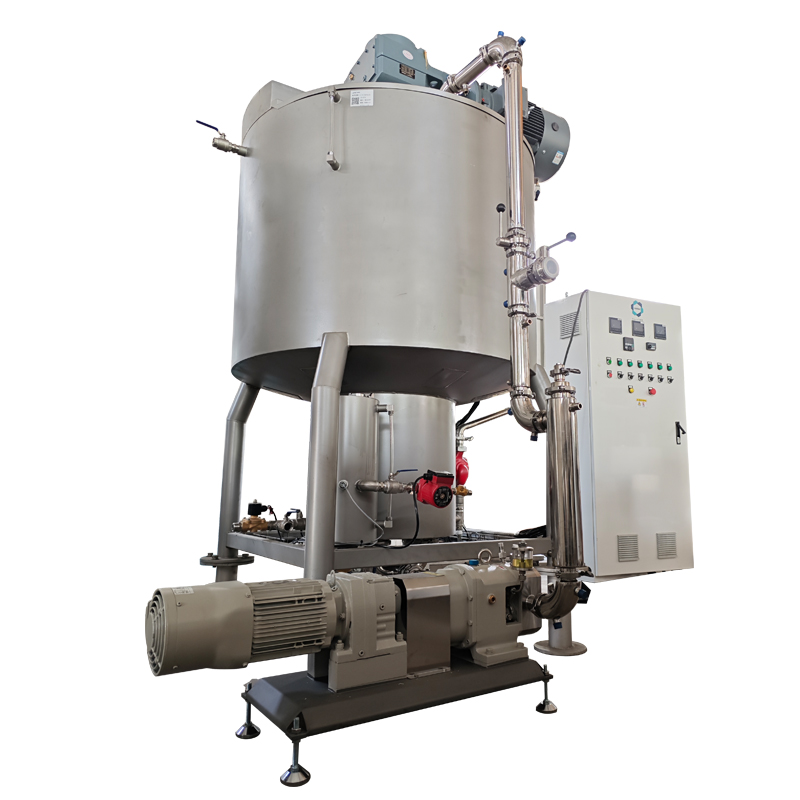
A chocolate holding tank keeps refined or conched mass at a workable temperature between processing stages, preventing separation or premature setting. Alongside it, a chocolate storage tank buys a factory flexibility, letting batches rest or wait for downstream packaging without quality drifting.
A mixing tank with heater often sits upstream, blending raw ingredients evenly and bringing them to a consistent starting temperature before they ever reach a mill or conche. And an industrial chocolate melter handles the initial liquefying step for solid inputs, which matters more than people expect since uneven melting at the start creates uneven results at every stage after it.
None of these support pieces replace the core grinding or conching function. But skipping them, or under-sizing them, is a common reason a factory blames the wrong machine for a texture or flavor problem that actually started somewhere else in the line.
So, Can One Replace the Other?
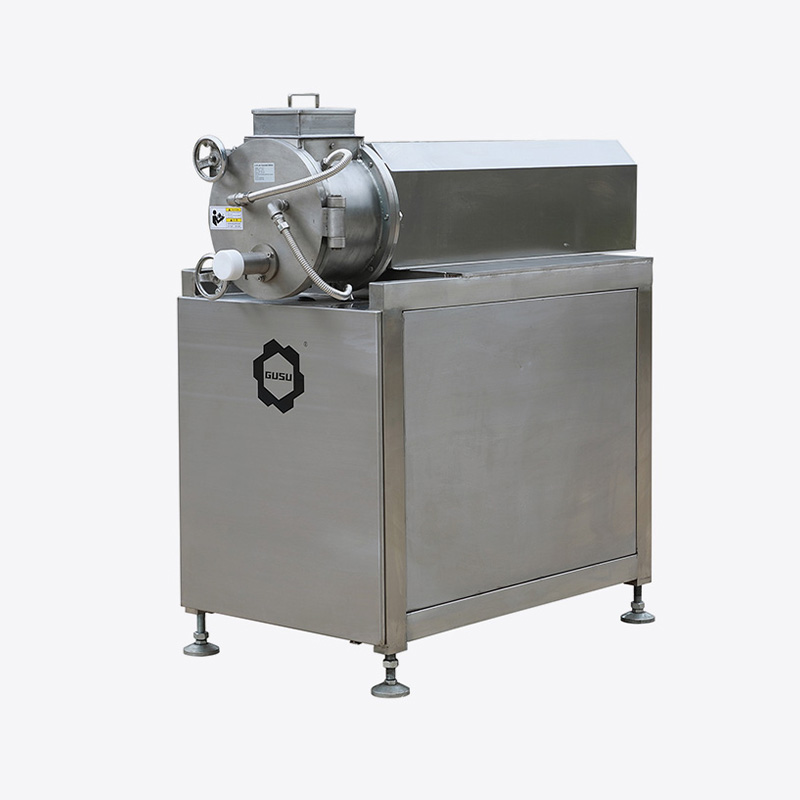
Mostly, no — not in the sense of a straight swap. A Chocolate Refiner Conche and a Ball Mill Chocolate Machine serve different functions within the same broader goal, and a factory chasing genuinely smooth, well-rounded chocolate typically benefits from both stages working together rather than choosing one over the other outright.
That said, some smaller operations, particularly those working with already-fine inputs or compound coatings where flavor complexity matters less, sometimes run conching alone and skip a dedicated milling stage. It works for certain product categories. It rarely works for anyone producing couverture-grade chocolate meant to compete on mouthfeel and aroma at once.
Choosing the Right Setup for Your Output Goals
Before assuming either machine needs replacing, it helps to map out what the current line is actually failing to deliver:
- Identify whether the complaint is texture-related (points toward milling) or flavor-related (points toward conching time or airflow).
- Check whether support equipment — holding tanks, melters, heated mixers — is properly sized for current output volume.
- Review whether current cycle times for either machine match the recipe being run, since a recipe change often demands a cycle adjustment too.
- Consider whether chocolate manufacturing equipment upstream and downstream is creating temperature swings that undermine either process.
Working through these questions before purchasing new equipment tends to save both money and floor space, since the fix is sometimes a process adjustment rather than a full machine replacement.
Getting this balance right takes some back and forth, and every factory's recipe, output volume, and product mix shift the answer slightly. A team that has spent years building and adjusting chocolate processing lines can usually walk through a factory's specific bottleneck faster than trial and error alone, and that kind of practical experience often matters more than any single spec sheet. Gusu Food Processing Machinery Suzhou Co.,Ltd. works with manufacturers weighing exactly this kind of decision, helping match milling, conching, and the supporting tanks and melters around them to whatever a particular product line actually needs. If your current setup is leaving texture or flavor on the table, reaching out for a conversation about your specific process is a reasonable next step before committing to new equipment.