

 English
 Español

Picking the right mill orientation is one of those decisions that feels straightforward until you actually start comparing options. Both horizontal and vertical versions of the Chocolate Ball Mill show up in working production environments for good reason — each one fits certain conditions better than the other. The real question is which set of conditions matches your operation.
Content
- 1 What the Equipment Actually Does
- 2 Two Orientations, Two Different Operating Logics
- 3 A Direct Comparison
- 4 The Factors That Actually Move the Decision
- 5 How Chocolate Type Shifts the Calculation
- 6 Questions Worth Raising with Suppliers
- 7 Where the Mill Sits in the Broader Line
- 8 Where Decisions Go Wrong
- 9 Finding the Right Partner for the Decision
What the Equipment Actually Does
A Chocolate Ball Mill works by tumbling grinding media — steel or ceramic balls — inside a jacketed vessel while chocolate mass flows through. The friction and impact between the media and the product gradually reduce particle size until the batch reaches the target fineness. That part is the same regardless of orientation.
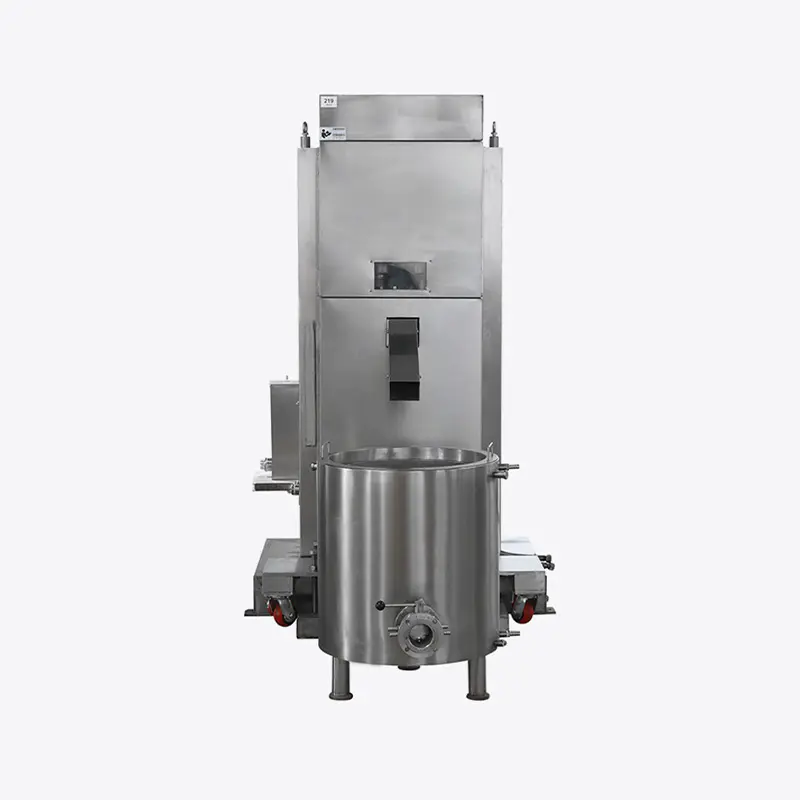
Where things diverge is in how the vessel sits, how the media behaves inside it, and how the whole unit fits into a production line. Orientation shapes everything from cooling efficiency to how long it takes to clean between runs.
Two Orientations, Two Different Operating Logics
The Horizontal Chocolate Ball Mill
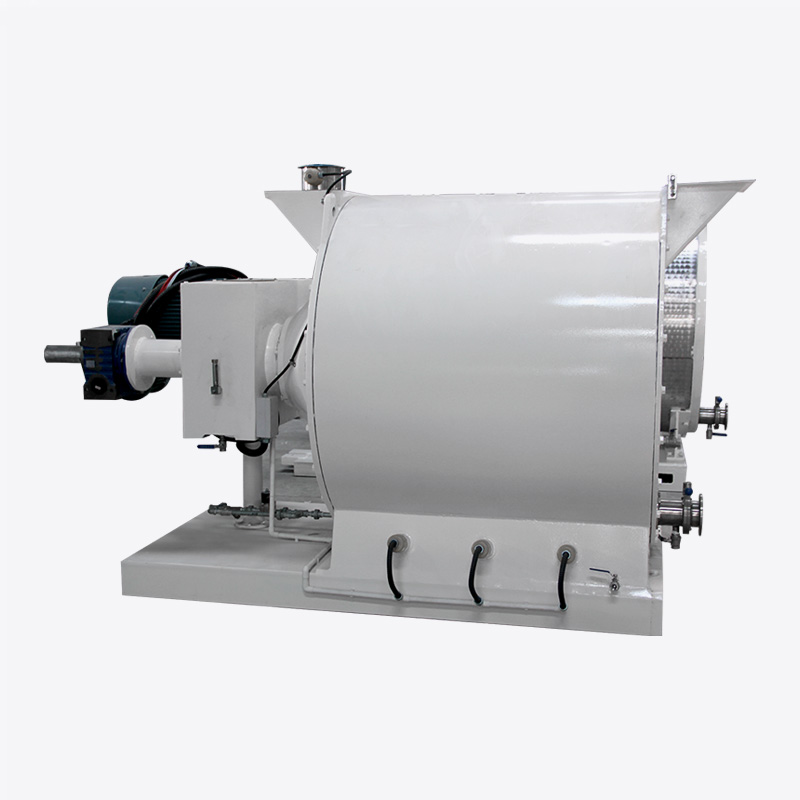
Lay the vessel on its side and you have a horizontal mill. Product moves from one end to the other while the agitator keeps the media in motion along that horizontal path. Gravity works with the flow rather than against it, which tends to support consistent media distribution across the full length of the vessel.
A few things that tend to come with this configuration:
- Continuous inline flow suits high-volume lines where throughput consistency matters
- The longer shell surface area makes jacket cooling relatively easy to manage
- Working height is lower, so maintenance and loading are less physically demanding
- Floor space requirements are higher — the vessel takes up a meaningful horizontal run
The Vertical Chocolate Ball Mill
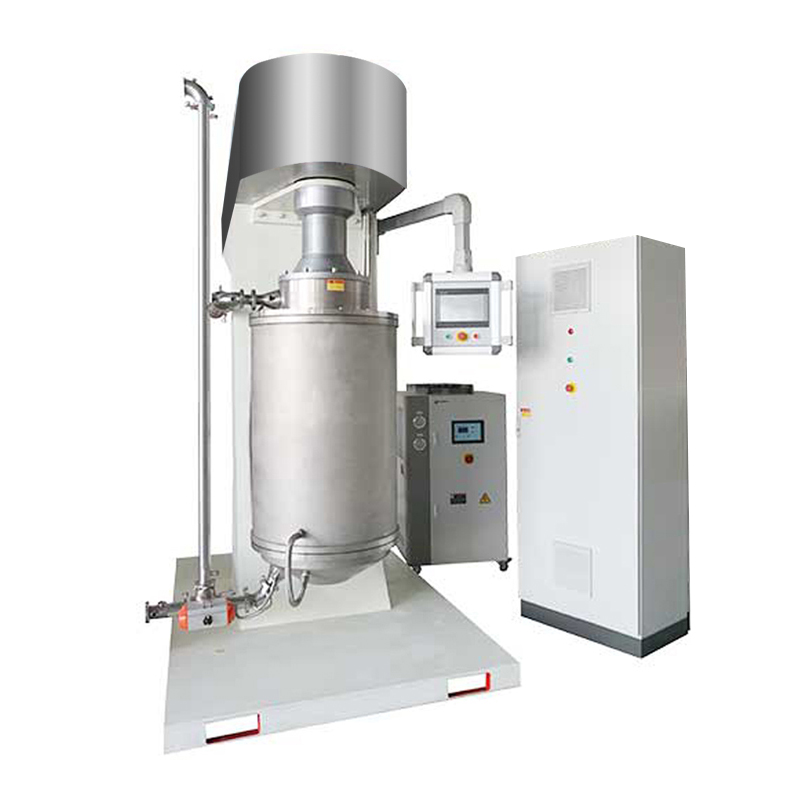
Stand the vessel upright and the logic shifts. Product comes in from the top, works its way down through the media bed driven by the agitator shaft, and exits at the bottom. Gravity is no longer assisting media distribution the same way, so the agitator carries more of that load.
What tends to follow from this layout:
- The footprint shrinks considerably, which matters in tighter facilities
- Scaling from a smaller trial unit to a larger production unit is relatively smooth
- Recirculation loops can be added to increase passes through the media bed
- Cleaning can take longer depending on how accessible the internal components are
- Running at partial capacity affects energy efficiency more noticeably than in horizontal designs
A Direct Comparison
| Factor | Horizontal Chocolate Ball Mill | Vertical Chocolate Ball Mill |
|---|---|---|
| Floor Footprint | Larger; extends horizontally | Smaller; builds vertically |
| Loading Access | Lower working height; straightforward | May need pumping or lifting for top-feed |
| Media Behavior | Gravity-assisted along vessel length | Agitator-driven; less gravity involvement |
| Cooling Design | Shell jacket; relatively simple | Often needs additional internal cooling |
| Cleaning Time | Generally faster disassembly | More components; can take longer |
| Production Scale | Fits well for sustained, high-volume runs | Handles both smaller batches and scale-up |
| Energy at Partial Load | More stable | Efficiency drops more at lower fill levels |
| Fineness Adjustment | Residence time and flow rate | Agitator speed and number of passes |
Keep in mind these are general tendencies. Individual machines vary, and a well-engineered vertical unit can outperform a poorly configured horizontal one on several of these points.
The Factors That Actually Move the Decision
Floor Space and Facility Layout
This one often gets settled before any technical comparison begins. If you have ceiling height but limited floor area, a vertical unit is the natural fit. If your facility runs long and low, a horizontal mill might drop in cleanly alongside existing equipment.
Retrofitting an existing line adds another layer — measure actual clearances rather than relying on rough estimates.
Volume and Run Length
High-volume continuous production tends to favor horizontal mills. The inline flow design keeps product moving steadily, which reduces variation across long runs. Vertical units fit more naturally into batch workflows or lines where recipes rotate frequently and the ability to switch quickly matters more than raw throughput.
Getting to the Right Particle Size
Both configurations can hit fine particle sizes. The difference is in how you dial it in. On a horizontal Chocolate Ball Mill, residence time and flow rate are the main handles. On a vertical unit, you are adjusting agitator speed and how many times the product circulates through. Neither approach is inherently more precise — they just require different tuning methods.
Cooling, Which Matters More Than It Looks
Chocolate is sensitive to heat during grinding. Flavor changes, viscosity shifts, and quality inconsistencies often trace back to temperature management rather than anything more exotic. Horizontal mills benefit from more external surface area, which tends to make jacket cooling more effective. Vertical mills sometimes need internal cooling elements to compensate.
If the recipe is fat-heavy or otherwise heat-sensitive, this is not a detail to skim over.
Cleaning Between Batches
For facilities running multiple chocolate types — or managing allergen separation between milk and dark products — cleaning cycle length directly affects throughput. Horizontal mills generally come apart more easily, though this varies by design. Some vertical units have components that require more steps to access and clean thoroughly.
Worth asking the supplier for a realistic cleaning cycle estimate, not just a theoretical minimum.
Energy Over Time
Neither configuration wins cleanly on energy. It depends on batch size, fill level, viscosity, and media type. One consistent pattern: vertical mills tend to lose efficiency faster when running below their designed fill level. If your batches are variable in size, factor that in when looking at operating cost projections.
Maintenance Access
Bearings, seals, and agitator shafts need attention on any mill. On horizontal units, most of that work happens at the end of the vessel at a manageable height. On taller vertical units, top-end components may require a platform or lifting equipment. Neither is a dealbreaker, but it affects labor time and what your maintenance team actually deals with week to week.
How Chocolate Type Shifts the Calculation
Dark chocolate with high cocoa solids is viscous and puts more mechanical load on the mill. Horizontal Chocolate Ball Mills tend to handle that viscosity well because the continuous flow and media distribution remain stable under heavier loads. Cooling is also easier to maintain across the longer vessel length.
Milk and white chocolate are more temperature-sensitive. Dairy components and sugar can degrade with heat exposure in ways that affect both flavor and texture. Whichever configuration you choose, cooling performance with dairy-based recipes deserves specific attention — not just a checkbox on a spec sheet.
Compound coatings and specialty products that rotate frequently through different formulations often do well with vertical units. Batch flexibility and changeover speed can outweigh throughput advantages when the variety mix is wide.
Questions Worth Raising with Suppliers
Before committing to a configuration, a few direct questions tend to surface issues that spec sheets skip over:
- How does throughput behave at the lower end of the rated capacity range, not just at peak?
- What does cooling performance look like specifically with high-fat recipes at full throughput?
- What is a realistic cleaning time for a full product changeover, including media removal if needed?
- What assumptions sit behind the energy figures — media type, fill level, viscosity?
- Which components need the most frequent replacement, and what are typical lead times?
- Can you visit an existing installation running a similar product type?
These questions do not require technical expertise to ask, but the answers will tell you a lot about whether a supplier actually knows the equipment in use or is mostly reciting marketing material.
Where the Mill Sits in the Broader Line
A Chocolate Ball Mill connects to everything around it — pre-mixers, conches, tempering units, depositors. The configuration you choose needs to physically and functionally connect to those upstream and downstream steps.
Horizontal mills with dedicated inlet and outlet ports tend to drop into piped inline systems cleanly. Vertical units sometimes call for buffer tanks or recirculation loops that add equipment and take up their own space. Neither is inherently complicated, but the integration requirements belong in the layout planning conversation early, not after the purchase order is placed.
Where Decisions Go Wrong
Focusing too heavily on purchase price alone is a common one. Operating costs — energy, media replacement, maintenance labor, cleaning time — accumulate over years and can easily outweigh an initial price difference. A configuration that reduces friction in daily operations is often worth paying more for upfront.
Treating cooling as a secondary specification is another. It shows up as a feature in brochures but often drives product quality outcomes more directly than grinding performance does. Reviewing cooling data with the same attention you give to particle size curves tends to surface problems before they become expensive.
And assuming that lab-scale results will transfer cleanly to production scale without checking. Grinding curves, residence time, and heat load all behave differently as batch size grows. Confirming the scale-up dynamics with the supplier before finalizing a decision avoids surprises after installation.
Finding the Right Partner for the Decision
Choosing between horizontal and vertical Chocolate Ball Mills comes down to matching the equipment to the actual production environment — not to a general preference or a single dominant spec. The more specific the conversation with a supplier, the more useful the comparison becomes.
Gusu Food Processing Machinery Suzhou Co.,Ltd. works with food processing teams on both configurations, helping evaluate production volume, recipe requirements, and facility constraints before a recommendation is made. If you are working through this decision, their technical team is a reasonable place to start the conversation.