

 English
 Español

A chocolate enrober is the cornerstone of modern confectionery production, enabling the efficient and uniform coating of centers such as biscuits, nuts, and creams with tempered chocolate. The quality of the final product—defined by its gloss, snap, and shelf stability—is directly dependent on the precise interaction between the machine’s mechanical components and the rheological properties of the chocolate. Successful enrobing requires maintaining chocolate viscosity between 2,000 and 3,000 mPa·s and ensuring perfect temper throughout the coating process. Understanding the mechanics of the wire mesh belt, bottoming roller, and air knives is essential for minimizing waste and achieving a professional finish.
Content
Core Components and Mechanical Function
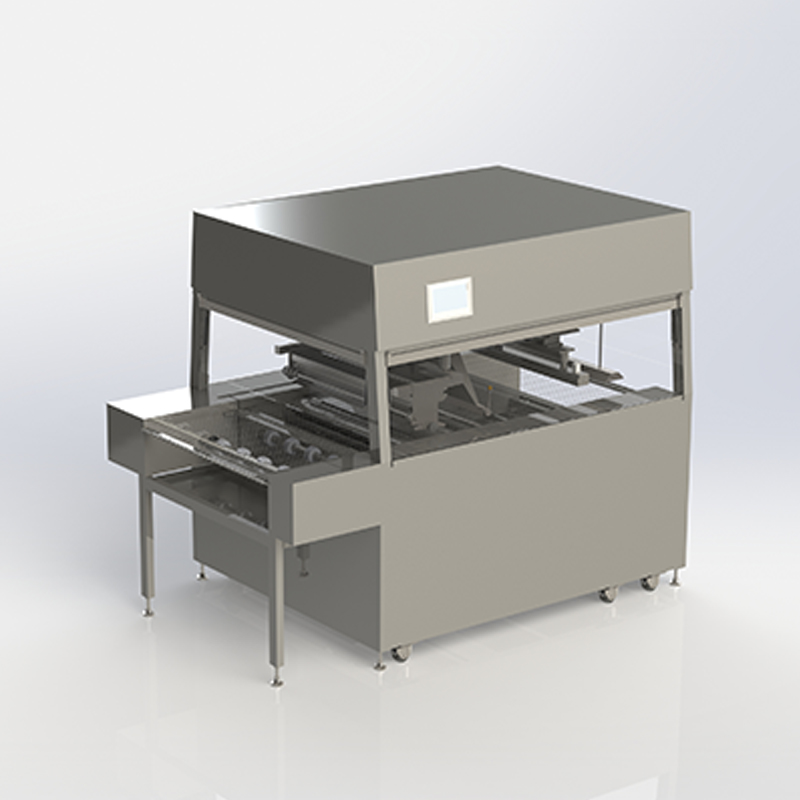
An enrober is not merely a curtain of chocolate; it is a complex system of pumps, belts, and airflow controls designed to manage the flow and setting of the coating. Each component plays a specific role in determining the weight and appearance of the coated product.
The Wire Mesh Belt and Bottoming Roller
Products are transported through the chocolate curtain on a stainless steel wire mesh belt. Before reaching the curtain, the belt passes over a bottoming roller submerged in the chocolate tank. This roller applies a pre-coat to the bottom of the product. The speed of the belt relative to the roller determines the thickness of this base layer. For heavy centers, a thicker bottom coat prevents the product from absorbing moisture from the filling, while delicate wafers require a lighter touch to avoid breakage.
The Chocolate Curtain and Air Knives
The main coating occurs as the product passes under a continuous curtain of chocolate, typically pumped at a rate of 500 to 1,000 kg/hour depending on the machine width. Immediately after the curtain, high-velocity air knives blow excess chocolate off the top and sides of the product. Adjusting the angle and pressure of these air knives is critical; too much pressure creates holes in the coating, while too little leaves uneven ridges and excessive weight.
The Critical Role of Tempering
An enrober cannot function effectively without properly tempered chocolate. Tempering is the process of pre-crystallizing cocoa butter to ensure the chocolate sets with a stable crystal structure (Form V).
| Stage | Temperature Range | Purpose |
|---|---|---|
| Melting | 45°C - 50°C | Eliminate all existing crystals |
| Cooling | 27°C - 28°C | Initiate crystal formation |
| Reheating | 31°C - 32°C | Stabilize Form V crystals for enrobing |
If the chocolate in the enrober tank drops below the working temperature, it will begin to set prematurely, causing rough surfaces and poor flow. Conversely, if it exceeds the upper limit, the crystal structure breaks down, resulting in a dull finish and long setting times. Most modern enrobers are equipped with integrated tempering units or recirculation systems to maintain this narrow thermal window.
Optimizing Coating Weight and Efficiency
Controlling the amount of chocolate used per unit is vital for cost management. Over-enrobing increases material costs, while under-enrobing compromises product quality and shelf life.
Adjusting Belt Speed and Flow Rate
The ratio of the chocolate pump speed to the conveyor belt speed determines the volume of chocolate available for coating. A slower belt speed allows for a heavier coat, while a faster speed reduces it. However, changing the belt speed also affects the dwell time in the cooling tunnel downstream. Therefore, adjustments must be made in conjunction with the air knife pressure. Fine-tuning these variables can reduce chocolate usage by up to 5-10% without affecting visual quality.
Managing Viscosity
Chocolate viscosity is influenced by temperature and fat content. Adding cocoa butter thins the chocolate, improving flow and reducing coating weight, but it must be done carefully to avoid altering the flavor profile. Viscometers should be used regularly to monitor consistency. Maintaining a viscosity of 2,500 mPa·s is often ideal for standard biscuit enrobing, providing a balance between coverage and drainage.
Maintenance and Troubleshooting Common Issues
Regular maintenance ensures the longevity of the enrober and the consistency of the product. Neglect can lead to mechanical failures and hygiene issues.
- Belt Tracking and Tension: Misaligned belts cause chocolate to drip onto the machine frame, creating waste and hygiene hazards. Check belt tension daily and adjust tracking rollers to ensure the belt runs centrally. A worn belt should be replaced immediately to prevent product marking.
- Nozzle and Air Knife Cleaning: Clogged air knives result in uneven coating and "tails" on the product. Disassemble and clean air knives weekly to remove hardened chocolate debris. Ensure the air supply is dry and oil-free to prevent contamination.
- Pump and Motor Care: Listen for unusual noises from the chocolate pump, which may indicate cavitation or wear. Lubricate motor bearings according to the manufacturer’s schedule. Keep the pump housing clean to prevent heat buildup, which can affect chocolate temperature.
- Tank Hygiene: Completely drain and clean the chocolate tank during product changeovers. Residual chocolate can burn or seize, contaminating the new batch. Use hot water and food-safe detergents, ensuring all parts are thoroughly dried before reassembly to prevent water ingress into the chocolate.