

 English
 Español

Bite into a chocolate bar and get a faint sandy feel against your teeth — that's not a seasoning issue or a cocoa quality issue. It's leftover sugar and cocoa particles that never got broken down small enough. A ball mill exists specifically to solve that one physical problem.
Content
- 1 The Grit Nobody Can Explain but Everyone Feels
- 2 What's Physically Happening Inside the Chamber
- 3 Grinding Time Isn't a Dial You Just Crank Up
- 4 Why Regulars Notice When Something's Slightly Off
- 5 One Step Among Several, but a Decisive One
- 6 A Machine Still Has to Work in a Real Kitchen
- 7 What Automation Actually Fixes — and What It Doesn't
- 8 Switching Products Without Buying a Second Machine
- 9 The Maintenance Habits That Actually Matter
- 10 Why This Kind of Machine Keeps Getting Reworked
- 11 What This Actually Means for Someone Running Production
The Grit Nobody Can Explain but Everyone Feels
Nobody stops mid-bite to think about particle size, yet the tongue registers it instantly. Once a sugar crystal or cocoa fragment crosses a certain size, taste receptors read it as texture rather than flavor. Two bars made from the exact same recipe can end up feeling nothing alike — one dissolves cleanly, the other leaves behind a faint chalkiness that lingers after swallowing.
Mixing ingredients together gets you halfway there at best. Turning sugar crystals and cocoa solids into something the mouth interprets as liquid rather than solid takes sustained mechanical grinding, not just combining.
| Production Factor | What Happens Without It |
|---|---|
| Even ingredient mixing | Pockets of unmixed sugar or cocoa create inconsistent bites |
| Sustained refining | Larger particles remain, producing a gritty mouthfeel |
| Steady processing conditions | Batch-to-batch texture starts drifting noticeably |
| Reliable equipment performance | Production slows down or turns out uneven results |
What's Physically Happening Inside the Chamber
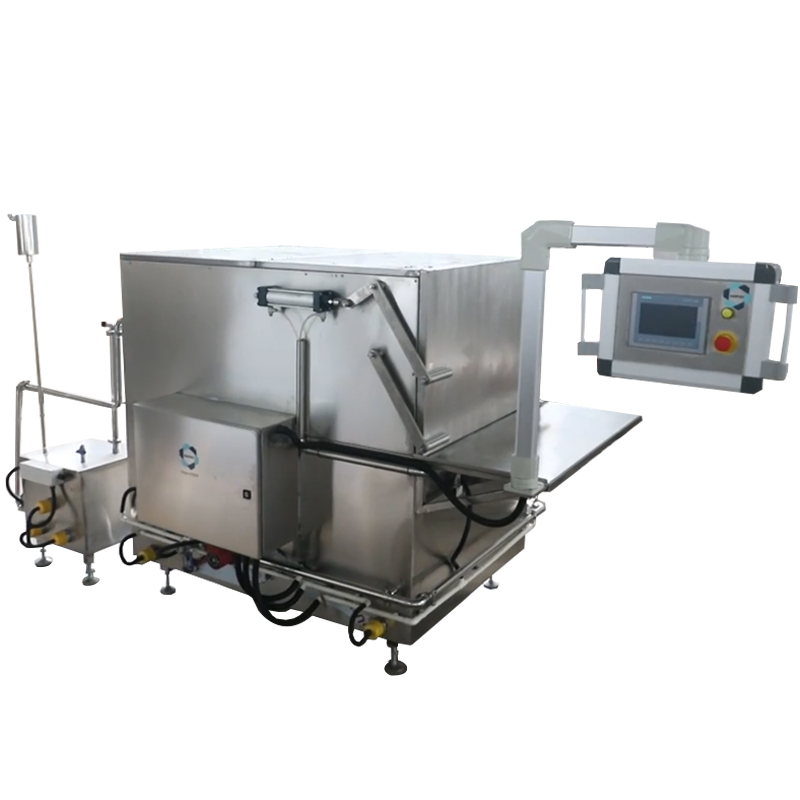
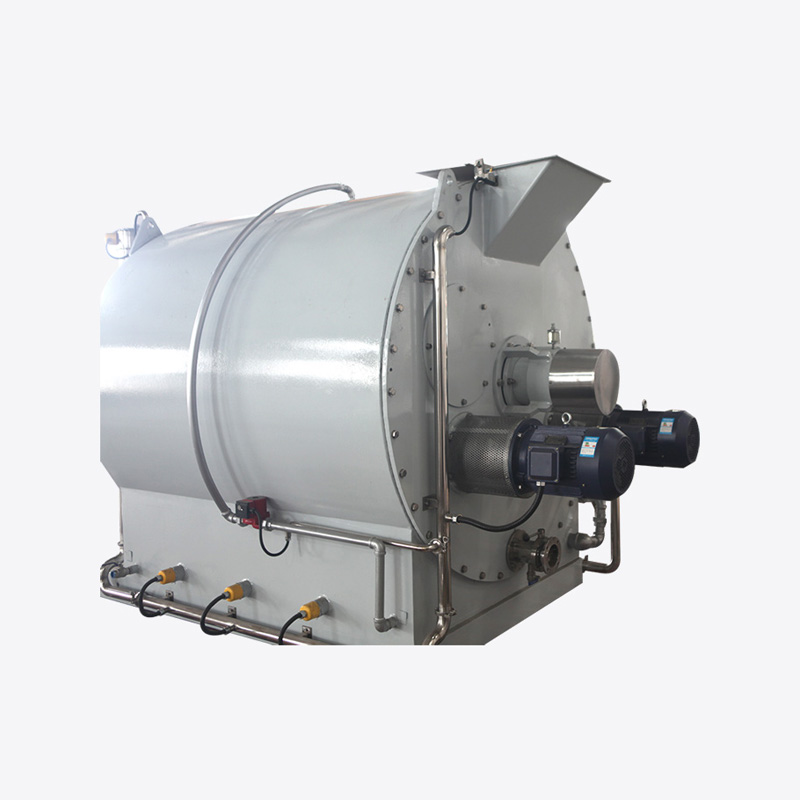
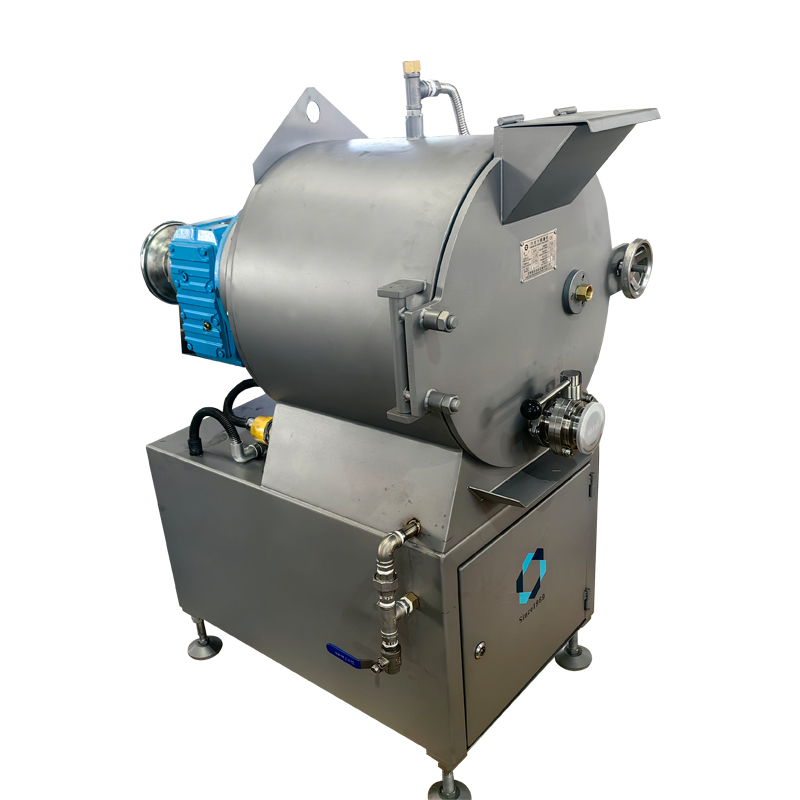
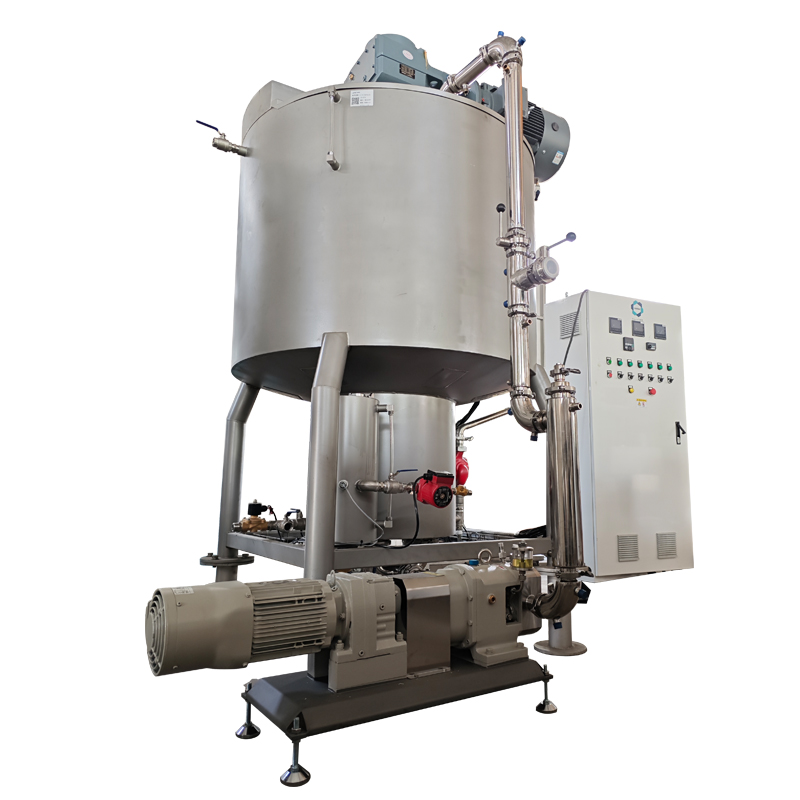
A ball mill chocolate machine runs on a fairly blunt principle: steel balls tumble around inside a rotating or agitated chamber, and whatever chocolate mixture sits between them gets crushed on repeat. Every rotation, those balls strike and roll over the mixture again, chipping larger particles down bit by bit until they're small enough to slide past the tongue unnoticed.
A roller refiner does something different — it squeezes ingredients between spinning cylinders instead of pounding them with loose steel balls. That distinction changes both the speed and the final fineness a batch ends up with.
| Component | Function |
|---|---|
| Grinding chamber | Houses the balls and ingredient mixture during processing |
| Mixing structure | Keeps ingredients circulating so grinding stays even |
| Drive system | Powers the rotation or agitation moving the balls |
| Control unit | Adjusts speed and timing for the batch |
Someone scaling a recipe from a countertop test batch to a full production run needs this mechanical process to behave the same way at both sizes. Plenty of equipment doesn't hold that promise once volume changes.
Grinding Time Isn't a Dial You Just Crank Up
More time under the balls usually means finer particles, but leaving the machine running longer than necessary backfires. Push it too far and the mixture heats up, which throws off flavor development and messes with how cocoa butter behaves once it's melted and reshaped repeatedly. Cut the cycle short, though, and the grit comes right back.
Dialing in the right duration for a specific recipe is closer to trial and adjustment than following a fixed number, since sugar, cocoa, and milk solids don't all grind at the same pace.
What shifts how a batch responds under the balls:
- The ratio of sugar to cocoa solids in the formula
- Whether milk powder or other dairy shows up in the mix
- How coarse the raw ingredients were before grinding even started
- Room temperature during the run, since it affects how the mixture flows inside the chamber
A dark, cocoa-heavy bar and a sweeter, milkier one rarely respond to the same grinding schedule. The ingredients just don't behave the same way under repeated impact.
Why Regulars Notice When Something's Slightly Off
Someone who buys the same bar every week expects it to taste and feel identical every time. That expectation sounds simple, but hitting it run after run takes tighter control than most people assume from the outside.
A small shift in grinding time, or a few degrees of temperature drift, or a slightly off ingredient ratio — any of these can nudge texture enough that a loyal customer notices something's different, even without being able to name it. Equipment that grinds the same way batch after batch is what keeps that kind of quiet drift from happening in the first place.
| Production Goal | Why It Matters to the Business |
|---|---|
| Stable texture | Keeps repeat customers satisfied with a familiar product |
| Predictable processing | Makes scheduling and planning easier |
| Adjustable settings | Lets a producer branch into new products without new equipment |
| Reliable quality control | Cuts down on waste from off-spec batches |
One Step Among Several, but a Decisive One
Grinding sits inside a longer chain of steps. Ingredients get combined first, refined next to knock particle size down, then often conched afterward to round out flavor and smoothness further.
The ball mill handles that middle refining stage — working over the combined mixture to grind down whatever coarse particles are still hanging around. Rush through this part, or skip it, and the resulting texture problem tends to resist fixing later, no matter how the flavor gets tweaked afterward.
What a properly run grinding stage actually accomplishes:
- Breaks down sugar crystals that would otherwise leave a grainy bite
- Spreads cocoa particles evenly through the entire mixture
- Sets the mixture up to behave better during whatever processing comes next
- Cuts down on texture complaints once the product actually reaches someone's mouth
A Machine Still Has to Work in a Real Kitchen
Good texture on paper doesn't matter much if the machine turns into a daily headache to run. Whether it's a small artisan operation or a factory floor, the people actually operating the equipment care just as much about how it fits into a normal workday.
| Design Aspect | Why It Matters Practically |
|---|---|
| Straightforward operation | Cuts down training time for new staff |
| Adjustable processing settings | Supports different recipes without new hardware |
| Manageable maintenance | Keeps downtime from cleaning or repairs reasonable |
| Sturdy construction | Handles daily use without frequent breakdowns |
A small chocolate shop running one machine every day needs something an ordinary staff member can operate without calling in a specialist. A factory running multiple shifts needs something that can take near-continuous use without constant interruption.
What Automation Actually Fixes — and What It Doesn't
Automated controls track grinding time, watch temperature, and adjust speed without someone hovering over the machine the whole shift. That takes care of the small inconsistencies that creep in when a tired operator is judging timing by feel eight hours into a shift.
Where automation genuinely helps:
- Keeping grinding time consistent across a long run of batches
- Removing the risk of someone forgetting to adjust a setting manually
- Making it easier to track which settings produced which results
- Coordinating more smoothly when the mill is one piece in a bigger line
None of that replaces a person who actually understands chocolate. A machine holds a setting steady once it's told to. Deciding what that setting should be for a brand-new recipe still comes down to someone tasting the result and adjusting from there.
Switching Products Without Buying a Second Machine
A shop making a dark chocolate bar one week and a milk chocolate filling the next doesn't necessarily need separate machines for each, assuming the equipment allows enough range in grinding time and speed.
| Production Need | How Equipment Flexibility Helps |
|---|---|
| Developing new products | Testing grinding settings without new hardware |
| Adjusting texture | Fine-tuning grind time for a different feel |
| Working across recipes | Adapting to varying sugar and cocoa ratios |
| Responding to seasonal demand | Scaling batch sizes without redesigning the process |
A business testing a new praline filling can run it through the same mill that handles its standard bar, just with the settings dialed differently, instead of justifying a second machine for something still in the experimental stage.
The Maintenance Habits That Actually Matter
Leftover chocolate stuck inside a grinding chamber isn't only a cleaning nuisance — old residue mixing into a fresh batch can throw off both flavor and texture. Grinding balls that wear down unevenly over time cause their own quiet inconsistency too.
Worth keeping on a routine:
- Cleaning the chamber thoroughly between recipe types, particularly switching between dark and milk chocolate
- Checking the grinding balls now and then for wear that could be affecting consistency
- Listening for unusual noise or resistance from the drive system that might signal trouble ahead
- Sticking to whatever lubrication and part-care guidelines the manufacturer laid out
Skip cleaning between batches often enough, and a customer might pick up on an odd aftertaste even when the texture itself holds up fine.
Why This Kind of Machine Keeps Getting Reworked
Consumers keep asking for new flavors, new textures, products built around specific dietary needs. A machine that only handles one narrow recipe well becomes a limitation the moment demand shifts even slightly.
Ball mills built with adjustable settings and manageable daily operation give producers room to experiment without tearing out their whole setup every time consumer taste moves. That kind of flexibility matters more now than it used to, back when chocolate recipes stayed roughly the same for years at a stretch.
What This Actually Means for Someone Running Production
Texture often registers before flavor even has a chance to. A ball mill chocolate machine handles the physical work of shrinking particles down small enough to disappear on the tongue, and how consistently it does that, batch after batch, has a direct bearing on whether customers come back.
Anyone sizing up equipment for a new or growing operation gets more value looking past raw grinding capability alone — asking instead how the machine handles different recipes, how easily staff can shift settings, and how much daily upkeep it realistically demands. Those details end up mattering more than any single spec sheet number when it comes to whether the equipment becomes a reliable part of the daily routine or a recurring source of frustration.