

 English
 Español

You added a splash of water to the pot, or the flame underneath was slightly too high, and within seconds the glossy mass turned dull, stiff, and grainy. The chocolate did not fail. The melting method did. If you want the most predictable way to melt chocolate, use a double boiler.
A double boiler heats chocolate indirectly with steam, keeps the temperature in a safe range, and gives you enough time to react before the chocolate overheats or seizes. This guide explains why the method works, how to set it up correctly, what temperatures to watch, and when it stops making sense at a larger scale.
Content
What a double boiler does to chocolate
A double boiler is two stacked vessels: a saucepan below holding simmering water and a bowl above holding the chocolate. The water never touches the chocolate. The steam gently warms the bottom of the bowl, and that indirect heat melts the chocolate evenly without scorching it.
The key advantage is temperature control. Chocolate melts at relatively low temperatures. Dark chocolate softens and flows around 45 to 50°C (113 to 122°F), while milk and white chocolate melt a few degrees lower. A direct flame can push chocolate past those ranges before you notice, producing separation, dull color, and a burnt flavor. Steam cannot exceed 100°C (212°F) at sea level, and the bowl adds another layer of insulation. In practice, the chocolate stays in a workable range as long as the water is at a gentle simmer and you stir.
Why steam beats a hot pan surface
A saucepan transfers heat at the point of contact, creating hot spots on the bottom. Chocolate is a poor conductor of heat, so the portion touching the pan can overheat while the center stays solid. The double boiler solves this because steam surrounds the bowl evenly and the bowl distributes that heat across its full surface. The result is more uniform melting and a much smaller chance of burnt pockets.
What double boiling does not do
Melting is not tempering. A double boiler gets chocolate into a liquid state for dipping, coating, molding, or mixing. Tempering, which aligns the cocoa butter crystals so the chocolate sets with a snap and shine, is a separate temperature sequence that happens after melting. If you plan to make molded chocolates or dipped truffles, expect to follow melting with a proper tempering curve.
Setting up a double boiler
You do not need specialized equipment. A stainless steel bowl that sits snugly over a saucepan works as well as a dedicated double boiler. The only rules are that the bowl must be completely dry and its bottom must not touch the water.
- Fill the saucepan with about 2.5 to 5 cm (1 to 2 inches) of water. The water surface should sit below the bottom of the bowl.
- Bring the water to a simmer over medium heat, then lower the heat. You want small bubbles, not a rolling boil.
- Place the dry bowl over the saucepan and add your chopped chocolate.
How to improvise a double boiler
If you do not own one, use a heatproof glass measuring cup or a wide metal mixing bowl. The same clearance rules apply: the vessel must fit the saucepan without touching the water, and the rim should overhang so the bowl stays stable. Glass heats more slowly than metal but holds a steadier temperature, which makes it a good choice for white chocolate.
Step-by-step: melting chocolate in a double boiler
This method works for chopped chocolate bars, couverture, and most baking chips. Chips formulated with stabilizers melt fine but may stay a little thicker than chopped couverture.
- Chop the chocolate into small, uniform pieces. Smaller pieces melt faster and more evenly than large blocks.
- Set the saucepan over medium heat and bring the water to a simmer. Reduce the heat before placing the bowl on top.
- Add the chopped chocolate to the dry bowl and stir with a dry spatula as soon as the edges begin to soften.
- Continue stirring gently every 30 seconds. The chocolate will thin out as the crystals melt.
- Remove the bowl from the heat while a few small lumps remain. Residual heat will finish the job without pushing the temperature too high.
- Wipe the bottom of the bowl dry before using the chocolate, because water dripping into the bowl will cause seizing.
For most batches, the process takes five to eight minutes. The exact time depends on the amount of chocolate, the piece size, and the heat level. Raising the flame to rush it only shortens the window before the chocolate overheats. Melted chocolate from a double boiler works well for dipping strawberries and pretzels, drizzling over cookies, coating nuts, folding into batters, or making chocolate bark. Because this chocolate is not tempered, dipped items should be eaten soon or refrigerated rather than held at room temperature for weeks.
Temperature benchmarks for melting chocolate
Keep a thermometer handy if you melt chocolate regularly. The numbers below represent safe melting ranges for each type. Staying below the maximum preserves fluidity and flavor.
| Chocolate type | Ideal melting range | Do not exceed |
|---|---|---|
| Dark chocolate | 45–50°C / 113–122°F | 52°C / 126°F |
| Milk chocolate | 43–45°C / 109–113°F | 46°C / 115°F |
| White chocolate | 40–43°C / 104–109°F | 44°C / 111°F |
White chocolate is the most sensitive because its lower cocoa butter content and added milk solids make it prone to scorching. Keep the heat low and stir continuously when working with white chocolate.
Why chocolate seizes and how to avoid it
Seizing is the most common failure when melting chocolate in a double boiler. The chocolate turns from a smooth liquid into a thick, paste-like mass. The usual cause is moisture. Even a few drops of water or steam condensation can trigger it, because water dissolves the sugar in the chocolate and makes the surrounding cocoa solids clump together.
Two rules prevent this. First, dry the bowl thoroughly before adding chocolate. Second, keep the water at a simmer rather than a boil so steam does not condense on the inside of the bowl. If condensation forms on the underside of the bowl, wipe it away before it can drip into the chocolate. Do not cover the bowl while melting, because trapped steam can condense on the lid and fall back in.
Overheating is the second failure mode. Chocolate that exceeds its safe maximum turns dull, thick, and slightly gritty, and cooling it down will not reverse the damage. The only reliable fix is to start over with fresh chocolate, which is why the gentle simmer of the double boiler matters.
Double boiler versus other melting methods
Microwave melting is faster and works well with short intervals and frequent stirring. The tradeoff is precision: a microwave can develop hot spots, and an interval that is slightly too long can overheat the edges of the bowl while the center is still solid. Direct stovetop melting in a saucepan is the riskiest option, because the chocolate sits directly on a hot metal surface and seizes or scorches easily.
The double boiler is the slowest of the three methods, but that slower pace is exactly what protects the chocolate. For a home kitchen melting a few hundred grams for brownies, chocolate bark, or a coating for fresh fruit, the double boiler provides the largest margin for error.
A water bath, or bain-marie, is often confused with a double boiler. In a bain-marie the bowl touches the water directly, which transfers heat faster and slightly less gently. Both work, but a true double boiler gives you more control for chocolate.
When a double boiler is not enough
The method has a practical limit. Once you move past a few kilograms of chocolate, a bowl over a saucepan becomes unwieldy, hard to keep at a consistent temperature, and far too slow for continuous production. A commercial kitchen or a startup chocolate maker needs a machine that can melt, hold, and deliver warm chocolate at a steady temperature.
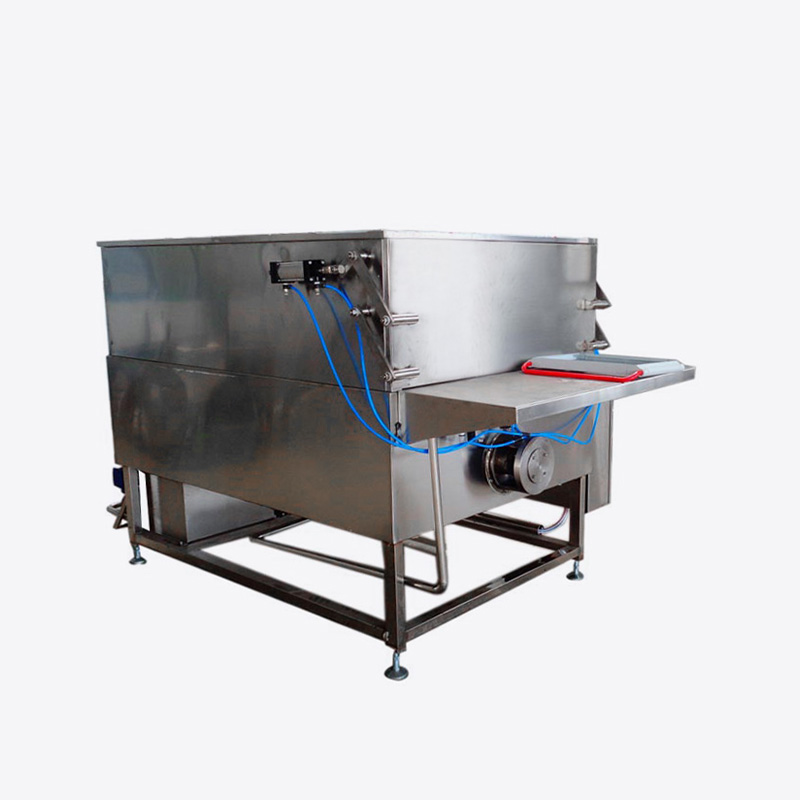
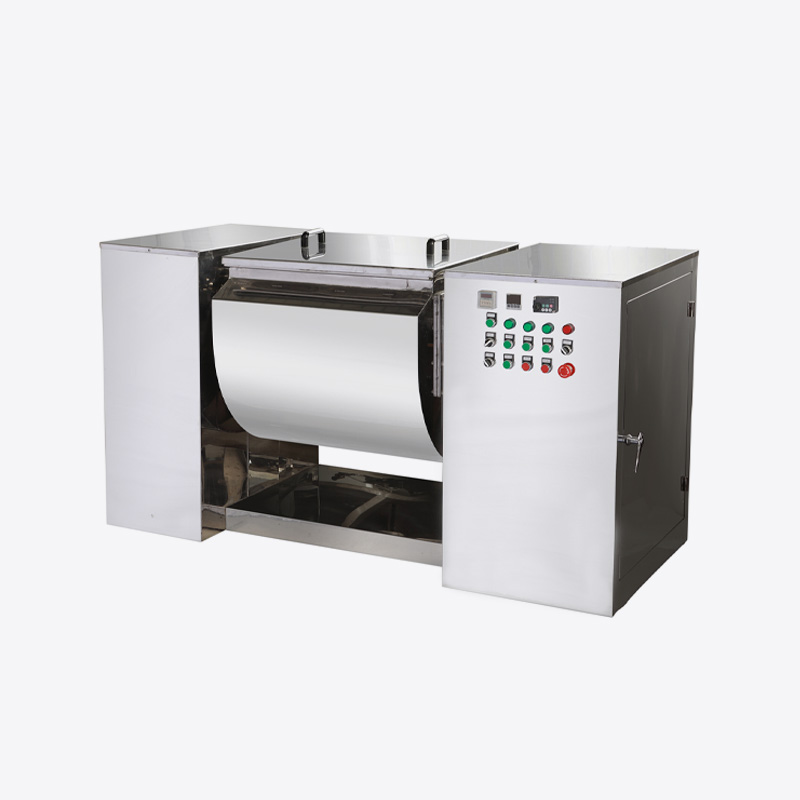
Industrial melting equipment solves this with jacketed tanks that circulate hot water or oil around a stainless steel vessel, plus agitation that keeps the melted mass moving. The RYG500 stainless steel chocolate fat melter is a typical example: it melts cocoa butter and chocolate fat in a heated, controlled tank, functioning as the direct industrial counterpart to a home double boiler.
 RYG500 Stainless Steeel Chocolate Fat Melter Chocolate Heating Melting Tank SuppGusu Machinery is China Wholesale RYG500 Stainless Steeel Chocolate Fat Melter Chocolate Heating Melting Tank Suppliers and Company, offe...View Product →
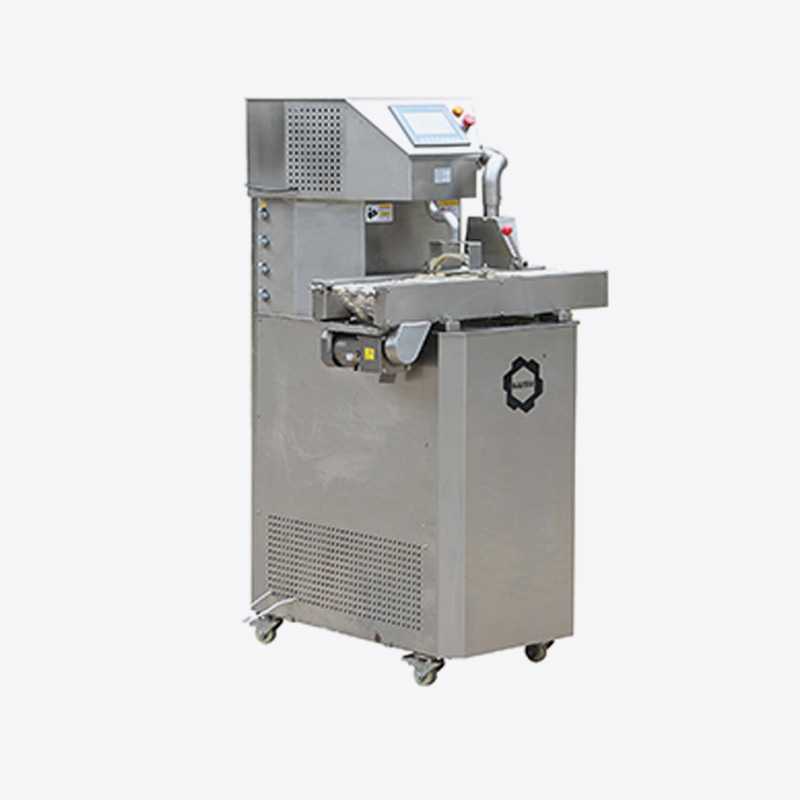
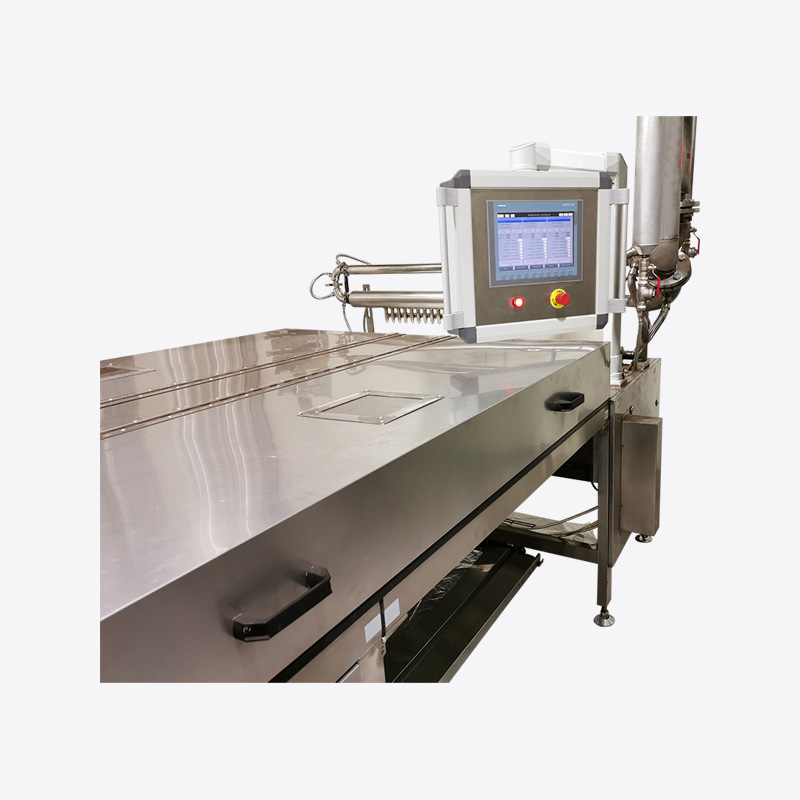
For larger batches, the RYG3 automatic square chocolate fat melter brings the same indirect heating principle into a compact automatic unit designed for easier discharge and cleaning. In a small production setup, melting is often paired with tempering. A 10L mini chocolate tempering machine can melt and temper small batches in one vessel, which removes the need to transfer hot chocolate and keeps the mass at the precise temperature for molding or coating.
10L Mini Chocolate Tempering Machine Chocolate Melting Machine Suppliers, CompanGusu Machinery is China Wholesale 10L Mini Chocolate Tempering Machine Chocolate Melting Machine Suppliers and Company, offer Wholesale 1...View Product →RYG-3 Automatic Square Chocolate Fat Melter Chocolate Melting Machine Suppliers,Gusu Machinery is China Wholesale RYG-3 Automatic Square Chocolate Fat Melter Chocolate Melting Machine Suppliers and Company, offer Whol...View Product →
In the industry, equipment makers such as Gusu Food Processing Machinery apply the same logic of indirect, controlled heat in machines built for continuous use. If you want to understand the professional side of this process, read about how to melt chocolate in a chocolate fat melting machine and how a chocolate fat melting machine works. The tempering usage guide for chocolate fat melting machines also explains how these units fit into a complete chocolate production flow. Together, the articles show how the double boiler principle scales into reliable commercial equipment.