

 English
 Español

Choosing a Protein Bar Extrusion Line is rarely as simple as comparing machines on a product list. A bar may look straightforward from the outside, but the mixture going into the forming section can behave very differently from one recipe to another.
Protein powders, grains, seeds, nuts, syrups, fruit pieces, sweeteners, and other ingredients can create mixtures with different textures and handling characteristics. A formula that moves smoothly through one forming process may need a different setup when the recipe becomes denser, softer, stickier, or more heavily loaded with inclusions.
That makes the selection process less about finding a machine with a certain name and more about understanding the complete production route.
A suitable line should make sense for the recipe, the desired bar shape, the cutting method, the available factory space, and the equipment that comes before and after extrusion.
Content
- 1 What Does a Protein Bar Extrusion Line Actually Do?
- 2 What Should You Know About the Protein Bar Mixture First?
- 3 Does the Desired Bar Shape Matter?
- 4 How Important Is the Extrusion Section?
- 5 What About Cutting After Extrusion?
- 6 Should Cooling Be Included?
- 7 How Does Chocolate Coating Change the Line?
- 8 How Many Products Will the Factory Make?
- 9 Does Factory Layout Affect the Choice?
- 10 How Does Cleaning Affect Equipment Selection?
- 11 What Information Should You Send to a Machinery Supplier?
- 12 Should You Choose a Complete Line or Build It in Stages?
- 13 What Common Mistakes Should Buyers Avoid?
- 14 How Can You Compare Different Protein Bar Extrusion Lines?
- 15 Frequently Asked Questions
- 15.1 What Is a Protein Bar Extrusion Line Used For?
- 15.2 Can One Extrusion Line Handle Different Protein Bar Recipes?
- 15.3 What Equipment Usually Comes Before Extrusion?
- 15.4 What Comes After Protein Bar Extrusion?
- 15.5 Can Chocolate Coating Be Added to a Protein Bar Line?
- 15.6 What Should I Prepare Before Asking for a Protein Bar Extrusion Line?
- 16 How Do You Choose a Protein Bar Extrusion Line?
What Does a Protein Bar Extrusion Line Actually Do?
At its simplest, an extrusion line takes a prepared bar mixture and turns it into a continuous form that can later be divided into individual pieces.
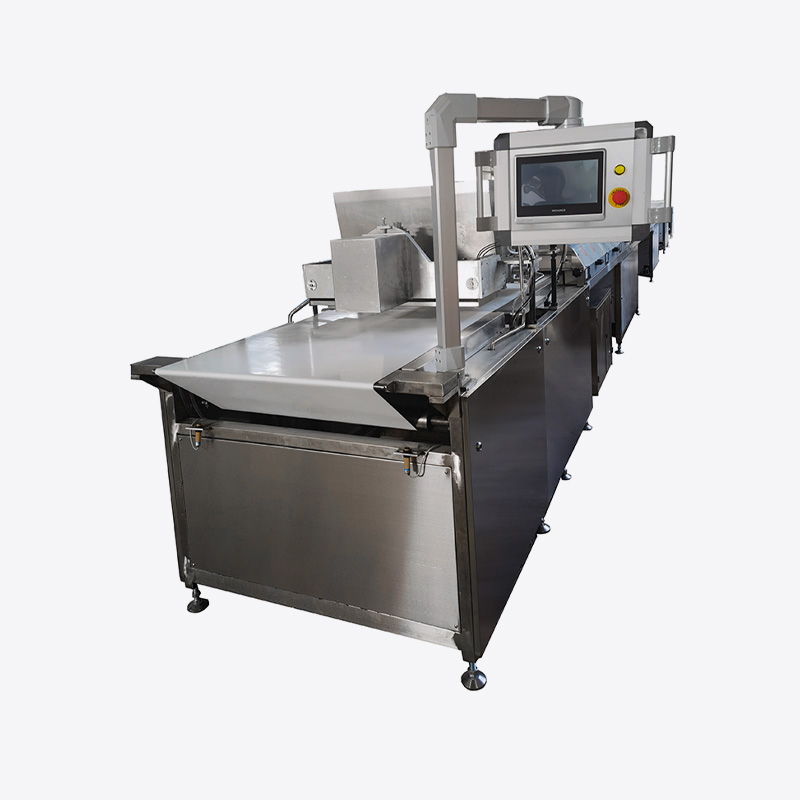
The process normally begins with ingredient preparation and mixing. Once the mass reaches the required condition, it is transferred to the forming section. The mixture is guided through an extrusion or forming system, creating a continuous bar shape. Cutting equipment then divides the continuous product into individual portions.
Depending on the product concept, additional stages may follow.
A typical production route can include:
- Ingredient preparation
- Mixing and blending
- Feeding into the forming section
- Extrusion and shaping
- Cutting
- Cooling or conditioning
- Optional coating
- Product transfer
- Packaging
Not every factory needs all of these stages in the same arrangement. Some manufacturers may produce an uncoated bar that moves directly toward packaging. Others may add chocolate coating or another finishing process.
The important point is that the extrusion section should be considered as one part of the complete line.
What Should You Know About the Protein Bar Mixture First?
Before choosing equipment, look closely at the material that needs to be formed.
This is one of the areas where buyers sometimes focus too much on the finished product and not enough on the mixture itself.
A protein bar recipe may contain a combination of dry ingredients and binding materials. Protein powders can behave differently from cereals or grains. Nuts and seeds introduce solid pieces into the mixture. Fruit ingredients may change the texture again.
The forming equipment needs to work with this combination.
Recipe Structure Can Affect the Forming Process
Consider two bars that have a similar rectangular appearance.
One may contain a relatively smooth protein mixture. Another may contain seeds, cereal pieces, nuts, or fruit. Even though both products eventually become bars, their behavior during feeding and shaping may be quite different.
Before contacting a machinery supplier, it helps to prepare information such as:
- Main protein ingredients
- Dry ingredients
- Binding ingredients
- Inclusions such as nuts, seeds, grains, or fruit
- General texture of the mixture
- Intended product shape
- Coating requirements
- Number of recipes planned for the line
The goal is not to create a complicated technical report. A clear description of the product is usually a useful starting point for discussing the forming system.
Does the Desired Bar Shape Matter?
Yes, because the product shape influences the forming arrangement.
A conventional rectangular protein bar may use a different forming approach from a round bar, bite-sized product, or another customized shape.
The shape also affects the transition from extrusion to cutting. The continuous material needs to remain stable enough for the next stage to divide it cleanly.
For manufacturers planning several product shapes, flexibility becomes an important part of equipment selection.
| Product Requirement | What to Consider |
|---|---|
| Standard bar | Check whether the forming section suits the intended recipe |
| Different bar sizes | Consider forming and cutting adjustments |
| Multiple shapes | Review whether the system supports the planned product range |
| Bars with inclusions | Discuss how solid ingredients move through the forming stage |
| Coated bars | Check how the formed product will transfer to the coating section |
A machine should not be selected only because it can produce one sample bar. The bigger question is whether the production arrangement makes sense for the products planned over time.
How Important Is the Extrusion Section?
The extrusion section is where the prepared mixture is transformed into a continuous product shape.
For buyers, the key issue is not simply whether extrusion is available. It is how the forming section interacts with the actual recipe.
The mixture must enter the equipment in a workable condition. The forming process then needs to create a continuous shape that can move toward cutting without unnecessary deformation.
This is why product testing and recipe information can be useful during equipment discussions.
A supplier may need to understand whether the mixture is soft, dense, sticky, crumbly, or filled with larger inclusions. These characteristics can influence how the material should be handled.
Feeding Is Part of the Same Conversation
The hopper or feeding section is easy to overlook because it sits before the visible forming area.
However, poor material flow at the feeding stage can affect the entire process. If the mixture does not enter the forming section consistently, operators may see changes in product shape or interruptions in the production flow.
The feeding arrangement should therefore be considered together with the extrusion section rather than treated as an unrelated component.
What About Cutting After Extrusion?
Once the mixture leaves the forming section, it normally needs to be divided into individual bars.
This sounds simple, but the cutting stage needs to match the material coming from extrusion.
If the formed product is not stable enough, cutting can create irregular edges or affect the appearance of the bar. The cutting system also needs to fit the planned product dimensions and production workflow.
For manufacturers producing different products, the changeover process matters as well.
Questions worth discussing include:
- How is the cutting position adjusted?
- How are different product sizes handled?
- How easy is it to clean the cutting area?
- How does the cutter connect with the forming section?
- What happens when the recipe changes?
These questions are particularly useful when a factory plans to manufacture several types of bars on the same line.
Should Cooling Be Included?
Cooling or conditioning may be needed depending on the recipe and the following production stage.
A freshly formed protein bar may need time to reach a condition suitable for cutting, coating, handling, or packaging. The exact arrangement depends on the product.
For some products, cooling may be closely connected with cutting. For others, the process may use a different sequence.
The equipment should therefore be planned around the actual product route.
A buyer should not assume that every protein bar requires exactly the same cooling arrangement. Instead, the discussion should start with the recipe and the desired final texture.
How Does Chocolate Coating Change the Line?
Chocolate-coated protein bars add another stage to the production process.
After forming and cutting, the bars may need to move toward an enrobing or coating section. This creates another connection that needs to be considered during line planning.
The transfer system needs to maintain the product's shape while moving it between stages. The spacing and arrangement of equipment also need to allow for inspection, cleaning, and routine operation.
A simplified production flow may look like this:
Mixing → Extrusion → Cutting → Cooling or Conditioning → Chocolate Coating → Packaging
An uncoated product may follow a shorter route:
Mixing → Extrusion → Cutting → Cooling or Conditioning → Packaging
The correct arrangement depends on the product range.
How Many Products Will the Factory Make?
This question can change the equipment discussion considerably.
A factory producing one recipe may have a relatively straightforward production schedule. A manufacturer producing several protein bars may need more flexibility.
Different products can require different forming conditions, shapes, ingredients, and cleaning procedures.
For example, switching from a smooth protein mixture to a recipe containing nuts and seeds may require more attention to cleaning and material handling. A change in shape can also involve adjustments in forming and cutting.
Before choosing the line, consider the planned product range.
| Production Question | Why It Matters |
|---|---|
| How many recipes will be produced? | Helps define the required flexibility |
| Will product shapes change? | Influences forming and cutting arrangements |
| Will ingredients change frequently? | Affects cleaning and changeover planning |
| Will some bars be coated? | May require additional downstream equipment |
| Will new products be added later? | Helps determine future expansion needs |
This kind of planning can prevent a line from being designed around only one product.
Does Factory Layout Affect the Choice?
It can have a practical effect.
A new factory has more freedom to arrange equipment around the intended process. An existing facility may already have mixers, conveyors, cooling equipment, coating machines, and packaging equipment in fixed locations.
The new extrusion line needs to connect with what is already there.
Before installation, manufacturers can review:
- Available floor space
- Material movement routes
- Operator access
- Cleaning access
- Electrical and utility connections
- Product transfer points
- Space around maintenance areas
- Position of downstream equipment
A line can fit within a room while still creating an inconvenient working environment if operators cannot easily access important areas.
Good layout planning looks at the movement of both product and people.
How Does Cleaning Affect Equipment Selection?
Protein-based mixtures can leave residues around feeding, forming, and cutting areas. Ingredients such as syrups, nut pastes, fruit components, and sticky binders may require particular attention during cleaning.
This means cleaning should be discussed before installation rather than after the machine arrives.
Look at the areas where product contact occurs and ask how operators will reach them.
A practical cleaning plan should consider:
- How product-contact components are accessed.
- Which parts need regular removal.
- How the cutting section can be cleaned.
- How product changes are handled.
- Whether the equipment layout leaves enough working space.
A machine that is easy to understand during production may still create problems if cleaning access was not considered during the original layout.
What Information Should You Send to a Machinery Supplier?
A useful equipment discussion usually starts with product information rather than a request for a machine name alone.
A buyer can prepare a simple overview like this:
| Information | Example of What to Explain |
|---|---|
| Product | Protein bar, energy bar, cereal-based bar, etc. |
| Recipe | Main ingredients and general formulation |
| Texture | Soft, dense, firm, sticky, or mixed |
| Inclusions | Nuts, seeds, grains, fruit pieces, and similar ingredients |
| Shape | Rectangular, round, bite-sized, or custom |
| Coating | Uncoated, partially coated, or fully coated |
| Production plan | Current products and possible future products |
| Existing equipment | Mixer, cooling equipment, coating system, packaging machine |
| Factory layout | Available space and material flow |
This information gives the supplier a clearer picture of the application.
For an existing factory, photographs of the production area can also help explain the available space and equipment connections.
Should You Choose a Complete Line or Build It in Stages?
There is no single arrangement that fits every manufacturer.
A new food production facility may plan several stages together from the beginning. An established factory may already have some equipment and only need to add a forming section.
The decision depends on the existing process, investment plan, product range, and expansion schedule.
A staged approach can make sense when a manufacturer already has working equipment that can be integrated into the new process. A more complete line arrangement may be considered when the factory is starting a new production route.
The important thing is to understand how each stage will connect.
Buying one machine at a time without checking the complete production flow can create unnecessary transfer points or layout changes later.
What Common Mistakes Should Buyers Avoid?
Several problems can be reduced through better planning.
Choosing Equipment Before Explaining the Recipe
The machine name alone does not tell a supplier enough about the application. Product composition and texture can have a direct effect on forming.
Planning Only for the Current Product
If new recipes or shapes may be introduced later, this should be part of the initial discussion.
Ignoring Downstream Equipment
The extrusion section does not operate independently. Cutting, cooling, coating, and packaging all influence the final layout.
Treating Cleaning as an Afterthought
Product changeovers are part of everyday factory operation. Cleaning access should be considered from the beginning.
Focusing Only on the Machine Footprint
Floor space is only one part of the layout. Operators also need room to inspect, clean, adjust, and maintain the equipment.
How Can You Compare Different Protein Bar Extrusion Lines?
Instead of comparing machines only by appearance or a list of features, build a practical checklist around your production needs.
Ask:
- Does the forming method match the recipe?
- Can the line support the planned product shapes?
- How does the material move from mixing to extrusion?
- How does the formed bar reach the cutter?
- Is cooling required for the product?
- Will chocolate coating be added?
- How are product changes handled?
- How will operators clean the product-contact areas?
- Can the line connect with existing equipment?
- Is there room for future product development?
This approach gives buyers a clearer basis for comparing different equipment arrangements.
Frequently Asked Questions
What Is a Protein Bar Extrusion Line Used For?
A Protein Bar Extrusion Line is used to form prepared bar mixtures into continuous shapes and then divide them into individual products. Depending on the production setup, cooling, coating, and packaging stages may follow.
Can One Extrusion Line Handle Different Protein Bar Recipes?
That depends on the equipment design and the characteristics of the recipes. Ingredient structure, texture, inclusions, product shape, cleaning requirements, and changeover frequency should be reviewed before selection.
What Equipment Usually Comes Before Extrusion?
Mixing equipment is commonly located before the forming stage because the ingredients need to be combined into a workable mass before extrusion.
What Comes After Protein Bar Extrusion?
The sequence varies by product. Cutting is generally part of the forming route, while cooling, conditioning, coating, and packaging may follow depending on the finished product.
Can Chocolate Coating Be Added to a Protein Bar Line?
Yes, a coating stage can be integrated into a suitable production arrangement when the product requires it. The transfer route between forming, cooling, coating, and packaging should be planned as one process.
What Should I Prepare Before Asking for a Protein Bar Extrusion Line?
Prepare information about the recipe, product shape, ingredients, inclusions, coating requirements, existing equipment, planned product range, and factory layout. This gives the machinery supplier enough context to discuss the forming solution.
How Do You Choose a Protein Bar Extrusion Line?
The right starting point is not the machine itself. It is the product.
Understand what the mixture contains, how it behaves, what shape the finished bar needs, and what happens before and after extrusion. From there, the forming section, cutter, cooling arrangement, coating equipment, and packaging connection can be considered as parts of one production route.
For manufacturers with an existing facility, the current equipment layout also matters. A new extrusion system needs to fit into the actual workflow rather than simply occupy an available space.
For a new production project, mapping the complete process can make equipment discussions much clearer. For an expansion project, reviewing the existing material flow may reveal which stages can remain and which ones need to be changed.
A well-planned Protein Bar Extrusion Line is therefore less about choosing a machine from a list and more about matching the forming process with the recipe, product range, factory layout, and future production plans.