

 English
 Español

The short answer to the question "does cocoa liquor have alcohol?" is no. Cocoa liquor contains no alcohol, no matter how many ingredient lists you check or how carefully you read the label. The name confuses almost everyone who meets it for the first time: a food safety trainee in a bakery, a purchasing agent comparing supplier documents, a home baker staring at a block of what looks like dark chocolate. All of them are looking at the same thing, a dense paste made from ground and roasted cacao nibs. The word "liquor" describes how it flows when warm, not what it contains.
The distinction matters in practice. If you buy cocoa liquor as a raw material, dose it into a recipe, or run a chocolate production line, the fact that it contains zero alcohol changes how you store it, how you handle it, and which certificates you should demand from your supplier. Chocolate liqueur, the alcoholic drink, is a different product entirely, and the two names are confused more often than any other pair of terms in the chocolate trade.
Content
What Is Cocoa Liquor?
Cocoa liquor, also called cocoa mass, chocolate liquor, or cacao paste, is the pure product of grinding roasted, husked cacao kernels. The kernels, known as nibs, are roughly half fat and half solids. When they are milled, the fat melts and the mass turns into a thick, pourable fluid that solidifies again below about 30 degrees Celsius.
In compositional terms, a typical cocoa liquor contains:
- 50 to 58 percent cocoa butter;
- 40 to 48 percent cocoa solids, including fiber, starch, protein, and minerals;
- trace amounts of organic acids, aroma compounds, and moisture;
- zero percent alcohol.
The ingredient is unsweetened. Dark chocolate is made by taking cocoa liquor and adding sugar and usually lecithin; milk chocolate adds milk powder; white chocolate uses only the cocoa butter component. That is why cocoa liquor is the structural base of the entire chocolate category.
Where Does the Name Come From?
The word "liquor" in this context is an old English term for a liquid. It does not imply fermentation, distillation, or ethanol. During grinding, friction heats the nibs well past the melting point of cocoa butter, which sits around 33 to 38 degrees Celsius. The fat melts inside the mill, and the ground solids become a flowing suspension. Early chocolate makers simply called that flowing product "liquor" because it behaved like one.
If you read about cocoa beans being fermented after harvest, you might wonder whether alcohol enters the picture there. The fermentation step does involve naturally occurring yeasts and bacteria, but it happens in the pulp around the beans in the open air, not in a sealed vessel. Its purpose is to develop the chemical precursors of chocolate flavor. By the time the beans are dried, roasted, cracked, and ground, any residual ethanol from fermentation has evaporated or been driven off. No alcoholic beverage exists at any point in the process.
How Is Cocoa Liquor Made?
Producing cocoa liquor follows a fixed sequence, and each step changes the flavor, the color, and the processing properties of the final paste:
| Step | What happens | Why it matters |
|---|---|---|
| Harvesting and fermentation | Pods are opened and the beans are fermented in heaps or boxes for several days. | Develops flavor precursors; removes the pulp that sticks to the beans. |
| Drying | Beans are sun-dried or machine-dried to roughly 7 percent moisture. | Prevents mold growth and stabilizes the beans for storage and transport. |
| Roasting | Beans are heated to temperatures typically between 110 and 150 degrees Celsius. | Creates the characteristic cocoa aroma, loosens the shells, and reduces acidity. |
| Cracking and winnowing | A crusher breaks the beans and an air stream separates the shells from the nibs. | Removes the woody shell, leaving only the cocoa kernel. |
| Grinding and milling | Nibs are ground into a paste with particle sizes of 20 to 30 micrometers. | Melts the cocoa butter and creates the flowing liquor that feeds every later step. |
Grinding is where the material becomes "liquor." The fineness of that milling determines how smooth the chocolate will feel in the mouth and how much work remains for the refining stage. In an industrial line, ball mills do this job by crushing the nibs between moving steel balls, and the same machines are also used for nut pastes and other high-fat materials.
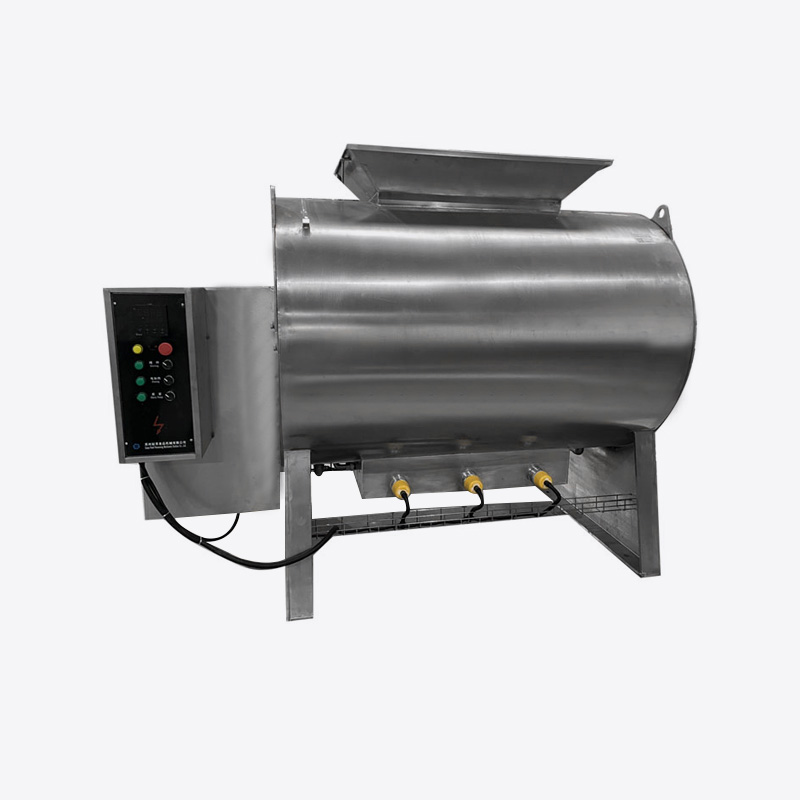
 LQMJ Chocolate Ball Mill for Fine Grinding of Cocoa LiquorThis industrial ball mill grinds cocoa nibs into smooth liquor, using alloy steel balls and 304 stainless steel contact parts. It suits chocolate and nut paste production, and appears right after the grinding stage is described.View Product →
The paste that leaves the mill is still warm and fluid. It can be poured into blocks for shipping, piped straight into a mixing tank, or pressed to split it into cocoa butter and cocoa powder. Cocoa liquor is therefore both a finished raw material and an intermediate step in the same line.
Cocoa Liquor vs. Chocolate Liqueur
Chocolate liqueur is the alcoholic drink. The two products are separated by one letter, but the difference is categorical. Chocolate liqueur is a sweetened alcoholic beverage made from spirits, sugar, and chocolate or cocoa flavoring. Cocoa liquor is a solid fat-based ingredient that only flows when warm.
| Property | Cocoa liquor | Chocolate liqueur |
|---|---|---|
| Alcohol content | 0 percent | Usually 15 to 25 percent by volume |
| Main ingredient | Ground cacao nibs | Distilled spirits plus chocolate flavoring |
| Sugar | None added | Usually high |
| State at room temperature | Solid, melts when heated | Liquid |
| Common use | Chocolate production, baking | Cocktails, desserts, drinking |
The confusion causes real problems in purchasing. If a supplier quotes "cocoa liquor" but the certificate of analysis mentions ethanol, you are looking at chocolate liqueur or a mislabeled product. A correct certificate for cocoa liquor will show alcohol as not detected or below the measurable limit. Labeling law in most jurisdictions treats the two very differently, because one is a food ingredient and the other is an alcoholic beverage subject to excise controls.
What the No-Alcohol Fact Means for a Production Line
Because cocoa liquor contains no alcohol, it can be handled with standard food-processing equipment. There is no alcohol vapor, no explosion-proof requirement, and no special ventilation demand at the mixing stage. Producers store it as a solid block, melt it in a fat melter, and pump it as a liquid, exactly as they would any other fat-based material.
The bigger concern is consistency. Cocoa liquor quality lives or dies in the milling and refining stages. If the particle size is uneven, the chocolate tastes gritty and the conche struggles to develop a clean flavor. That is why producers compare suppliers by fineness data and by the equipment behind the product. A well-matched ball mill and conche cut batch variation, and the difference between the two machines is something every buyer should check before committing to a supplier.
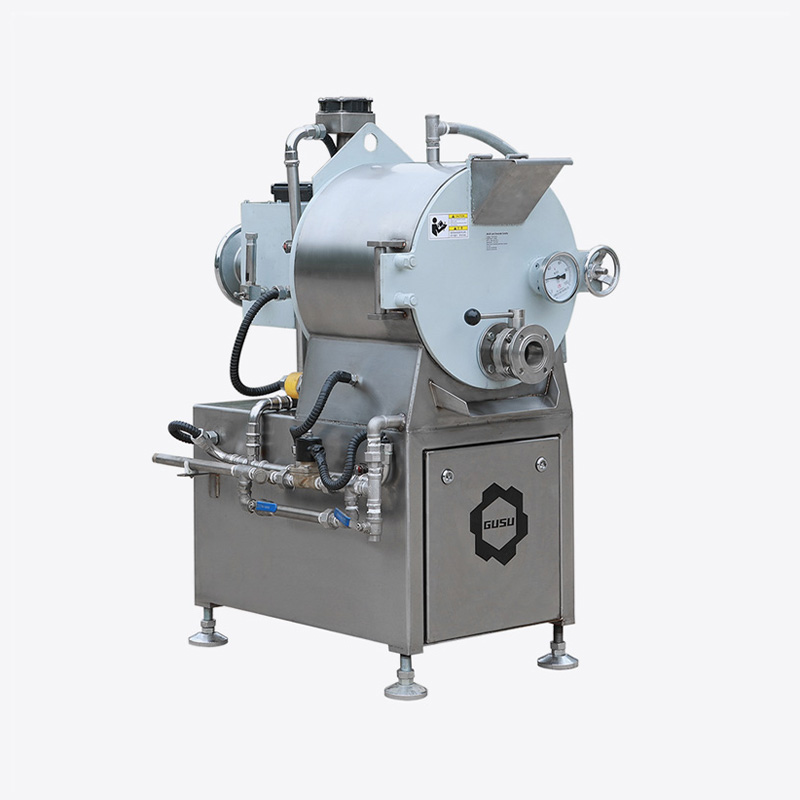
Gusu JMJ2000 Stainless Steel Chocolate Conche RefinerThe JMJ2000 is an industrial conching machine for medium to large-scale chocolate production. It refines high-viscosity masses to improve flavor and texture, and is presented alongside other Gusu machines for a complete bean-to-bar line.View Product →
For manufacturers setting up bean-to-bar production, the same reasoning applies to every step after the liquor is made: mixing, refining, tempering, depositing, and cooling all need to work as one system. Equipment suppliers who build complete lines rather than isolated machines make it easier to keep that system stable and repeatable.
From Cocoa Liquor to Finished Chocolate
Once the liquor is blended with sugar, milk powder, and lecithin, the mixture still needs two passes of treatment before it becomes chocolate you would recognize. The first is conching, a long kneading stage that drives off volatile acids and coats every particle with fat. The second is tempering, a precise heating and cooling cycle that forces the cocoa butter into a stable crystal form.
Tempering deserves respect because it is the step where most quality is won or lost. Chocolate that is not correctly tempered sets with a dull surface, a soft crumb, and streaks of white fat blooming on the surface. Chocolate that is properly tempered snaps cleanly, shines, and stays stable at room temperature.
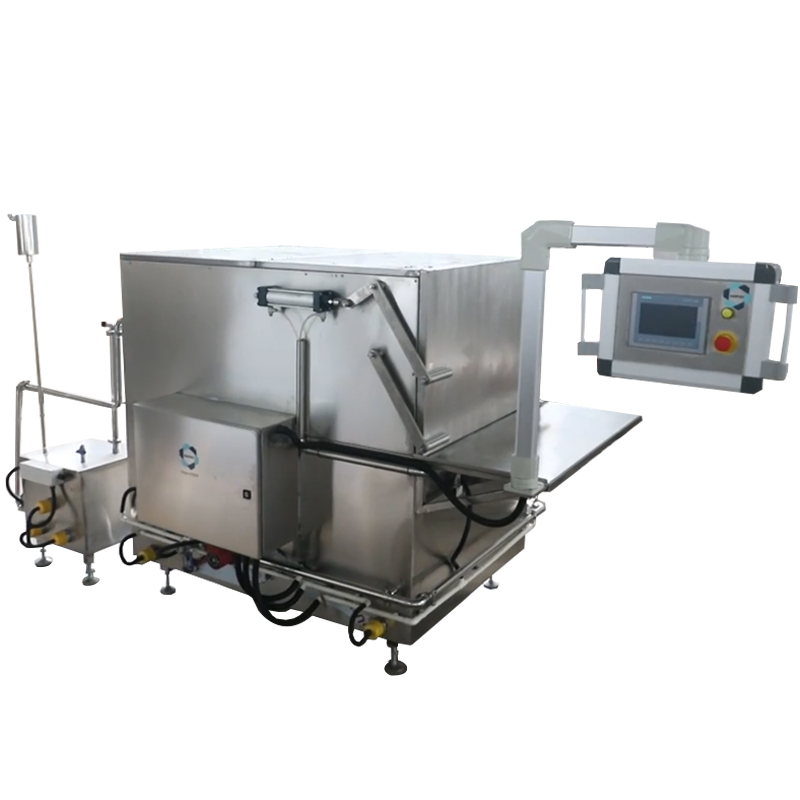
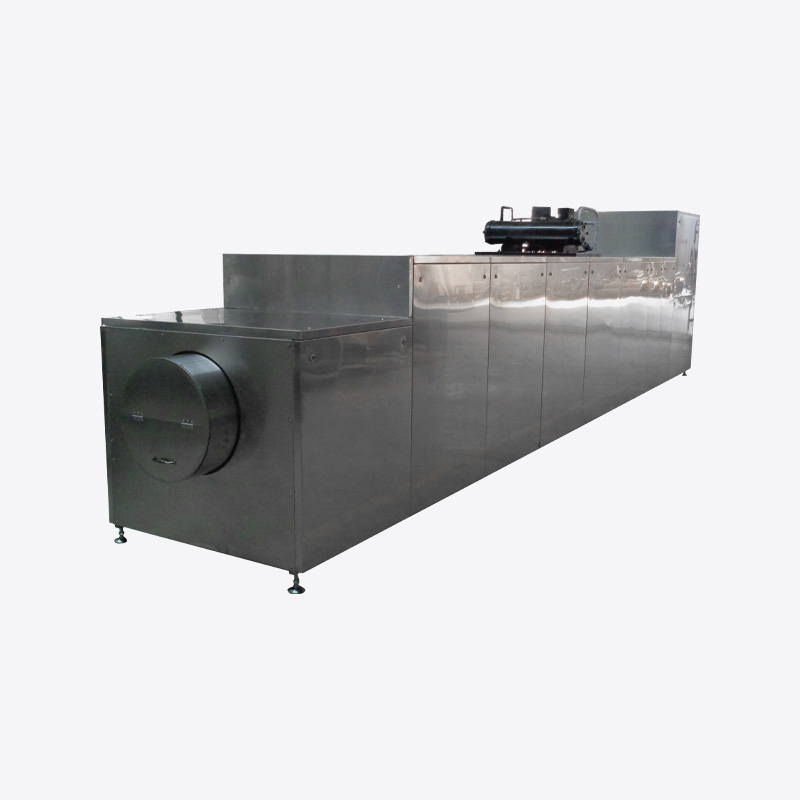
QT Series Chocolate Tempering Machine with Automatic Temperature ControlThis tempering machine uses multi-zone temperature control and hot/cold water systems to ensure proper crystal formation. It comes in capacities from 100 to 2000 kg/h, and is highlighted right after the importance of tempering is explained.View Product →
None of these steps involves alcohol, and neither does the final product. Cocoa liquor enters the line as a solid, melts into a fluid paste, and leaves as part of a chocolate bar that contains no added alcohol. The name never changes, but the chemistry does not either: from the first grinding to the last tempering stage, the ingredient remains what it always was, pure cocoa, nothing stronger.