

 English
 Español


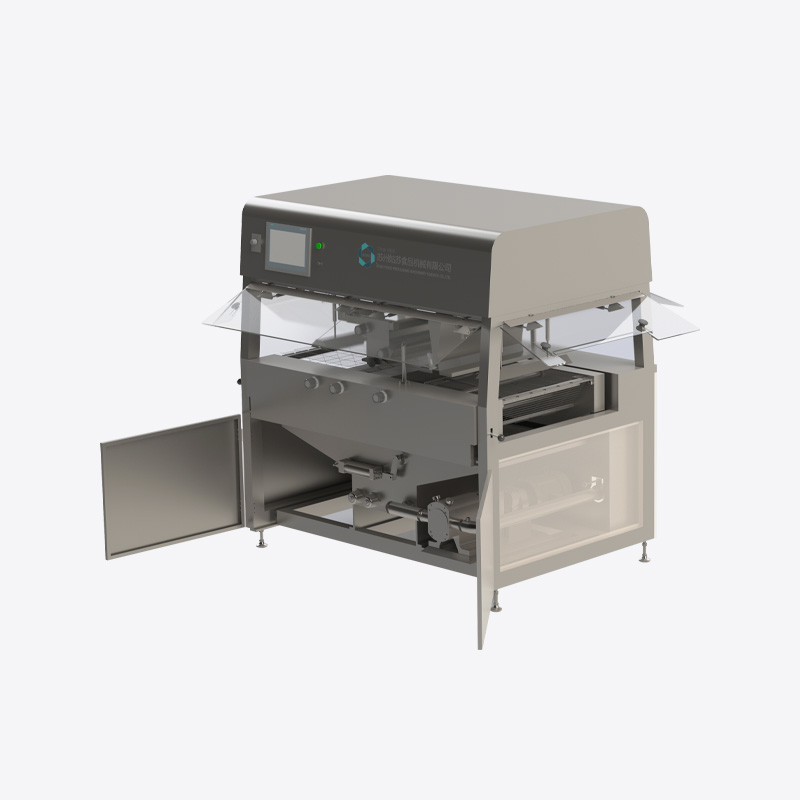
Personalized chocolate products, seasonal gift items and distinctive dessert finishes continue to shape demand across retail, bakery and gift channels. Unique lines, patterns and surface treatments help individual products stand out on shelves and in presentation boxes. The ability to change appearance for holidays, special events or promotional themes adds further commercial value. A Chocolate Decorating Machine provides a practical means of applying these surface treatments with greater consistency and less reliance on purely manual work.
Content
- 1 Commercial Value of Customized Chocolate Appearances
- 2 Range of Surface Designs Achievable with Decorating Equipment
- 3 Ease of Changing Decorative Schemes
- 4 Support for Limited-Quantity Customized Runs
- 5 Contribution of Automated Decoration to Appearance Consistency
- 6 Features Worth Examining When Selecting Decorating Equipment
- 7 Integration of Decorating Equipment into Commercial Production Sequences
- 8 Practical Steps for Matching Equipment to Custom Design Requirements
- 9 Overview of Decorative Capabilities Across Product Types
- 10 Expanding Visual Range Through Suitable Decorating Equipment and Available Support
Commercial Value of Customized Chocolate Appearances
Responding to Interest in Individualized Chocolate Items
Interest in chocolates that carry personal messages, seasonal motifs or distinctive visual finishes remains strong. Gift packs, wedding favors and limited-run dessert pieces all benefit from surfaces that look deliberate rather than generic. Equipment that can apply controlled decorative elements supports the production of these varied appearances without requiring every piece to be finished by hand.
Creating Visual Distinction Through Surface Treatment
Fine lines, grids, wave patterns and other controlled deposits of chocolate alter the visual character of a finished piece. When the same pattern is repeated accurately across a batch, the product gains a recognizable identity that can be linked to a particular brand or occasion. The decorative layer becomes part of the product's market presence rather than an afterthought.
Adapting Appearance for Seasonal and Promotional Runs
Holiday themes, anniversary promotions and short-term marketing campaigns often require rapid changes in surface design. Equipment that can store and recall different decorating paths allows production to shift from one visual scheme to another with limited downtime. The same base chocolate form can therefore serve multiple market moments simply by altering the decorative layer.
Range of Surface Designs Achievable with Decorating Equipment
Controlled Lines, Grids and Surface Patterns
Precise control of chocolate flow produces fine lines, intersecting grids, continuous waves and other geometric effects. The width and continuity of each line depend on nozzle size, flow rate and the speed of the motion system. Once the parameters are set, the same path can be repeated across successive pieces.
Surface Treatments Adapted to Product Shape
Decoration is not limited to flat surfaces. Equipment can follow the contours of molded bars, filled shells or irregular shapes, provided the motion system and nozzle orientation accommodate the geometry. The final visual result is determined by the interaction between product form, chocolate viscosity and the programmed path.
Layered Effects Using Multiple Chocolate Colors
Successive passes with different colored chocolates or compatible decorative materials build visual depth. Light and dark layers, contrasting borders or multi-tone patterns become possible when the equipment can switch or combine flow streams. The order and registration of each layer affect the clarity of the finished design.
Incorporation of Text, Symbols or Theme Motifs
Simple lettering, logos or seasonal symbols can be formed by controlled deposition when the motion system and nozzle allow sufficient detail. More complex motifs may require specialized nozzles, finer motion control or additional process steps. The practical limit of detail is set by chocolate behavior, equipment resolution and the size of the product surface.
Ease of Changing Decorative Schemes
Adjustment of Flow, Speed and Path Parameters
Output volume, travel speed, path geometry and chocolate temperature can be altered to suit different designs. Small changes in these settings produce noticeable differences in line thickness, spacing and overall appearance. Once a satisfactory combination is found, the settings can be recorded for later use.
Storage and Recall of Decorating Programs
Equipment fitted with programmable controls can retain multiple design paths. Switching from one stored program to another reduces the time spent re-establishing parameters between product runs. The ability to archive and retrieve schemes supports both routine production and experimental development.
Adaptation to Different Product Dimensions
Chocolate pieces vary in length, width, height and surface texture. Decorating paths and nozzle positions can be adjusted to match these dimensions so that the decoration remains centered and complete. Compatibility with a range of sizes increases the number of products that can share the same equipment.
Shorter Preparation Time Between Design Changes
When parameters and programs are organized systematically, the interval required to move from one decorative scheme to another shrinks. Faster changeovers allow more product variants to be produced within the same production window and reduce the cost of short runs.
Support for Limited-Quantity Customized Runs
Production of Seasonal and Event-Specific Items
Holiday assortments, wedding favors and promotional giveaways often involve relatively small quantities of each design. Automated decoration makes it feasible to produce these limited editions without dedicating large amounts of manual labor to each piece.
Evaluation of New Designs Before Larger Commitment
New patterns can be tested on sample batches, adjusted and re-tested until the appearance meets the intended standard. Market response to the trial pieces can then inform decisions about larger production quantities. The same equipment serves both development and subsequent volume runs.
Balancing Individual Appearance with Production Rate
Automation reduces the variation that naturally occurs when decoration is applied entirely by hand. Consistent line quality and placement across a batch improve overall presentation while still allowing design changes between batches. The result is a practical middle ground between full customization and high-volume uniformity.
Managing Several Design Variants Within One Production Setting
When multiple decorative schemes are required in the same facility, the equipment's ability to store programs and change nozzles or flow settings becomes important. Clear changeover procedures and compatible product handling keep the transition between variants orderly.
Contribution of Automated Decoration to Appearance Consistency
Repetition of Uniform Lines and Patterns
Stable flow control and repeatable motion paths reduce differences between successive pieces. Once the parameters are locked, each product receives essentially the same decorative treatment, which supports a consistent visual standard across the batch.
Regulation of Chocolate Flow and Deposition
Chocolate viscosity, temperature and deposition rate interact with travel speed to determine line sharpness and thickness. Maintaining these variables within a narrow range keeps the decorative layer predictable from piece to piece.
Reduction of Variation Introduced by Manual Work
Hand decoration inevitably introduces small differences in pressure, speed and path. Automated systems eliminate much of that variation, so the finished appearance remains closer to the intended design across larger quantities.
Alignment of Decorative Quality with Production Goals
The required level of detail, the desired production rate and the final appearance standard together determine the appropriate equipment configuration. Matching these elements avoids both under-performance and unnecessary complexity.
Features Worth Examining When Selecting Decorating Equipment
Precision of Motion and Deposition Control
The ability to follow a defined path accurately and to deposit consistent amounts of chocolate determines how fine and repeatable the decoration can be. Complex patterns demand higher resolution in both motion and flow.
Nozzle Range and Resulting Design Options
Different nozzle diameters and shapes produce different line widths and deposition styles. Compatibility with a variety of nozzles expands the range of visual effects that can be achieved on the same machine.
Temperature Management and Chocolate Compatibility
Chocolate must remain within a workable temperature band throughout the decorating process. Equipment that maintains stable temperature across different formulations and ambient conditions supports more reliable results.
Programmability and Ease of Operation
An interface that allows parameters to be stored, recalled and adjusted simplifies both routine production and design development. Clear controls reduce the time needed to set up new schemes.
Cleaning Access, Maintenance Needs and Line Compatibility
Food-contact surfaces must be accessible for thorough cleaning. Maintenance intervals and spare-part availability affect long-term operating cost. Compatibility with existing conveyors or upstream chocolate equipment determines how smoothly the decorator fits into the wider production sequence.
Integration of Decorating Equipment into Commercial Production Sequences
Coordination with Molding and Forming Stages
Decoration usually follows molding or forming. Timing and product orientation between the two stages must allow the chocolate surface to accept the decorative layer without distortion.
Use of Conveyors and Positioning Systems
Continuous or indexed conveyors keep products moving past the decorating head at a controlled rate. Accurate positioning ensures that each piece receives the decoration in the intended location.
Sequence from Design Setup to Finished Piece
Parameter selection, chocolate supply, automated decoration and final visual check form a continuous chain. Smooth transitions between these steps reduce idle time and product handling.
Selection of Automation Level According to Output Needs
Semi-automatic arrangements suit lower volumes or frequent design changes. Higher degrees of automation become advantageous when output volume is large and design changes are less frequent. Capacity, product variety and available resources guide the choice.
Practical Steps for Matching Equipment to Custom Design Requirements
Clarifying the Range of Products to Be Decorated
Product shape, size, surface texture and desired decorative effect are defined first. These characteristics determine the motion range, nozzle requirements and flow control needed.
Assessing Design Complexity and Required Accuracy
Simple continuous lines demand less precision than intricate multi-color motifs. The equipment's resolution and programmability must be capable of sustaining the most demanding design in the planned range.
Aligning Machine Capacity with Expected Throughput
Hourly output, frequency of design changes and typical order size influence the required production rate. Equipment that matches these figures avoids both bottlenecks and excess capacity.
Conducting Trials with Actual Chocolate and Product Forms
Sample runs using the intended chocolate formulation and product geometry reveal pattern clarity, repeatability, flow stability and cleaning demands. Results from these trials inform the final equipment decision.
Considering Ongoing Operating and Maintenance Expenses
Energy use, cleaning time, consumable parts, routine maintenance and operator training all contribute to the long-term cost of ownership. These elements are weighed alongside the initial equipment outlay.
Overview of Decorative Capabilities Across Product Types
| Design Category | Typical Visual Effect | Equipment Considerations |
|---|---|---|
| Fine continuous lines | Delicate borders or grid patterns | Precise flow control and stable motion |
| Multi-color layering | Contrasting tones and visual depth | Ability to switch or combine flow streams |
| Surface-following decoration | Patterns adapted to curved or irregular forms | Motion system that tracks product geometry |
| Text or simple symbols | Readable lettering or logos | Adequate resolution and path accuracy |
| Seasonal or thematic motifs | Holiday or promotional surface treatments | Program storage and rapid changeover |
| Limited-edition short runs | Small quantities of distinctive designs | Flexible parameter adjustment and low setup time |
Expanding Visual Range Through Suitable Decorating Equipment and Available Support
Automated chocolate decoration supports personalized surface designs, rapid switching between patterns, limited-quantity custom runs and consistent appearance across batches. Selection of equipment centers on decorating accuracy, control method, chocolate compatibility, production capacity and degree of automation. Matching these characteristics to the intended product range and output volume produces a practical production solution. Gusu Food Processing Machinery Suzhou Co.,Ltd. manufactures chocolate processing equipment including decorating systems. Review of available configurations against product geometry, target designs and production volume allows identification of equipment suited to commercial customized chocolate production.