

 English
 Español

Every chocolate production line eventually runs into the same wall: the grinding equipment that seemed adequate for early batches starts limiting quality, capacity, or both. Particle size is uneven. Throughput stalls. The texture of the finished product is inconsistent between runs. These are not random problems — they trace back to whether the chocolate conching refining machine in the line was selected to match the actual production goals, or simply purchased because it was available at the right price. Choosing the right grinder is a compound decision involving product type, scale, automation requirements, and downstream processing, and getting it right at the selection stage is substantially cheaper than correcting it during production.
Content
- 1 What a Chocolate Grinder Actually Does in a Production Line
- 2 Main Types of Chocolate Grinding Equipment
- 3 Ball Mill vs Refiner Conche: Where the Real Difference Lies
- 4 How to Match Equipment to Production Scale
- 5 How Grinding Equipment Affects Final Product Quality
- 6 Cost and Efficiency: What the Investment Actually Covers
- 7 Why Modern Chocolate Factories Favor Ball Mill Systems
- 8 Choosing a Chocolate Grinding Equipment Manufacturer
- 9 Questions Manufacturers and Buyers Often Raise
- 9.1 What Is the Difference Between a Ball Mill and a Conche?
- 9.2 Can a Ball Mill Replace a Conche?
- 9.3 What Is a Chocolate Refiner Conche Used For?
- 9.4 How Does an Industrial Chocolate Melter Affect Grinding Quality?
- 9.5 How Should a Small Chocolate Factory Approach Equipment Selection?
- 9.6 What Makes One Ball Mill Chocolate Machine Different from Another?
- 10 Bringing the Selection Decision Together
What a Chocolate Grinder Actually Does in a Production Line
The Core Function Is Particle Reduction
Grinding in chocolate production serves one primary mechanical goal: reducing solid particles — cocoa solids, sugar crystals, milk powder — to a size fine enough that the finished chocolate feels smooth on the palate rather than gritty. The equipment does this by applying sustained mechanical force across the particle mass, breaking down solid structures and releasing cocoa butter in the process.
The fineness target matters because it determines mouthfeel, texture, and how the chocolate carries flavor. Coarser particle sizes produce a perceptibly rough texture. Grinding below a certain threshold produces diminishing sensory returns while increasing energy consumption and processing time. The grinder you choose determines where in that range your product lands consistently.
Grinding Also Affects Flavor Development
This is where the distinction between equipment types becomes commercially significant. A grinding system that also incorporates conching action — agitation, aeration, and extended processing of the chocolate mass — drives off volatile acids and develops the roasted, rounded flavor profile associated with finished chocolate. Equipment that only reduces particle size without this additional processing produces a technically smooth product that may still taste flat or acidic.
For manufacturers producing premium dark or milk chocolate, the flavor development capability of the grinding system is as important as its particle reduction performance. For compound chocolate or coating applications where flavor complexity is less critical, throughput and consistency take priority.
Main Types of Chocolate Grinding Equipment
Ball Mill Chocolate Machine: Continuous Processing at Scale
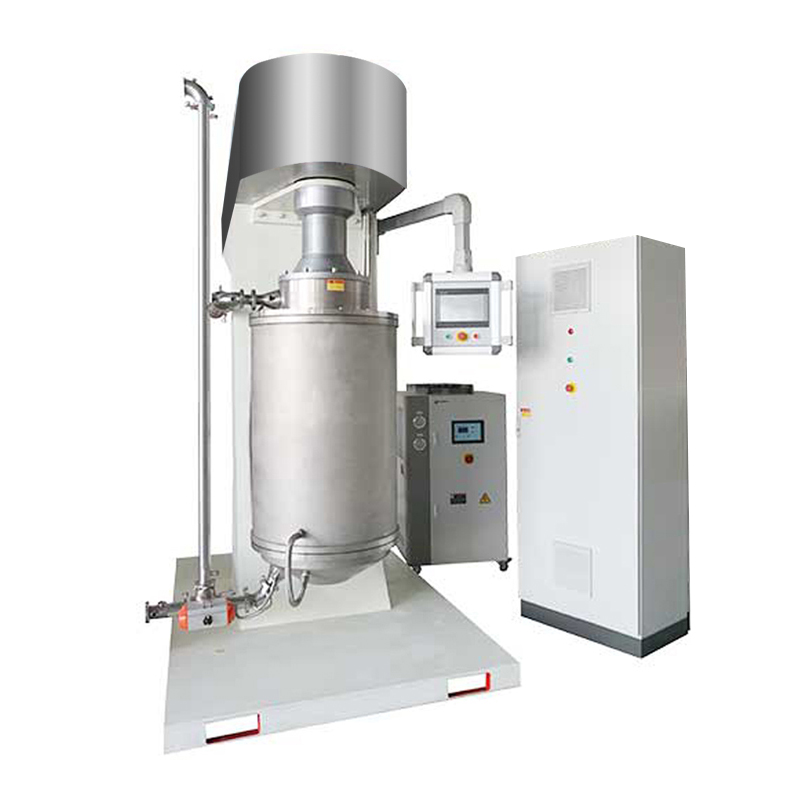
A Ball Mill Machine for Chocolate works by passing the chocolate mass through a grinding chamber filled with steel or ceramic balls. As the chamber rotates or agitates, the balls collide with each other and with the chocolate mass, breaking down particles through impact and friction. The process runs continuously — material enters one end, processes through the grinding zone, and exits at the other end at the target particle size.
The key characteristics of a Ball Mill Chocolate Machine:
- Continuous flow: Unlike batch systems, ball mills process material without interruption, which suits high-volume production where downtime between batches reduces output.
- Consistent particle size: The grinding action is mechanical and repeatable, producing stable particle distribution across large volumes.
- High throughput capacity: Ball mill systems scale well. Larger chambers, faster throughput, and modular configurations allow production lines to grow without switching equipment categories.
- Automation compatibility: Ball mills integrate readily into automated production lines with controlled inlet flow, temperature management, and discharge.
A Ball Mill for Chocolate Making is particularly well-suited to industrial-scale production where volume and consistency outweigh the need for extended flavor development. Compound chocolate, coating chocolate, and mass-market products are natural fits.
Chocolate Refiner Conche: Flavor-Forward Processing
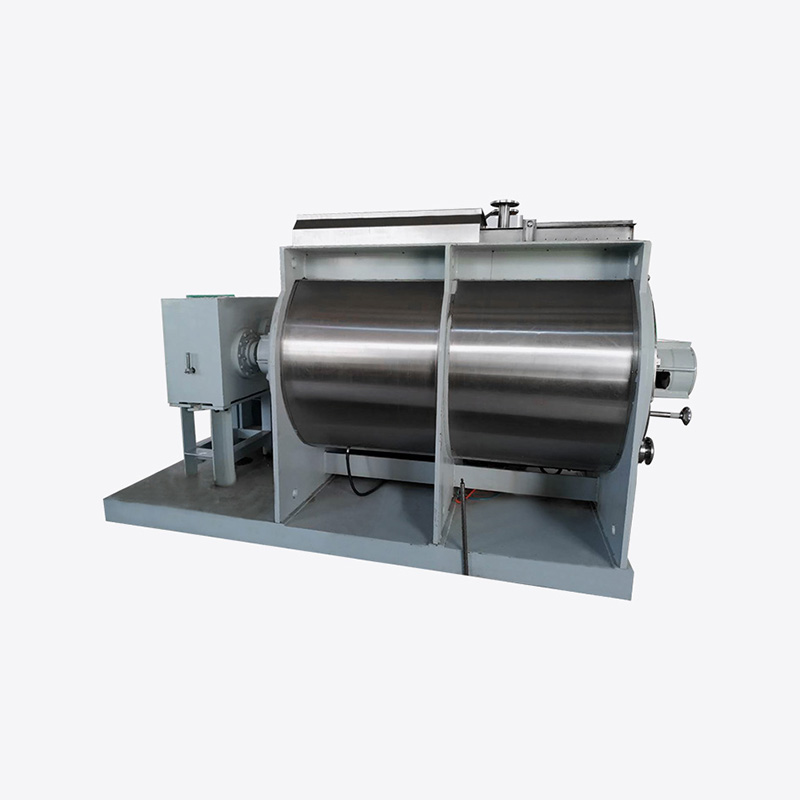
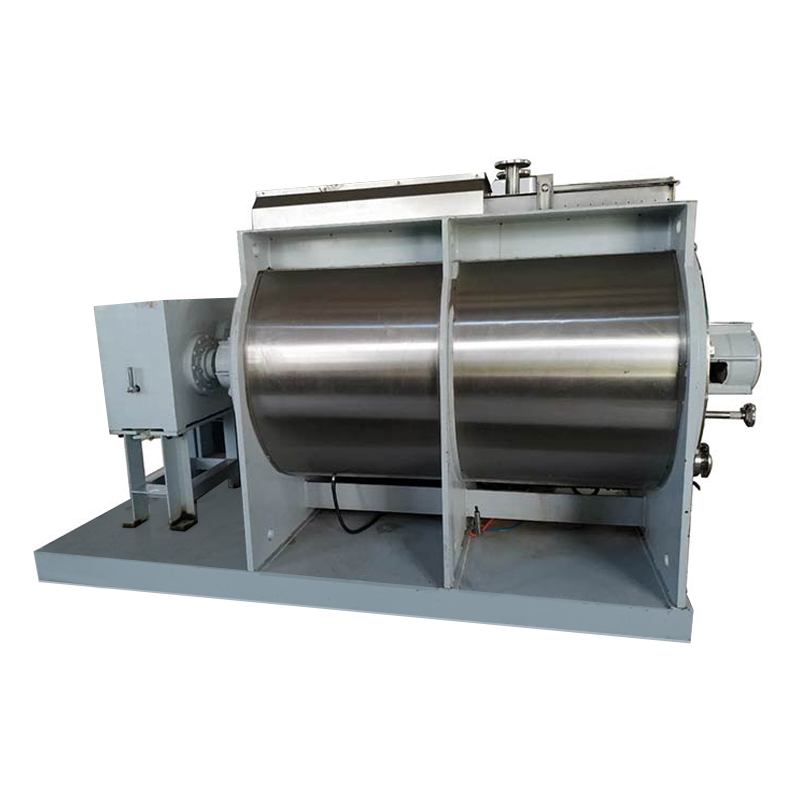
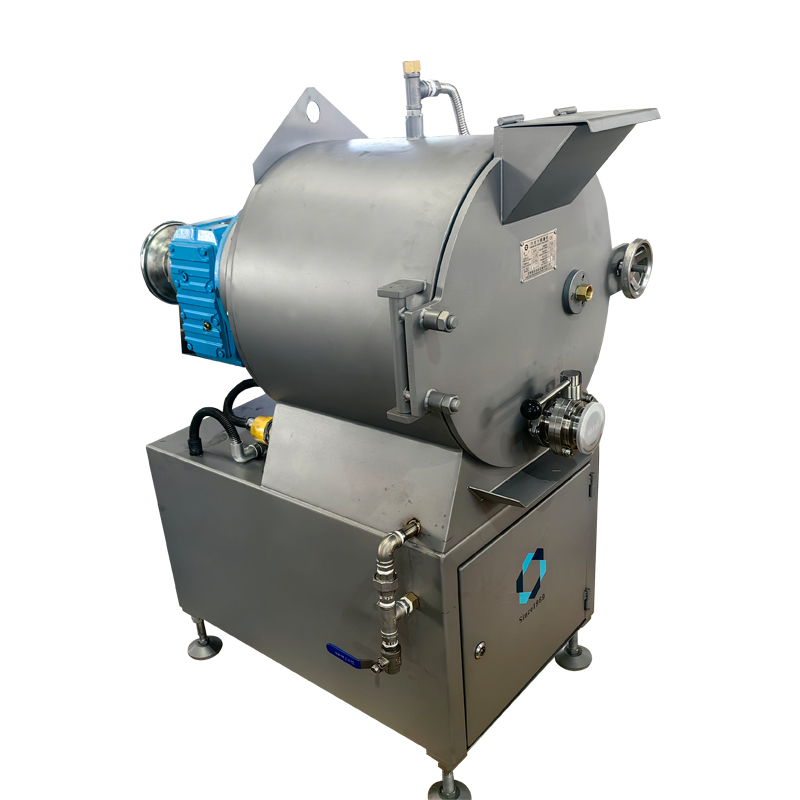
The refiner conche combines particle reduction with conching — the extended mechanical working of chocolate mass that develops flavor and modifies texture. Where a ball mill focuses on throughput efficiency, a chocolate refiner conche prioritizes the quality transformation that happens during processing time.
During conching, the chocolate mass is agitated, aerated, and maintained at a controlled temperature for an extended period. Volatile acids evaporate. The flavor compounds released during roasting bind with cocoa butter. The texture shifts from a paste-like consistency to the fluid, glossy mass that characterizes well-developed finished chocolate.
The trade-off is processing time. A refiner conche takes longer per batch than a ball mill at equivalent mass. For manufacturers whose product differentiation depends on flavor complexity — single-origin bars, premium dark chocolates, craft or bean-to-bar production — that processing time is part of the value created, not a cost to be minimized.
Industrial Chocolate Melter: The Supporting Stage
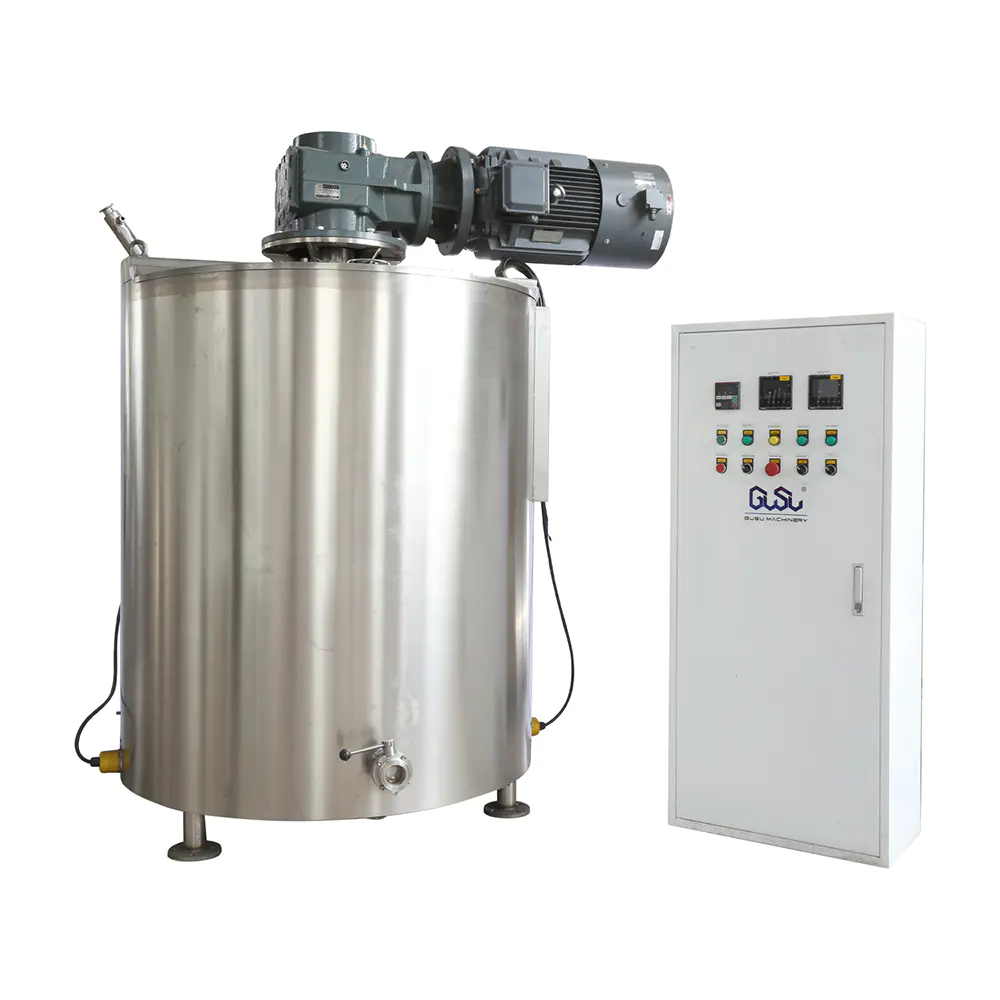
An industrial chocolate melter is not a grinder, but its role in the production line directly affects grinding performance. Before cocoa mass, cocoa butter, or chocolate ingredients can be fed into a ball mill or refiner conche, they need to be brought to a controlled liquid state at the right temperature and viscosity.
A melter that delivers inconsistent inlet temperature or poorly mixed material creates variability at the grinding stage. The grinder then has to compensate for the inconsistency, which affects both product quality and equipment wear. Treating the melting stage as a throughput-only step rather than a quality control step is a common source of grinding problems that appear to originate in the grinder itself.
Ball Mill vs Refiner Conche: Where the Real Difference Lies
| Factor | Ball Mill Chocolate Machine | Chocolate Refiner Conche |
|---|---|---|
| Processing Mode | Continuous | Batch |
| Particle Reduction Speed | Fast | Moderate |
| Flavor Development | Limited | Substantial |
| Automation Level | High | Moderate |
| Throughput Capacity | High | Lower per Unit |
| Suited To | Industrial, Compound, Coating | Premium, Craft, Specialty |
| Integration with Production Lines | Strong | Moderate |
| Energy per Unit Output | Efficient at Scale | Higher per kg |
The comparison above is not a ranking — it is a fit assessment. A chocolate refiner conche is not a slower ball mill. It produces a different result. A producer who needs to run large volumes of coating chocolate efficiently will find the refiner conche undersized for the task. A craft producer who needs to develop flavor complexity from single-origin beans will find the ball mill produces technically fine but flavor-flat results.
The question is not which machine is better. It is which machine fits the product and the production context.
How to Match Equipment to Production Scale
Small-Scale and Craft Production
Producers working with smaller batch volumes and a focus on flavor differentiation typically find that a batch-oriented refiner conche or a small ball mill with extended processing time fits their needs. The investment is lower, the control over individual batches is higher, and the flavor development that comes from slower processing aligns with the product positioning.
What to prioritize at this scale:
- Batch size flexibility: Equipment that can handle variable batch volumes without losing process control.
- Temperature management: Precise thermal control during grinding and conching is more critical at small scale because there is less mass to buffer temperature variation.
- Ease of cleaning: Frequent product changeovers are common in small-scale production, and equipment that is difficult to clean between batches is a practical liability.
Medium-Scale Factory Production
A medium-scale operation has usually moved past artisan methods but has not yet committed to fully automated continuous processing. Ball Mill Chocolate Machine configurations at this scale typically run in semi-continuous mode, with controlled feed systems, temperature monitoring, and discharge into holding or tempering tanks.
The key decisions at this scale involve:
- Throughput matching: The grinder's capacity should match the upstream (melting, mixing) and downstream (tempering, moulding) stages without creating a bottleneck.
- Automation depth: Partial automation — automated feed control and discharge with manual quality checks — often gives better returns than either fully manual or fully automated configurations.
- Maintenance access: Equipment at medium scale tends to run more hours per day than small-scale systems. Access for cleaning, bearing inspection, and ball replacement matters.
Industrial-Scale Production Lines
At full industrial scale, the chocolate conching refining machine configuration typically integrates a ball mill as the primary grinding stage, preceded by a melting and pre-mixing system and followed by conching or holding tanks. The system runs continuously across multiple shifts, with process parameters monitored and adjusted automatically.
At this scale:
- System integration takes priority over individual machine specs. How the ball mill connects to upstream mixing and downstream tempering matters as much as the mill's standalone performance.
- Redundancy planning is worth building in. A single grinding unit that stops production for the entire line when it requires maintenance is a different risk profile than a parallel-configured system.
- Energy efficiency compounds. At high annual throughput, energy consumption per kilogram of output directly affects production cost and needs to be part of the equipment selection calculation.
How Grinding Equipment Affects Final Product Quality
Particle Size and Texture
The target particle size for finished chocolate is typically in the range where the tongue cannot perceive individual particles — small enough that the texture reads as smooth rather than grainy. Equipment that cannot reliably reach or hold this target produces finished product with perceptible texture variation between batches, which creates quality control challenges and affects consumer perception.
A Ball Mill for Chocolate Making, when correctly configured and maintained, holds particle size with high consistency across continuous operation. A refiner conche produces similar fineness but also transforms the texture through the conching action — the finished product tends to be smoother and more fluid than a product that was only ground without conching.
Flavor and Aroma Retention
Grinding temperature affects flavor. Excessive heat during grinding drives off volatile aromatic compounds that contribute to the complexity of the finished chocolate. Equipment with good thermal management — jacketed chambers, controlled cooling water, temperature monitoring at the outlet — preserves more of the aromatic profile developed during roasting.
This is one area where equipment quality shows up clearly in product quality. A machine that cannot hold stable processing temperature will produce inconsistent flavor across batches, independent of how well the cocoa beans were sourced and roasted.
Production Consistency
Consistency between batches is a quality requirement and a commercial one. Customers and retail buyers depend on the finished product tasting and performing the same way across deliveries. Equipment that introduces variability — through wear, inconsistent feed, or temperature drift — makes consistency harder to achieve regardless of how tightly the recipe is controlled.
Cost and Efficiency: What the Investment Actually Covers
The upfront cost of grinding equipment is visible. The downstream costs are less obvious but often larger over the life of the equipment.
Factors worth calculating beyond the purchase price:
- Energy consumption per unit of output: A machine that is cheap to buy but energy-intensive to operate can cost more over five years than a higher-priced, efficient alternative.
- Maintenance cycle and parts cost: Ball wear in a ball mill is a recurring operational cost. How frequently balls need replacement, and at what cost, varies significantly between equipment specifications.
- Labor requirements: A more automated system costs more upfront but reduces per-shift labor input. For facilities operating multiple shifts, the labor saving compounds quickly.
- Downtime cost: Equipment that requires extended maintenance periods or has a history of unplanned stops creates production losses that are harder to quantify in advance but very tangible in operation.
- Scalability path: Equipment that cannot be expanded as production grows forces a complete replacement cycle. Systems designed with modular expansion in mind have a longer useful life relative to their initial cost.
Why Modern Chocolate Factories Favor Ball Mill Systems
The shift toward Ball Mill Chocolate Machine configurations in commercial chocolate production is not a trend — it reflects the practical requirements of operating at scale with consistent quality targets.
Several factors explain the pattern:
- Continuous operation reduces labor coordination. Batch systems require manual loading, monitoring, and discharge at each cycle. Continuous systems run with fewer touchpoints and less variability from operator to operator.
- Particle size is more controllable. The grinding parameters in a ball mill — ball size, rotation speed, feed rate — can be adjusted systematically to hit a target particle distribution and held there with minimal variation.
- Integration with downstream systems is cleaner. A continuous discharge into a holding tank with temperature control feeds directly into tempering without the batch-timing coordination that conche-heavy systems require.
- Scaling is modular. Adding capacity means adding a mill or increasing throughput parameters, not replacing the fundamental system architecture.
For producers who are combining a ball mill with a downstream conching stage — using the mill for particle reduction and the conche for flavor development — the result captures efficiency and quality without sacrificing either.
Choosing a Chocolate Grinding Equipment Manufacturer
Production Capability and Configuration Options
A manufacturer who offers a range of configurations — different chamber sizes, throughput capacities, automation levels — gives buyers more room to match equipment to actual production needs rather than adapting their process to whatever the manufacturer happens to produce.
When evaluating manufacturers, ask specifically about:
- Customization depth: Can the system be configured for your specific feed material, target particle size, and discharge requirements, or is it a fixed-specification product?
- Integration support: Does the manufacturer provide engineering support for integrating the grinder into your existing production line, or does that responsibility fall entirely on the buyer?
- After-sales service scope: What does the service coverage look like for wear parts, technical support, and on-site maintenance? For equipment running multiple shifts, this is not a minor consideration.
Testing Before Commitment
Reputable manufacturers of Ball Mill Chocolate Machines and chocolate conching refining machine systems typically offer production trials or can provide trial data from comparable production setups. Evaluating how a specific machine performs with your actual materials — your cocoa mass, your sugar particle size, your target viscosity — is more reliable than extrapolating from general specifications.
Questions Manufacturers and Buyers Often Raise
What Is the Difference Between a Ball Mill and a Conche?
A ball mill reduces particle size through mechanical impact in a continuous grinding process. A conche refines the already-ground chocolate mass through extended agitation, aeration, and heat, developing flavor and modifying texture. The two can be used sequentially for production lines that need both particle fineness and flavor development.
Can a Ball Mill Replace a Conche?
For particle size reduction, yes. For flavor development, no. If the production goal is texture-smooth chocolate with complex flavor, both stages are needed. If the goal is coating chocolate or compound chocolate where flavor complexity is secondary, a ball mill alone may be sufficient.
What Is a Chocolate Refiner Conche Used For?
It serves both refining — reducing particle size — and conching — developing flavor and modifying texture — in a single unit. It is particularly suited to premium chocolate production where flavor is a key product differentiator.
How Does an Industrial Chocolate Melter Affect Grinding Quality?
It determines the consistency of the material entering the grinder. Inconsistent inlet temperature or poorly melted ingredient blends create variability in the grinding stage that is difficult to correct downstream.
How Should a Small Chocolate Factory Approach Equipment Selection?
Scale matters. A small factory with craft positioning benefits from batch-oriented processing that allows control over individual runs. A small factory aiming to grow toward medium-scale production may be better served by a smaller ball mill that can scale, rather than batch equipment that will need replacement as volume grows.
What Makes One Ball Mill Chocolate Machine Different from Another?
Chamber design, ball material, rotation mechanism, thermal management, and automation capability all vary between manufacturers and specifications. Two machines with similar listed throughput can produce significantly different results in practice. Testing with actual production materials is the only reliable way to verify performance.
Bringing the Selection Decision Together
Choosing a chocolate grinder is not a single-variable decision. The grinding system shapes product texture, flavor, production consistency, and operational cost over the life of the equipment — which means the selection logic has to work through product requirements, scale, automation depth, and total cost of operation before settling on a configuration. A Ball Mill Chocolate Machine suits producers who need continuous throughput with stable particle control. A chocolate refiner conche suits producers who need flavor development alongside refining. Many serious production lines use both in sequence, letting each do what it does well. If you are evaluating grinding equipment for a new line or an upgrade and want to discuss configurations, trial data, and production-specific requirements, Gusu Food Processing Machinery Suzhou Co.,Ltd. works with chocolate manufacturers across production scales and can help match equipment specifications to actual production goals. Reaching out with your product type, throughput target, and current setup is a practical starting point.