

 English
 Español

Wrong equipment purchases hurt — not just at the point of payment, but for years afterward in the form of production slowdowns, quality complaints, and repair bills that keep arriving. Chocolate manufacturers know this better than most. A machine that grinds unevenly, overheats under load, or turns into a cleaning nightmare can quietly drain resources long after the invoice is paid. That is the context worth keeping in mind when evaluating a Ball Mill Machine for Chocolate — because the real cost of a bad decision rarely shows up on the purchase order.
Content
- 1 Grinding Performance Is Where Evaluation Should Start
- 2 Does the Machine Match Your Production Volume?
- 3 Temperature Control Affects Both Quality and Equipment Life
- 4 Material and Construction Standards Matter More Than Appearance
- 5 Cleaning and Maintenance: The Hidden Cost Drivers
- 6 Automation and Control Features Influence Operational Efficiency
- 7 Continuous vs. Batch Operation: Which Configuration Fits Your Process?
- 8 Supplier Reliability Is Part of the Equipment Decision
- 9 A Practical Pre-Purchase Checklist
Grinding Performance Is Where Evaluation Should Start
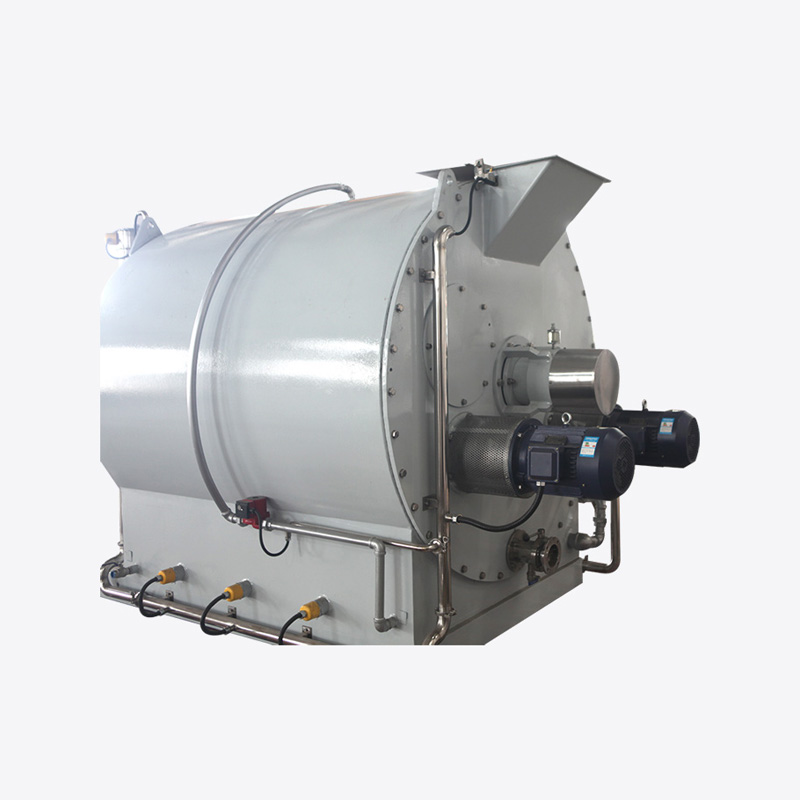
Particle size reduction sits at the heart of what any ball mill for chocolate making actually does. Get this wrong and nothing else compensates for it.
When assessing grinding performance, pay attention to:
- Particle size range: Does the machine reliably hit the fineness your formulation needs — not just on a demo run, but batch after batch under real production conditions?
- Grinding consistency: A machine that performs well during a factory visit but drifts once it is running for eight hours straight is a problem waiting to happen. Push suppliers on how performance holds across extended cycles.
- Milling media quality: The grinding balls themselves matter more than buyers often realize. Poorly finished or mismatched media creates uneven refining and chews through the chamber lining faster than expected.
- Chamber geometry: How material moves through the grinding chamber affects both processing time and energy draw. An awkward flow path is not always obvious from the outside.
Smooth chocolate texture is not a marketing claim — it is an outcome of consistent, controlled particle reduction. If the grinding performance cannot be verified clearly, that is reason enough to keep looking.
Does the Machine Match Your Production Volume?
Capacity mismatches show up in different ways. Too small and you are running extra shifts to cover demand. Too large and capital sits idle while maintenance costs accumulate on a machine that never runs at its intended load.
Key questions worth settling before any purchase decision:
- What does actual working volume per batch translate to in finished product output across a full production day?
- Can the machine sustain continuous operation, or does it need scheduled rest periods to cool down between cycles?
- How does throughput behave when the chocolate mass runs thick — higher fat content, lower temperature, heavier viscosity?
- Is there room to grow? A machine locked to a fixed capacity may need replacing entirely when production scales up.
Volume requirements change. A piece of equipment that fits perfectly today but has no room to flex creates a harder decision down the road than the one you are facing now.
Temperature Control Affects Both Quality and Equipment Life
Chocolate is unforgiving when it gets too warm during processing. Heat degrades flavor, disrupts fat crystal structure, and can cause the mass to seize in ways that are difficult to recover from. A ball mill chocolate machine that lacks solid thermal control introduces a variable that is genuinely hard to manage from the outside.
Things worth checking closely on the cooling side:
- Jacket design: Does the cooling system cover the grinding chamber evenly, or does it concentrate around the inlet and leave the rest to chance?
- Live temperature monitoring: Operators need real-time visibility, not a thermometer check at the end of a run. Look for clear, accessible readouts.
- Performance under sustained load: Short-cycle cooling looks fine. Extended production runs are where weak systems give out. Ask for data on thermal behavior over longer periods.
- Designed for chocolate specifically: Cooling systems borrowed from other food processing applications often underperform with high-fat, high-viscosity chocolate paste. It is worth confirming the design was built with this material in mind.
Thermal management failures tend to be subtle at first — a slight flavor shift, occasional thickening, minor texture variation. By the time the problem is obvious, the damage is already done.
Material and Construction Standards Matter More Than Appearance
A machine can photograph well and still fall short on the inside. In chocolate production, what the equipment is made of matters in two distinct ways: food safety compliance for product-contact surfaces, and structural durability for everything else.
Construction points that deserve direct verification:
- Product-contact surfaces should be food-grade stainless steel, finished smooth enough to clean thoroughly and resistant to the fatty acids and sugars in chocolate.
- Seals and gaskets need to be rated for food contact — not just technically compliant but practically resistant to the conditions chocolate production creates.
- The frame needs to handle sustained vibration and mechanical load without loosening joints or developing stress points over time.
- Welds on product-contact areas should be ground flush. Any crevice where chocolate can sit and harden becomes a hygiene problem.
It sounds basic. And yet construction shortcuts show up regularly in equipment that looked fine during inspection and started causing problems six months into operation.
Cleaning and Maintenance: The Hidden Cost Drivers
Purchase price is visible. Maintenance costs are not — at least not until the machine is running and the cleaning shifts are eating into production time. A ball mill for chocolate making that takes hours to strip down, clean, and reassemble after every product change has a real operational cost that does not appear on any quote.
Maintenance factors worth digging into before signing off:
- Cleaning access: Can the grinding chamber be reached and cleaned without specialist tools or lengthy disassembly? A machine that is annoying to clean tends to get cleaned less thoroughly.
- Wear parts and sourcing: Grinding media, seals, and chamber liners all wear out. How readily can replacements be sourced, and from where? A machine dependent on a single distant supplier for critical parts is a supply chain risk.
- Documented service intervals: Ask for the actual maintenance schedule in writing. Vague answers here often mean maintenance requirements are more demanding than the supplier wants to highlight upfront.
- Known failure points: Every machine has them. Ask which components wear fastest and what replacement looks like in practice — cost, time, technical difficulty.
The machines that look affordable often become expensive once maintenance reality sets in. Asking these questions early is far less painful than discovering the answers mid-production.
Automation and Control Features Influence Operational Efficiency
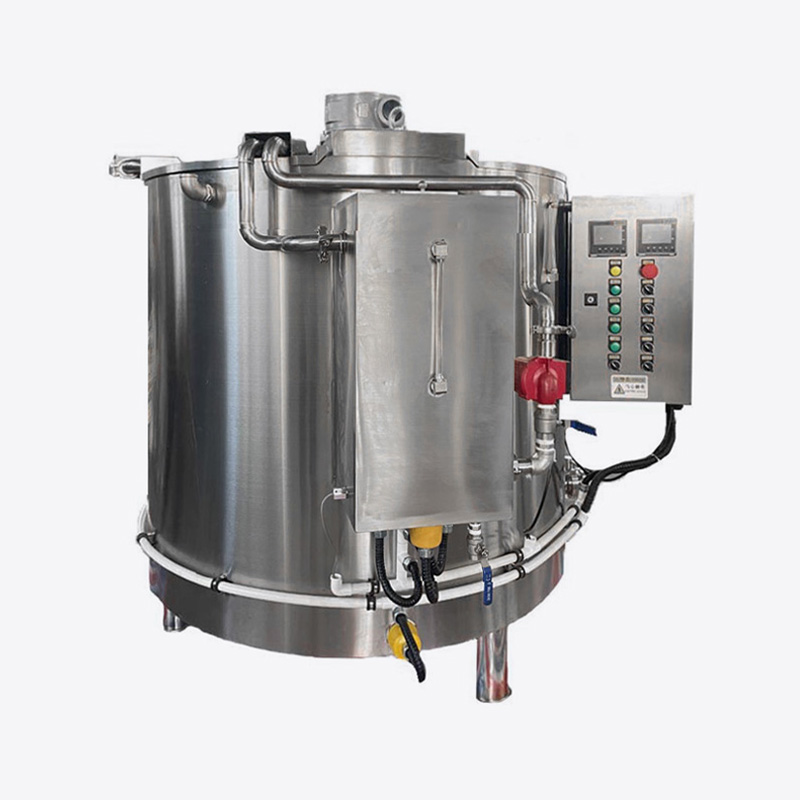
There is a meaningful difference between a machine an operator has to watch constantly and one that holds its settings reliably across a full shift. For industrial chocolate production, the gap between manual and automated control shows up in consistency, labor cost, and documentation quality.
| Feature | Why It Matters |
|---|---|
| PLC control system | Locks in repeatable process parameters and cuts down on operator-driven variation |
| Digital temperature display | Gives real-time visibility without manual intervention |
| Automated circulation | Keeps material moving consistently without someone monitoring flow |
| Variable speed control | Lets you tune refining intensity when switching between formulations |
| Data logging capability | Supports batch records and traceability without extra administrative work |
Not every production environment needs all of these. A small operation running a single formulation has different requirements than a factory switching between product lines daily. The point is to match the automation level to the workflow — not to chase features that will never get used, but not to skip ones that would genuinely reduce production friction.
Continuous vs. Batch Operation: Which Configuration Fits Your Process?
This decision shapes how the machine integrates with everything around it — not just how it runs in isolation.
Batch configuration:
- Handles a set volume of chocolate per cycle before stopping
- Practical for operations running multiple recipes or smaller production quantities
- Requires active operator involvement at the load and unload stages
- Offers flexibility that continuous systems cannot easily match
Continuous configuration:
- Material flows through without interruption between cycles
- Suits high-volume, standardized production where throughput consistency matters
- Connects more naturally to downstream tempering or filling systems
- Demands consistent incoming material quality to maintain stable output
Neither is inherently better. The right answer depends on how your production line is structured, how often formulations change, and what the equipment upstream and downstream actually requires. Getting this choice wrong is not catastrophic, but it does create friction that shows up every single production day.
Supplier Reliability Is Part of the Equipment Decision
A well-built machine from a supplier who disappears after delivery creates a different kind of problem — but a real one. Spare parts that take months to arrive, technical support that goes unanswered, and service engineers who are never available turn equipment issues into extended production stoppages.
When sizing up a supplier, a few things are worth probing:
- Does their documented experience cover chocolate processing specifically, or are they adapting general food machinery experience to a specialized application?
- Can they provide references from comparable production environments — not just testimonials, but actual contacts willing to speak about equipment performance over time?
- Are certifications current and relevant to the markets the equipment will operate in?
- What does after-sales support actually look like — response times, parts lead times, remote troubleshooting capability?
- How they communicate during the sales process tends to predict how they behave when something goes wrong. Slow responses and vague answers before the purchase rarely improve afterward.
Sourcing a Ball Mill Machine for Chocolate is a long-term commitment. The supplier relationship does not end at the loading dock.
A Practical Pre-Purchase Checklist
Before any final decision is made, running through a structured review catches the gaps that are easy to overlook when attention is focused on headline specs and price:
- Grinding fineness verified against actual product specification
- Production capacity cross-checked against realistic output targets
- Cooling system assessed specifically for chocolate processing conditions
- Food-grade material compliance confirmed across all product-contact surfaces
- Cleaning process walked through step by step — not just described
- Spare parts availability and maintenance schedule documented in writing
- Automation features mapped against the real workflow, not an ideal one
- Batch vs. continuous configuration aligned with upstream and downstream process
- After-sales support capability verified through direct conversation
- Relevant certifications reviewed and confirmed current
Going through this list while there is still room to negotiate or walk away is always easier than doing it after the equipment is on the production floor.
Purchasing a chocolate ball mill rewards patience and specificity. The variables that separate equipment that performs reliably for years from equipment that becomes a recurring problem — grinding consistency, thermal control, build quality, cleaning practicality, supplier dependability — are all things a buyer can evaluate before committing. None of it requires guesswork. It requires asking the right questions, pressing for straight answers, and treating the decision as the long-term operational choice it actually is. For chocolate manufacturers who want industrial-grade processing equipment supported by genuine technical knowledge and responsive service, Gusu Food Processing Machinery Suzhou Co., Ltd. brings deep experience in chocolate machinery to buyers who need more than a catalog and a quote. Their team is a practical starting point for matching equipment specifications to the real demands of your production environment.