

 English
 Español

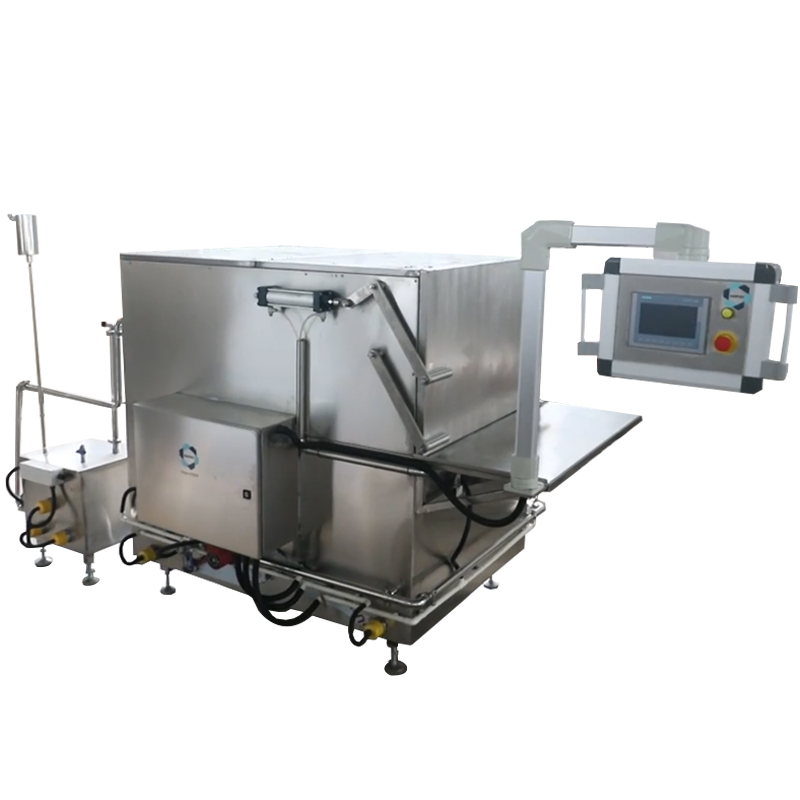
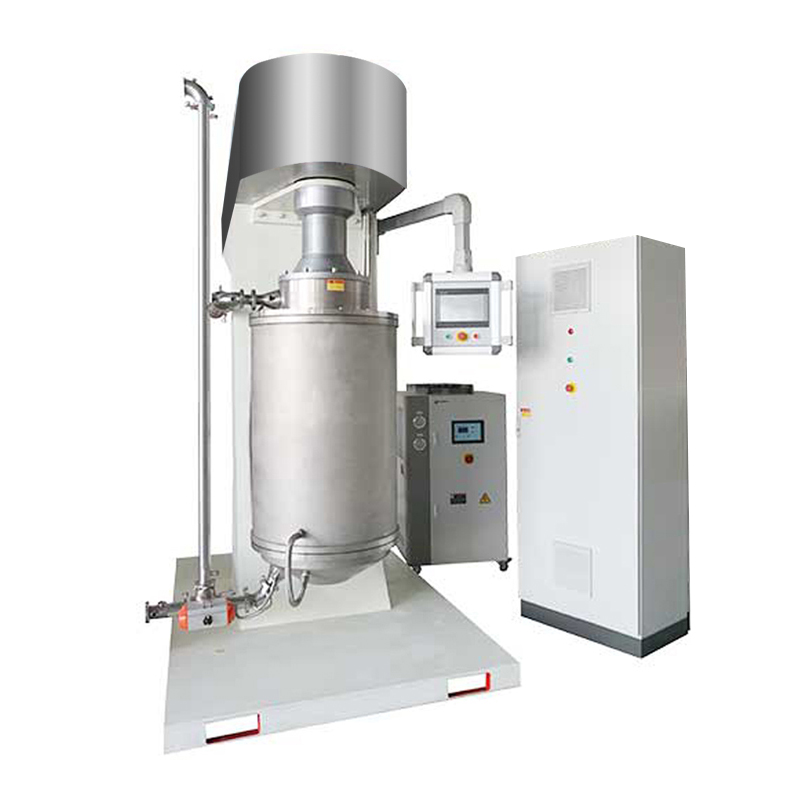
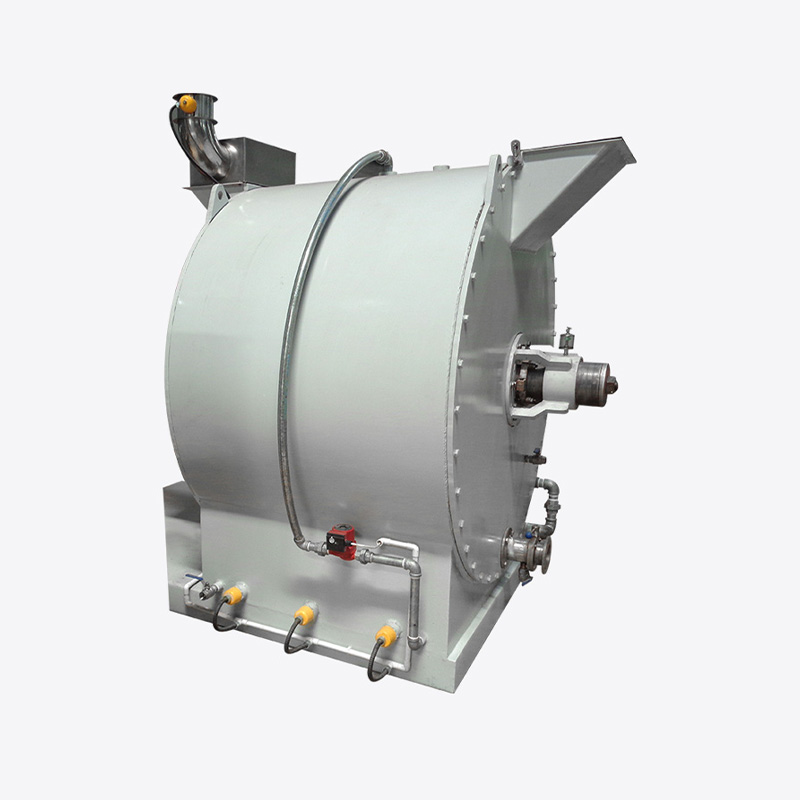
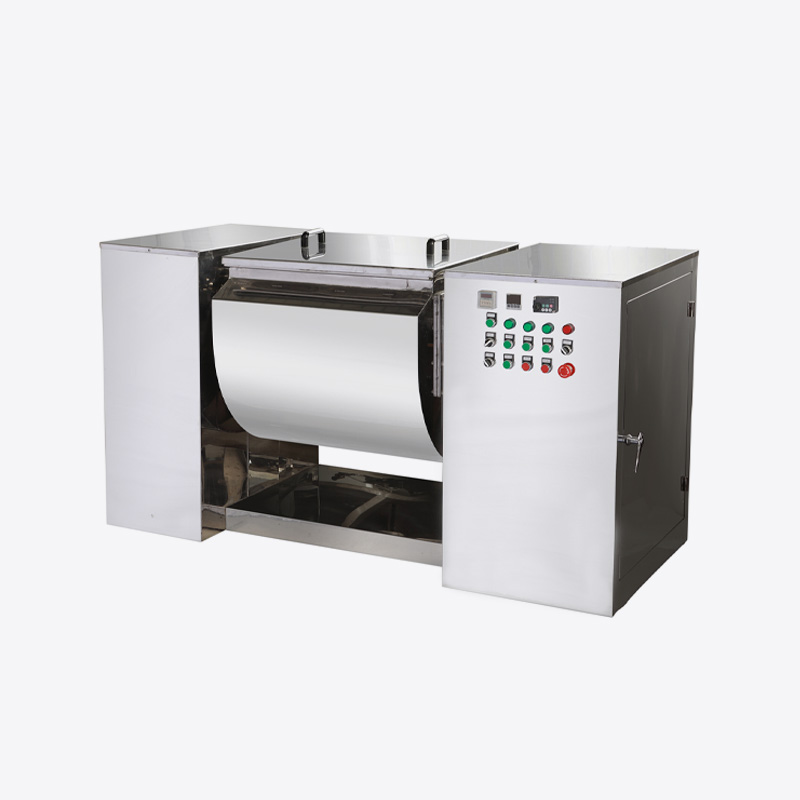
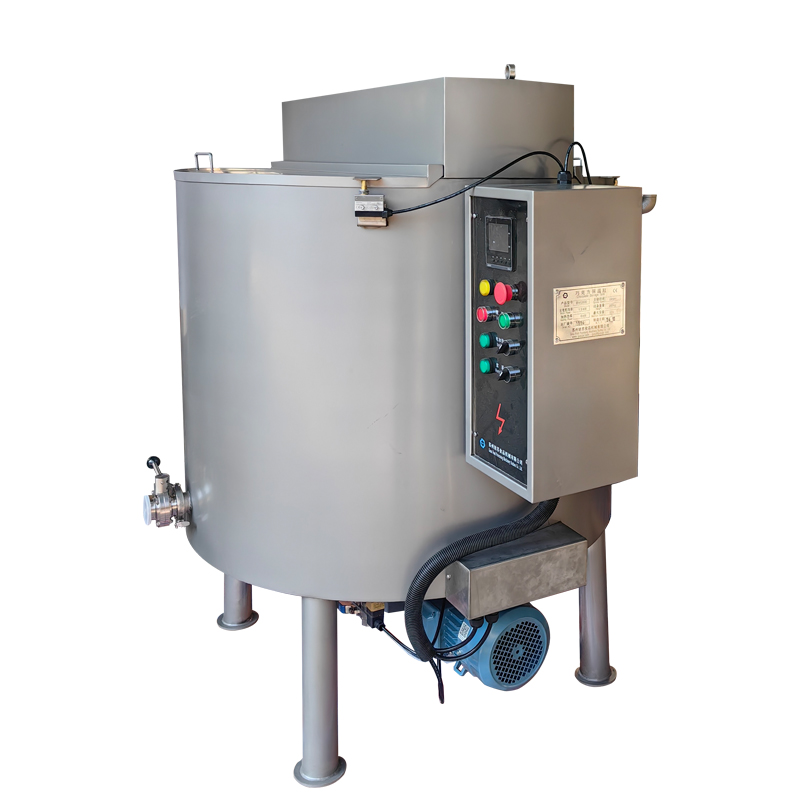
Chocolate that feels gritty on the tongue is not a minor flaw — it is a product quality failure. The issue is almost never the recipe. It is particle size. Raw cocoa solids, sugar crystals, and milk powder all arrive as coarse materials, and mixing them together does not make them fine. Something has to reduce those particles to a scale the tongue cannot detect. That process is grinding, and the industrial standard for achieving it efficiently and consistently in chocolate production is the Ball Mill Machine for Chocolate : a continuous wet-grinding system that processes chocolate paste by driving steel media through the liquid mass at high speed, breaking down particle structures to the fineness that separates premium-feel chocolate from everything else.
Content
- 1 Why Does Particle Size Determine Texture in Chocolate?
- 2 What Happens Inside a Chocolate Ball Mill?
- 3 How Fine Does Chocolate Need to Be?
- 4 Is Ball Milling the Same as Conching or Refining?
- 5 Why Does Industrial Chocolate Production Favor Ball Mills?
- 6 How Does Viscosity Interact With Grinding Performance?
- 7 What Distinguishes a Quality Ball Mill for Chocolate Making?
- 8 Does the Ball Mill Also Affect Flavor Development?
- 9 Choosing the Right Equipment Partner
Why Does Particle Size Determine Texture in Chocolate?
The Biology of Mouthfeel
The human tongue is a sensitive instrument. It cannot perceive individual particles below a certain size threshold — somewhere in the fine micron range — but it detects anything above that clearly. Sugar crystals at a coarser grind feel sandy. Cocoa solids that have not been reduced far enough create a dry, rough sensation that no amount of fat or flavoring can fully mask.
The relationship is direct: smaller, more uniform particles produce a creamier, more continuous sensation in the mouth. The paste feels like it melts rather than dissolves — which is exactly what premium chocolate is supposed to do.
This is not a sensory preference. It is a textural engineering problem with a measurable solution. The target is a particle distribution fine enough that the tongue registers the mass as smooth rather than particulate. Achieving that consistently across large production volumes requires mechanical precision, not just careful mixing.
What Happens Inside a Chocolate Ball Mill?
Grinding Mechanics in a Wet System
A chocolate ball mill operates as a continuous wet-grinding system. The vessel — typically cylindrical — is loaded with small steel balls, often several millimeters in diameter. Liquid chocolate paste is fed into the vessel and circulated continuously through the grinding media.
As the vessel rotates or the agitator inside it turns, the steel balls move against each other and against the vessel wall. Chocolate paste caught between moving balls experiences two types of mechanical force:
- Impact — the ball mass collides, crushing particles between contact surfaces
- Shear — surfaces moving at different speeds drag the paste, tearing particle structures apart
Both forces act simultaneously and repeatedly as the paste circulates through the media bed. Particles that enter the mill at a coarse size exit progressively finer with each pass through the system. In continuous operation, the chocolate paste recirculates until the particle distribution reaches the target range.
The steel balls do not contaminate the product — they are retained inside the vessel while the processed paste exits through a screen or separation gap sized to allow paste flow but retain the grinding media.
How Fine Does Chocolate Need to Be?
Understanding the Target Particle Range
Different chocolate products have different texture requirements, and the grinding target varies accordingly. The principle, though, is consistent: the finer and more uniform the particle distribution, the smoother the sensory experience.
Milk chocolate typically requires a finer grind than dark chocolate to achieve the same perceived smoothness, partly because milk solids add their own textural contribution. White chocolate — which contains no cocoa solids but includes sugar and milk — has a different grinding challenge because sugar can behave differently from cocoa under the same grinding conditions.
What matters in practical terms:
- Uniform particle distribution produces more consistent mouthfeel batch to batch
- Overgrinding wastes energy and can affect viscosity in ways that create processing problems downstream
- Undergrinding produces chocolate that feels unfinished regardless of flavor quality
Ball mills in industrial production are typically run with inline particle size monitoring or scheduled sampling to confirm the paste is reaching its target before being passed downstream to tempering or molding.
Is Ball Milling the Same as Conching or Refining?
Three Processes, Three Functions
Chocolate production involves several size-reduction and texture-development stages, and confusing them leads to equipment misspecification. Ball milling, conching, and roll refining each serve a different function in the production chain.
| Process | Primary Function | Mechanism | Typical Position in Production |
|---|---|---|---|
| Ball mill grinding | Particle size reduction | Steel media impact and shear | After initial mixing, before conching |
| Roll refining | Particle size reduction | Compression between metal rolls | Alternative to ball milling in some lines |
| Conching | Flavor development and texture refinement | Prolonged agitation, heat, aeration | After grinding or refining |
| Melanger / stone grinding | Gradual particle reduction | Stone wheels on granite base | Small-scale and artisan production |
Ball milling and roll refining both reduce particle size, but they do so through different mechanisms and suit different production scales. Roll refiners are effective but require careful gap adjustment and generate dry, flaked output that must be re-liquefied. Ball mills process liquid paste continuously, which integrates more naturally into high-volume production lines.
Conching is not a substitute for grinding. A conche cannot reduce large particles to fine ones — it refines texture and develops flavor in paste that has already been ground. Sending coarsely ground chocolate into a conche produces a better-flavored coarse chocolate, not a smooth one.
Why Does Industrial Chocolate Production Favor Ball Mills?
Continuous Processing and Scale Efficiency
The ball mill's advantage in industrial settings comes down to how it fits into a production line. Because it handles liquid paste continuously — feed in one end, refined paste out the other — it does not require batch loading, unloading, and cleaning between runs. A properly designed system can run extended production cycles with minimal interruption.
Key production advantages:
- Continuous output — paste moves through the mill in a controlled flow rather than in discrete batches, matching the rhythm of upstream mixing and downstream tempering
- Scalable capacity — vessel size and media load can be increased to match higher output targets without changing the fundamental process
- Consistent particle distribution — continuous circulation under controlled conditions produces more uniform results than batch processes that are inherently variable
- Temperature management — industrial ball mill chocolate machines include cooling systems that maintain paste temperature within the range that preserves viscosity and prevents premature crystallization
These characteristics make the ball mill the standard choice for manufacturers running high-volume lines where consistency and throughput matter.
How Does Viscosity Interact With Grinding Performance?
The Fluid Dynamics Problem in Chocolate Milling
Chocolate paste is not a simple liquid. Its viscosity — resistance to flow — changes with temperature, fat content, particle size, and moisture. All of these variables affect how the paste behaves inside the ball mill and, in turn, how efficiently grinding occurs.
Paste that is too thick does not circulate freely through the media bed. The balls cannot move properly, grinding contact is reduced, and energy is wasted pushing paste rather than grinding it. Paste that is too thin circulates freely but may exit the mill before particles have received sufficient grinding passes.
Managing viscosity during ball mill chocolate machine operation involves:
- Controlling jacket temperature to keep the paste fluid without overheating it
- Monitoring fat content — cocoa butter and added fats affect flow behavior directly
- Avoiding moisture contamination, which causes dramatic viscosity increases through sugar crystallization and paste seizing
- Adjusting circulation rate to match the consistency of the paste at different stages of the grind
Getting viscosity management right is as important as the grinding mechanics themselves. A mill running the right particle size target on paste with the wrong viscosity will still produce inconsistent results.
What Distinguishes a Quality Ball Mill for Chocolate Making?
Equipment Factors That Affect Production Outcomes
Not all ball mill systems perform equally, and the differences matter when the goal is consistent, scalable chocolate production. Several design and engineering factors separate well-specified equipment from generic alternatives.
- Media quality and uniformity — grinding balls must be highly spherical and consistent in size; irregular media creates uneven grinding contact and unpredictable particle distribution
- Vessel design and circulation path — the internal geometry of the grinding chamber affects how paste flows through the media bed and how evenly particles are exposed to grinding forces
- Cooling system capacity — chocolate paste generates heat during grinding; adequate cooling prevents temperature excursions that damage product quality or cause fat bloom downstream
- Screen and separation design — the mechanism that retains grinding media while allowing paste to exit must be reliable and easy to inspect and clean
- Drive system efficiency — the motor and transmission that power the agitator or rotating vessel directly affect energy consumption per unit of output
For manufacturers considering ball mill for chocolate making at scale, these engineering details translate directly into operating costs, maintenance frequency, and product consistency over the equipment's service life.
Does the Ball Mill Also Affect Flavor Development?
Grinding Has a Secondary Effect Beyond Particle Size
The primary job of the ball mill is mechanical: reduce particles. But the process is not entirely without effect on flavor. Prolonged grinding at elevated temperatures can volatilize some aromatic compounds. Conversely, the intimate mixing of fat, cocoa solids, and sugar during grinding begins the process of flavor integration that conching continues.
In some production systems — particularly those optimizing for shorter conching times — the ball mill is used more aggressively to do more of the texture and integration work, with conching focused on flavor refinement rather than texture correction. This approach reduces total processing time but requires careful temperature control during extended grinding.
The interaction between grinding time, temperature, and flavor outcome is product-specific. Manufacturers developing new formulations typically run trials to determine the grinding parameters that deliver the target particle size without adversely affecting the intended flavor profile.
Choosing the Right Equipment Partner
Chocolate texture quality is built into the process, not added afterward. The ball mill step is where particle structure is determined, and the equipment running that step shapes every batch of product that follows. Gusu Food Processing Machinery Suzhou Co., Ltd. develops industrial chocolate processing equipment including ball mill systems designed for continuous production environments. Their engineering and application teams work with chocolate manufacturers to specify equipment configurations that match production scale, paste characteristics, and output quality targets. If you are evaluating ball mill chocolate machine options for a new line, a capacity expansion, or a quality improvement project, reaching out to discuss your production requirements is a practical way to move from specification to a system that delivers the grinding performance your product actually needs.