

 English
 Español

The phrase "hot cocoa machine" means very different things depending on who's asking. To a café owner it's a countertop dispenser. To a food manufacturer it's an entire production system — a chain of precision equipment that transforms raw cocoa butter and sugar into a consistent, shelf-stable powder or liquid product at scale. This article focuses on that second category: the industrial machinery behind hot cocoa production, how each piece fits into the line, and what to look for when selecting or scaling equipment.
Content
- 1 What Hot Cocoa Machines Actually Are
- 2 The Industrial Hot Cocoa Production Process Step by Step
- 3 Key Machines in a Hot Cocoa Production Line
- 4 Powder vs. Liquid: Two Formats, Two Equipment Paths
- 5 What to Look for When Selecting Hot Cocoa Production Equipment
- 6 Scaling Up: From Pilot Batch to Full Production Line
What Hot Cocoa Machines Actually Are
At the retail and foodservice level, a hot cocoa machine is a dispenser or mixing unit that blends pre-made powder with hot water or milk. These countertop units are useful for high-volume cafes and convenience stores but have nothing to do with manufacturing the cocoa product itself.
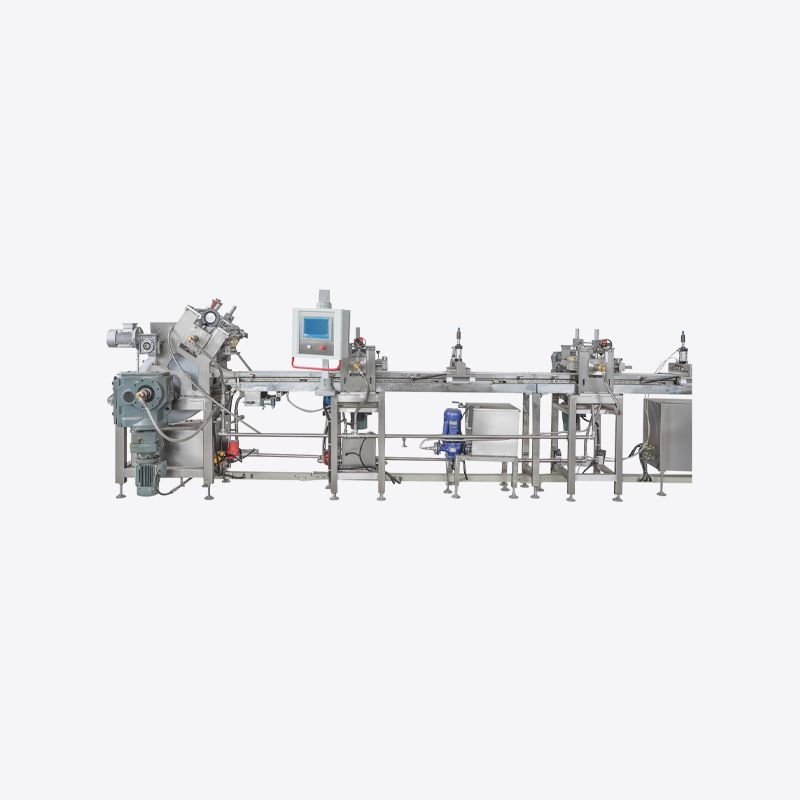
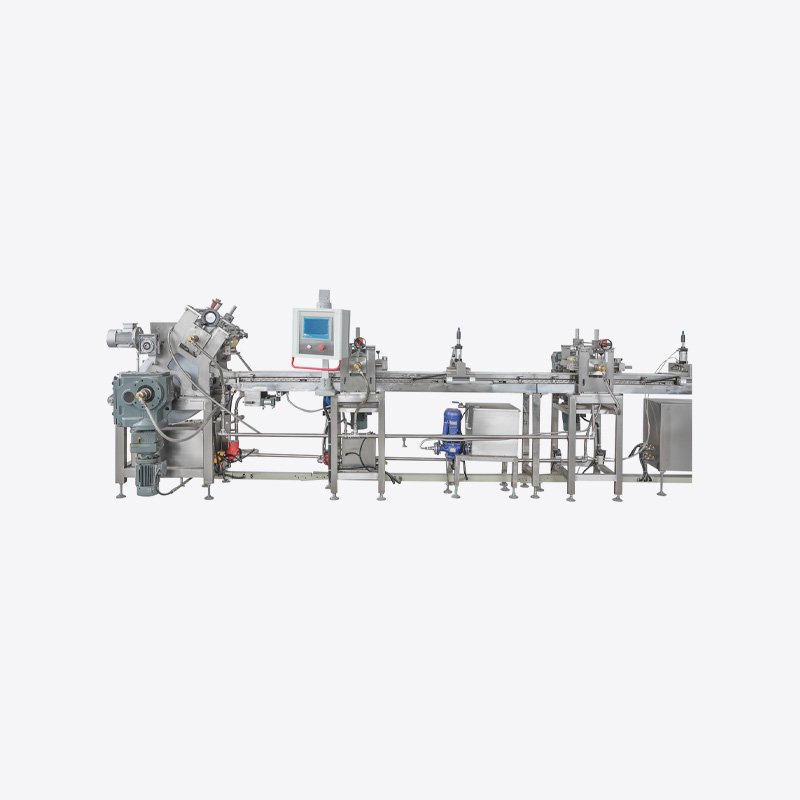
Industrial hot cocoa machines operate at an entirely different level. They are the equipment used to produce the cocoa powder, liquid chocolate base, or compound that eventually goes into those countertop dispensers — or into packaged retail products, confectionery coatings, and food manufacturing supply chains. A typical industrial hot cocoa production setup includes a fat melting system, sugar milling equipment, a ball mill or refiner, a conching unit, a tempering machine, and holding tanks. Each piece handles a distinct stage of the process, and the output quality of the final product depends on how well these stages are matched and sequenced.
Understanding this distinction matters for procurement decisions. Buying dispenser-grade equipment when your operation requires production-grade machinery — or vice versa — results in either underperformance or significant overspend. The rest of this guide addresses industrial production equipment specifically.
The Industrial Hot Cocoa Production Process Step by Step
Hot cocoa production follows a defined sequence. Each stage feeds directly into the next, and the conditions at each step — temperature, particle size, mixing time — determine the flavor, texture, and stability of the finished product.
Stage 1 — Fat melting. Cocoa butter arrives as a solid block and must be liquefied before it can be blended with other ingredients. Melting tanks heat the fat to a controlled temperature, typically between 40°C and 55°C, while continuous agitation prevents localized overheating that would degrade flavor compounds.
Stage 2 — Sugar milling. Granulated sugar is too coarse for cocoa applications. It must be ground to a fine powder — typically below 200 microns — before being incorporated into the mix. Sugar mills handle this reduction step, producing a consistent fine-ground sugar that blends uniformly with cocoa solids and fat.
Stage 3 — Ball milling. The combined ingredients — cocoa mass, liquefied fat, milled sugar, and any dry additives — are fed into a ball mill, where rotating steel balls grind the mixture to the target particle size. For hot cocoa applications, final particle size typically falls in the 15–25 micron range. As the International Cocoa Organization's cocoa processing guidance notes, particle size reduction is foundational to achieving smooth texture and good flavor release in finished cocoa products.
Stage 4 — Conching and refining. Conching develops flavor through prolonged mixing at elevated temperature, driving off volatile acids and creating the smooth mouthfeel associated with high-quality chocolate and cocoa products. This stage can last anywhere from a few hours to over 24 hours depending on the target flavor profile and product grade.
Stage 5 — Tempering. For liquid chocolate bases and coated products, tempering controls cocoa butter crystallization to produce a stable, glossy product with a clean snap. Products that skip tempering remain susceptible to bloom — the white streaking caused by unstable fat crystals migrating to the surface.
Stage 6 — Storage and transfer. Finished liquid cocoa mass or tempered chocolate must be held at precise temperatures until it is deposited, packaged, or further processed. Jacketed storage tanks with continuous agitation maintain product consistency during this holding period.
Key Machines in a Hot Cocoa Production Line
Each machine in the production chain has a specific engineering function. Here is what each one does and which specifications to evaluate during selection.
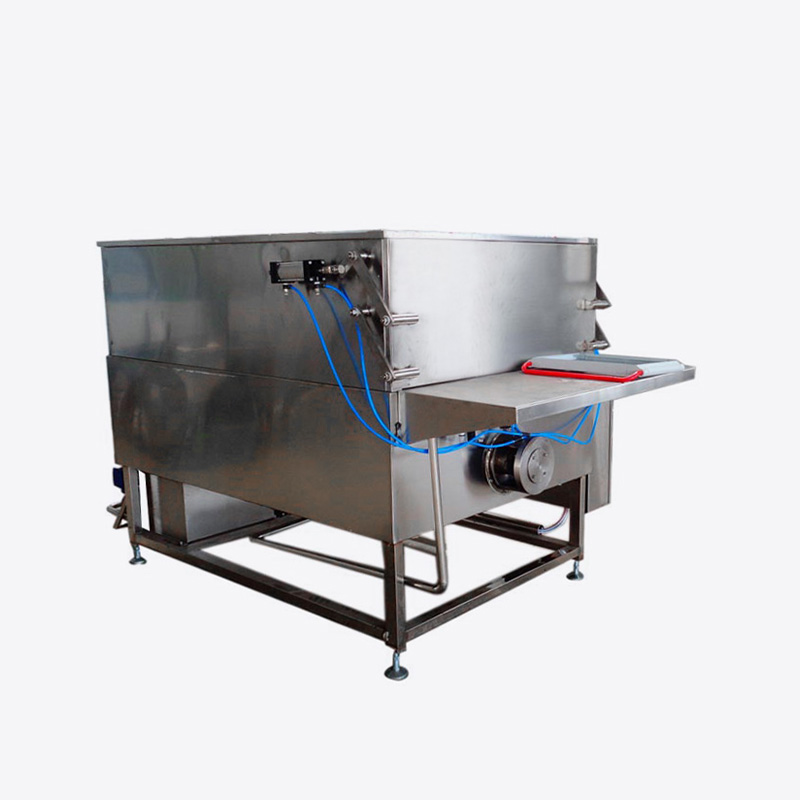
Fat melters are insulated, jacketed tanks fitted with heating elements and agitators. The key parameters are heating uniformity, temperature control accuracy (±1°C is the standard for quality production), and tank capacity matched to batch size. Larger operations benefit from continuous-flow melting systems rather than batch units. Our cocoa butter fat melting machines are available in a range of capacities with stainless steel construction and programmable temperature control for consistent results across production runs.
Sugar mills reduce granulated sugar to a fine powder suitable for chocolate and cocoa blending. The critical spec is output particle size distribution — a narrow distribution produces a more uniform blend and reduces the processing load on the ball mill downstream. Our sugar grinding mills for cocoa production deliver consistent fine-ground output with minimal heat generation, protecting sugar quality during the milling process.
Ball mills are the core particle reduction equipment in a cocoa production line. A continuous ball mill circulates the chocolate mass through a chamber filled with precision steel balls, progressively reducing particle size while maintaining temperature control. Output fineness is adjustable by controlling flow rate and ball size. Our chocolate ball mill equipment supports both batch and continuous operation, with stainless steel construction suitable for food-grade production environments.
Chocolate conches and refiners combine mechanical shear and thermal treatment to develop flavor and achieve final texture. Modern conches allow independent control of temperature, mixing speed, and aeration, giving manufacturers precise control over flavor development. Our chocolate conche and refiner machines are designed for both small-batch specialty production and continuous high-volume operation.
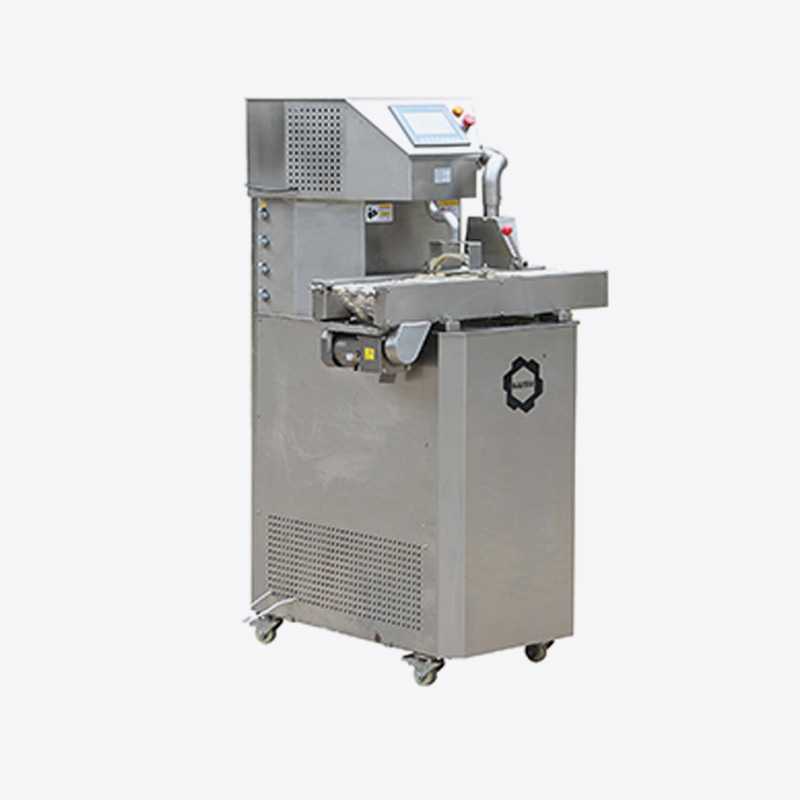
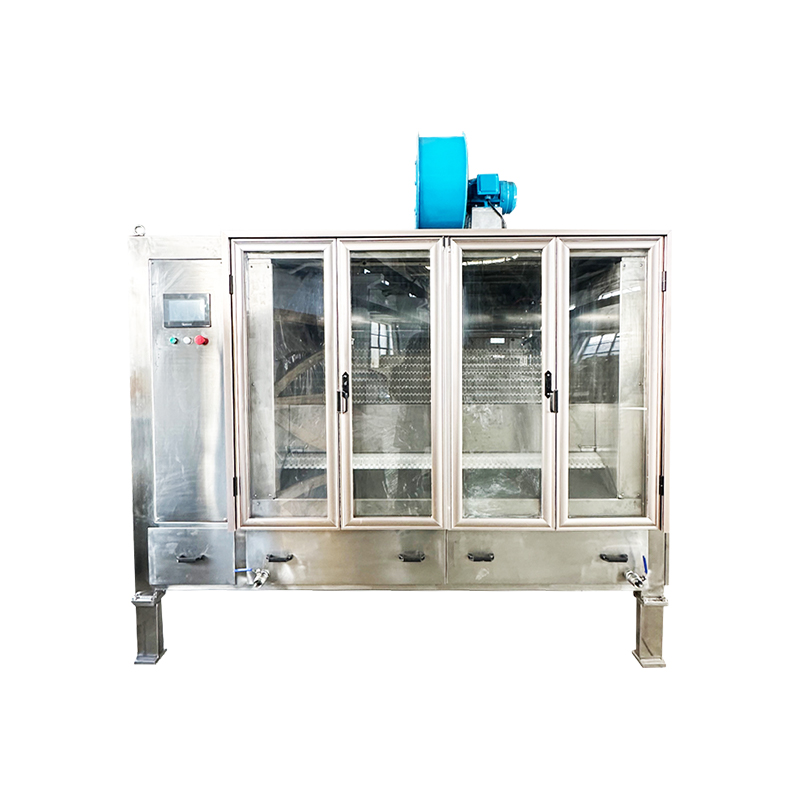
Chocolate tempering machines cycle liquid chocolate through a precise temperature program — heating, controlled cooling, and gentle rewarming — to seed the correct cocoa butter crystal form (Form V) before the product is deposited or coated. Poorly tempered chocolate blooms within days; correctly tempered product remains stable for months. Our chocolate tempering machines offer continuous tempering with digital control panels and automatic seeding systems for consistent results without operator expertise dependency.
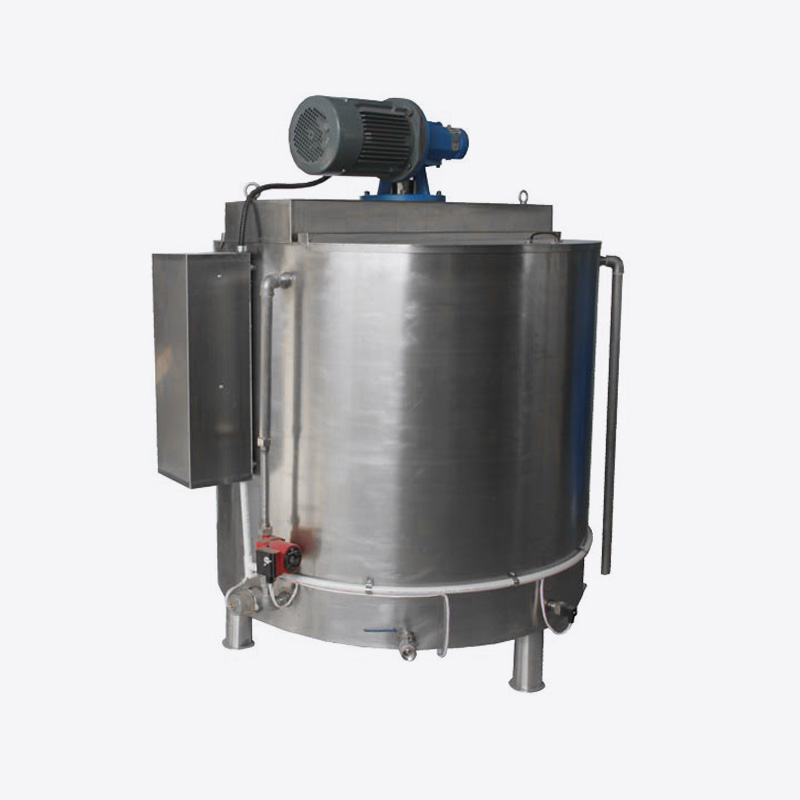
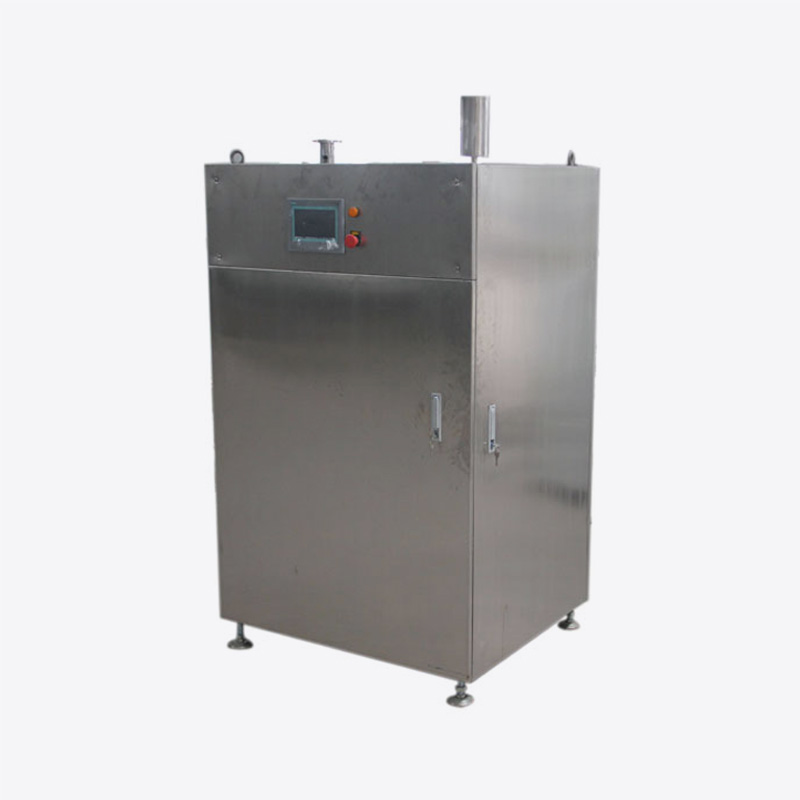
Storage tanks maintain liquid chocolate or cocoa mass at holding temperature between production stages, during packaging operations, or during transportation to downstream equipment. Insulated jackets minimize energy consumption; continuous agitation prevents fat separation and sedimentation. Our chocolate storage tanks are available in multiple capacities with CIP (clean-in-place) compatibility for efficient sanitation.
| Machine | Function | Key Spec to Evaluate |
|---|---|---|
| Fat Melter | Liquefies cocoa butter and solid fats | Temperature accuracy, capacity, agitation uniformity |
| Sugar Mill | Grinds granulated sugar to fine powder | Output particle size, throughput, heat generation |
| Ball Mill | Reduces particle size of cocoa mass | Final fineness (microns), batch vs. continuous, energy efficiency |
| Conche / Refiner | Develops flavor and smooth texture | Conching time control, temperature range, aeration capability |
| Tempering Machine | Stabilizes cocoa butter crystal structure | Temperature curve precision, throughput, automatic seeding |
| Storage Tank | Holds liquid product between stages | Insulation, agitation system, CIP compatibility |
Powder vs. Liquid: Two Formats, Two Equipment Paths
Hot cocoa products reach the market in two primary formats — dry powder blends and liquid chocolate bases — and the production equipment paths diverge significantly depending on which format is being made.
Hot cocoa powder production requires cocoa liquor to be pressed to separate cocoa butter from cocoa cake. The remaining cake is then milled and sifted into fine powder. This path requires pressing equipment and powder handling systems in addition to the upstream processing machinery. Fat content in the final powder is controlled by adjusting press pressure during the separation stage. The dry format offers long shelf life, easy transport, and simple reconstitution — making it the format of choice for retail packaged products and single-serve applications.
Liquid hot cocoa base production skips the pressing step entirely. Cocoa mass, liquefied fat, sugar, and milk solids are combined, refined, and held in liquid form for direct use in foodservice dispensers, chocolate fountains, or as an ingredient in confectionery manufacturing. This path requires robust temperature-controlled storage and distribution infrastructure, but eliminates the drying and sifting equipment costs associated with powder production.
Manufacturers who serve both markets — supplying powder to retail and liquid base to foodservice clients — typically need parallel processing capacity or equipment that can be reconfigured between production runs. Choosing a production line architecture that accommodates both formats without full duplication of equipment is a common design objective for mid-to-large producers.
What to Look for When Selecting Hot Cocoa Production Equipment
Equipment selection for a hot cocoa production line involves several overlapping considerations. Getting any one of them wrong creates a bottleneck that limits the entire line's output.
Capacity matching across stages. Each machine in the line must be sized to match the throughput of the machines upstream and downstream. A ball mill capable of processing 500 kg/hour paired with a conche rated for 200 kg/hour creates an immediate bottleneck at the conching stage. Map the full production target in kg per shift before specifying any individual machine.
Temperature control precision. Hot cocoa quality is highly sensitive to temperature at multiple stages. Fat melting too hot degrades flavor compounds; ball milling that generates excess heat affects viscosity and particle size consistency; conching at the wrong temperature produces flat or acidic flavor profiles. Equipment with independently verified temperature accuracy — not just a stated specification — is essential for consistent product quality.
Automation level. Fully manual equipment is appropriate for small-batch specialty producers where recipe flexibility and artisan control are priorities. Automated systems with PLC controls and recipe storage make more sense for high-volume consistent production where labor costs and batch repeatability are the primary concerns. Most industrial cocoa production at scale falls into the automated category.
Food safety compliance. Equipment used in cocoa and chocolate production must meet food-grade construction standards — stainless steel contact surfaces, no crevices or dead zones where product accumulates, CIP-compatible design. For facilities supplying the US market, HACCP compliance and FDA food safety modernization requirements apply to both the product and the manufacturing process. Selecting equipment already engineered to support these compliance frameworks significantly reduces validation burden.
Ease of cleaning and maintenance. Chocolate and cocoa mass solidify at room temperature, making residue buildup a sanitation challenge. Equipment designed with removable components, accessible seals, and CIP compatibility reduces cleaning time between production runs and extends service intervals on mechanical components.
Scaling Up: From Pilot Batch to Full Production Line
Most hot cocoa producers don't start at full industrial scale. Recipe development begins on small laboratory or pilot equipment, and production scales up as demand grows and formulations are validated. The equipment architecture chosen at each stage significantly affects how smoothly that scale-up proceeds.
Pilot-scale equipment — small conches, tabletop ball mills, benchtop melters — allows recipe development without committing to production-grade machinery costs. The limitation is that process parameters established on pilot equipment don't always transfer directly to larger machines. Particle size reduction behaves differently in a 5 kg ball mill versus a 500 kg continuous mill, and flavor development in a small conche doesn't always replicate exactly in a large-volume unit. Building scale-up factors into recipe development from the start reduces reformulation work later.
Modular production line design addresses the scaling challenge by allowing capacity to be added in stages rather than requiring a complete system replacement at each growth threshold. A single ball mill can be supplemented by a second parallel unit when throughput demands increase, without disrupting the upstream or downstream equipment. Similarly, additional storage tanks and tempering units can be added as output volume grows.
For manufacturers ready to move from individual machines to an integrated system, complete chocolate production lines bring all stages — from raw material intake through finished product output — into a coordinated system with matched capacity, shared control infrastructure, and validated process parameters. This approach eliminates the integration work required when individual machines from different manufacturers are combined, and provides a single point of accountability for performance and support.
Whether the starting point is a single fat melter or a fully integrated production line, the key principle is the same: every piece of equipment in the hot cocoa production chain must be matched to the others in capacity, temperature range, and throughput. The machines that do this job well are invisible in the final product — you taste only the cocoa.