

 English
 Español

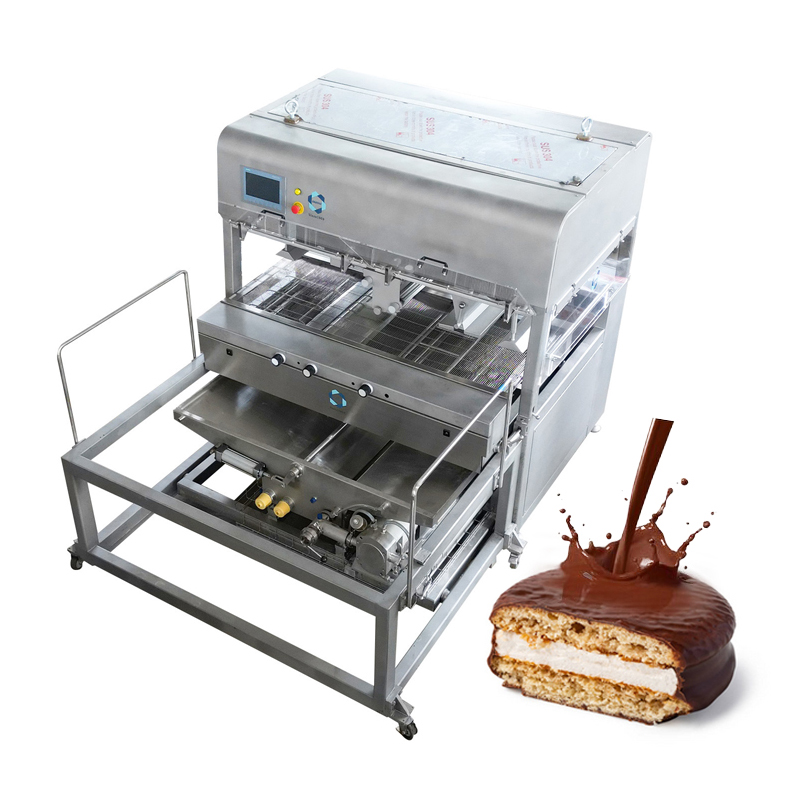
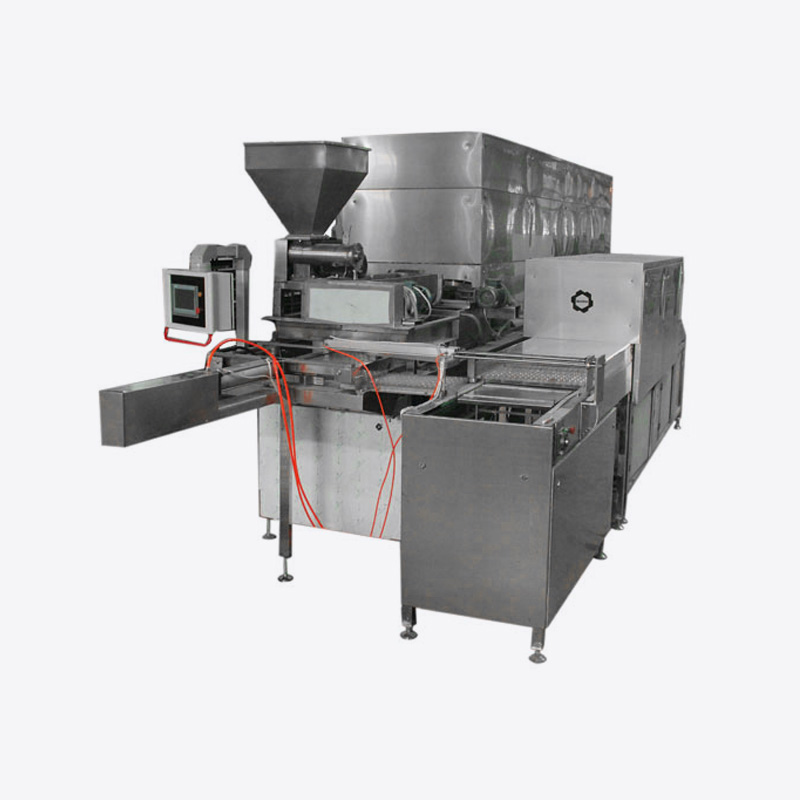
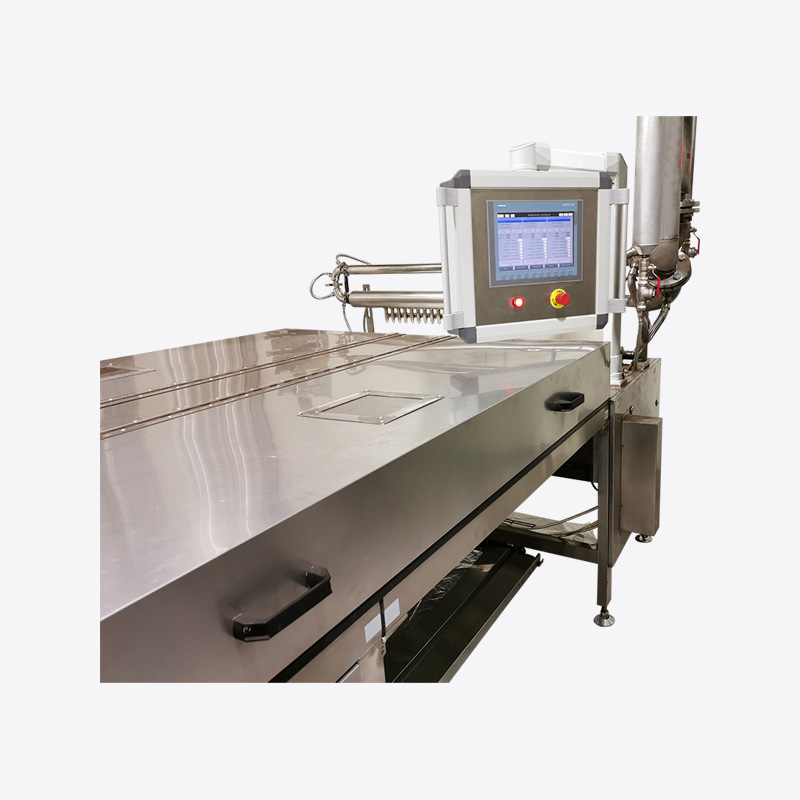
A chocolate enrober coats products in a smooth, even layer of chocolate by running them under one or more falling curtains of tempered chocolate. Instead of dipping items by hand, a wire mesh conveyor carries the product through the machine at a controlled speed while chocolate flows continuously from a reservoir above and below the belt. The result is a uniform shell on every piece, at a scale hand-dipping simply can't match.
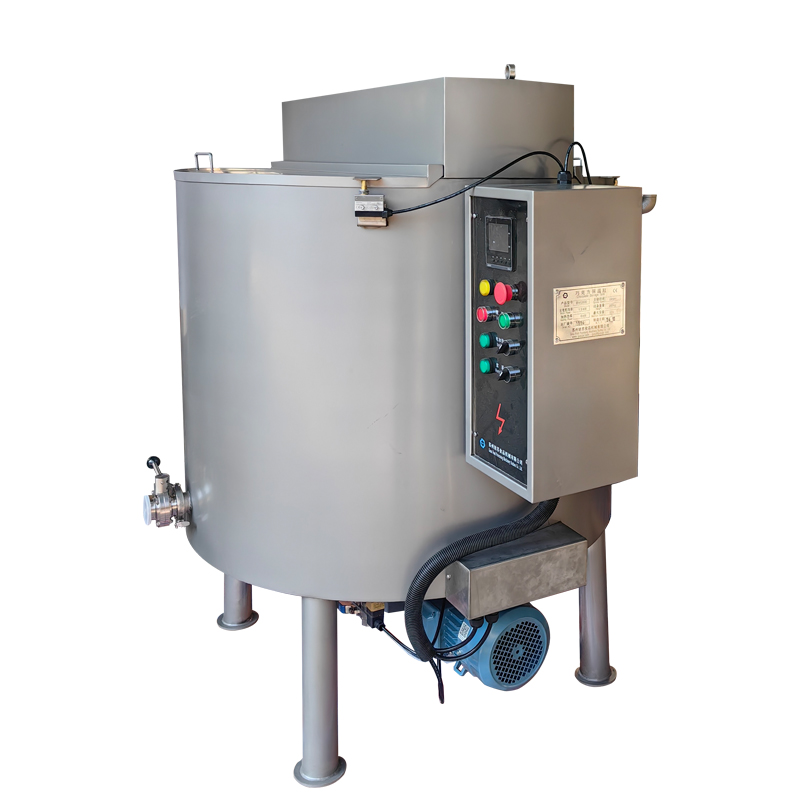
The process starts with the chocolate itself. It's held in a tank at a set temperature and pumped up into a flow pan, where it spills down as a curtain. As each item passes underneath, the curtain covers the top and sides while a bottom applicator or dip coats the underside. Air jets or light vibration then shake off the excess, preventing the thick "foot" of pooled chocolate that forms at the base of hand-dipped pieces. From there, the coated product moves straight into a cooling tunnel, where the chocolate sets before packaging.
Content
Why Temperature Control Is the Whole Game
Cocoa butter can crystallize into six different structures, but only one — Form V — gives chocolate its glossy finish, clean snap, and resistance to that dull grey bloom that ruins shelf appeal. Getting there requires tempering: heating the chocolate to melt out the unstable crystal forms, then cooling it in a controlled way so Form V crystals dominate and act as seeds for the rest of the batch. Recent structural research has shown that Form V alone doesn't guarantee bloom-resistant chocolate — the microstructure formed during crystallization matters just as much, which is why consistent temperature and flow control inside the enrober aren't a minor detail but the difference between a shiny finish and a streaky one.
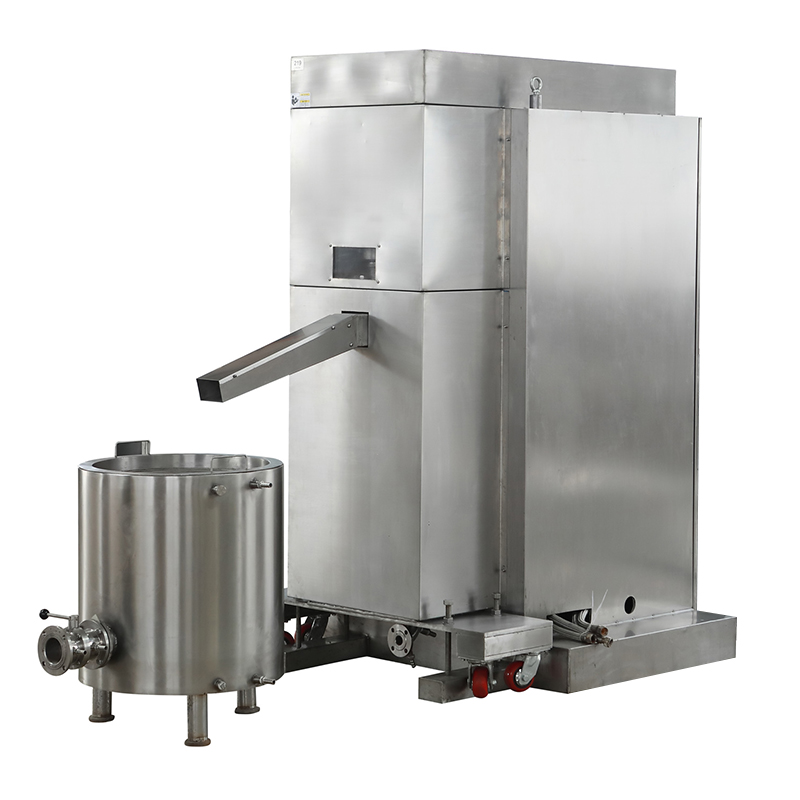
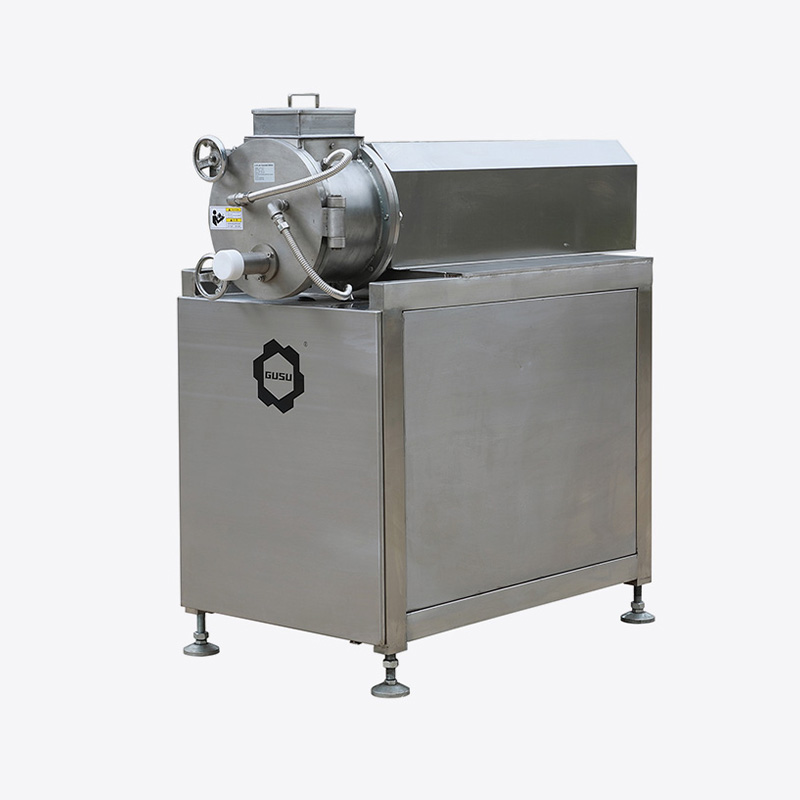
This is why most industrial enrobers don't work as standalone units. They're fed by a dedicated tempering machine that keeps the chocolate in that narrow, correct crystal state right up until it hits the curtain.
What Gets Enrobed
Enrobers handle a wide range of confections and baked goods:
- Pralines and truffle centers
- Biscuits and cookies
- Chocolate bars and wafer bars
- Nuts, raisins, and dried fruit
- Cakes and marshmallow pieces
Different products need different handling. Delicate or irregularly shaped items may need adjustable curtain width or slower belt speeds; dense items like bars need enough chocolate volume to fully cover the sides without pooling.
Choosing the Right Enrober
The right machine depends mostly on volume and how it needs to fit into your existing setup:
- Small producers and chocolatiers often want an all-in-one unit that combines tempering, enrobing, and mould filling in a compact footprint — ideal for moving off manual dipping without a full production-line investment.
- Mid-sized and semi-industrial producers typically need a standalone enrober with a wider belt (240mm to 1000mm+) that integrates with a separate tempering machine and cooling tunnel, built for continuous, multi-shift runs.
- Large-scale manufacturers need enrobers designed as one stage in a fully automated line — synced with tempering, cooling, and downstream packaging equipment for consistent throughput.
Integrating the Enrober Into a Full Line
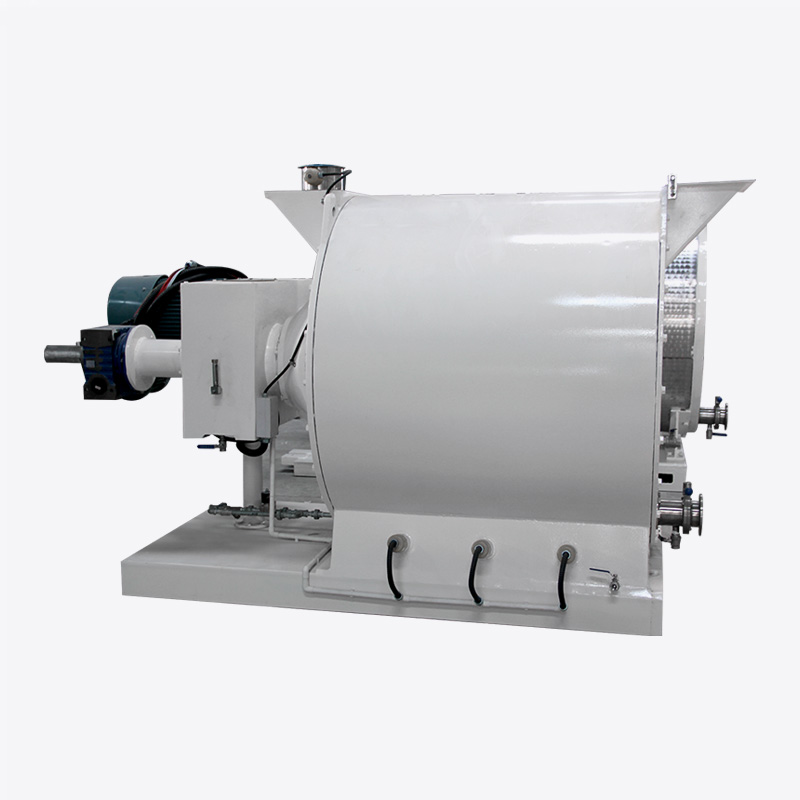
On a complete production line, the enrober sits between tempering and cooling. Melted chocolate is refined and tempered upstream, flows into the enrober's reservoir, coats the product, and then the freshly coated pieces move directly into a cooling tunnel to set before they're collected and packaged. Because timing and temperature have to stay synchronized across all three stages, mismatched equipment is one of the most common causes of inconsistent coating quality on a production line — it's rarely the enrober alone that's at fault.
Common Coating Problems and Fixes
Streaking or uneven coverage usually traces back to chocolate that's too cool or improperly tempered — it thickens before it can flow evenly across the product.
Excess buildup or dripping on finished pieces is often a belt-speed issue: if the conveyor moves too fast, there isn't enough time for excess chocolate to drain off before the product reaches the cooling tunnel.
Inconsistent thickness across a batch can come from uneven product spacing on the belt or a curtain that isn't calibrated to the size of the item passing through it.
Most of these issues are solved by revisiting temperature settings, belt speed, and curtain calibration together rather than adjusting one variable in isolation — since on an enrober, they're never really independent of each other.