

 English
 Español

A chocolate ball mill cannot support steady production simply by being placed between a mixer and a storage tank. Product temperature, feed condition, transfer piping, holding capacity, cleaning access, operator movement, and maintenance space all affect how the milling stage behaves.
In practical factory use, the aim is to keep chocolate moving through a controlled route while protecting product consistency and food safety. A workable line also needs enough flexibility for recipe changes, sanitation, inspections, and planned shutdowns.
Content
- 1 How Does Ball Milling Connect With Chocolate Production?
- 2 Why Does Feed Preparation Matter?
- 3 How Should the Mixer and Ball Mill Be Coordinated?
- 4 What Material-Flow Layout Works in Daily Production?
- 5 How Does the Ball Mill Process Chocolate Mass?
- 6 How Can Discharge Stay Coordinated With Downstream Equipment?
- 7 What Role Do Pumps and Piping Play?
- 8 How Should Controls Connect the Production Stages?
- 9 How Does Cleaning Fit a Connected Chocolate Line?
- 10 How Can Changeovers Be Planned?
- 11 How Does Maintenance Affect Production Continuity?
- 12 What Layout Details Affect Operators?
- 13 How Can Line Interruptions Be Investigated?
- 14 Where Could Nylon Gear Components Appear?
- 15 What Should Be Reviewed Before Installation?
- 16 Building a Workable Continuous Process
How Does Ball Milling Connect With Chocolate Production?
Chocolate manufacturing involves several linked operations. Ingredients need to be prepared and blended before milling, while the refined mass must remain suitable for pumping, holding, and further processing.
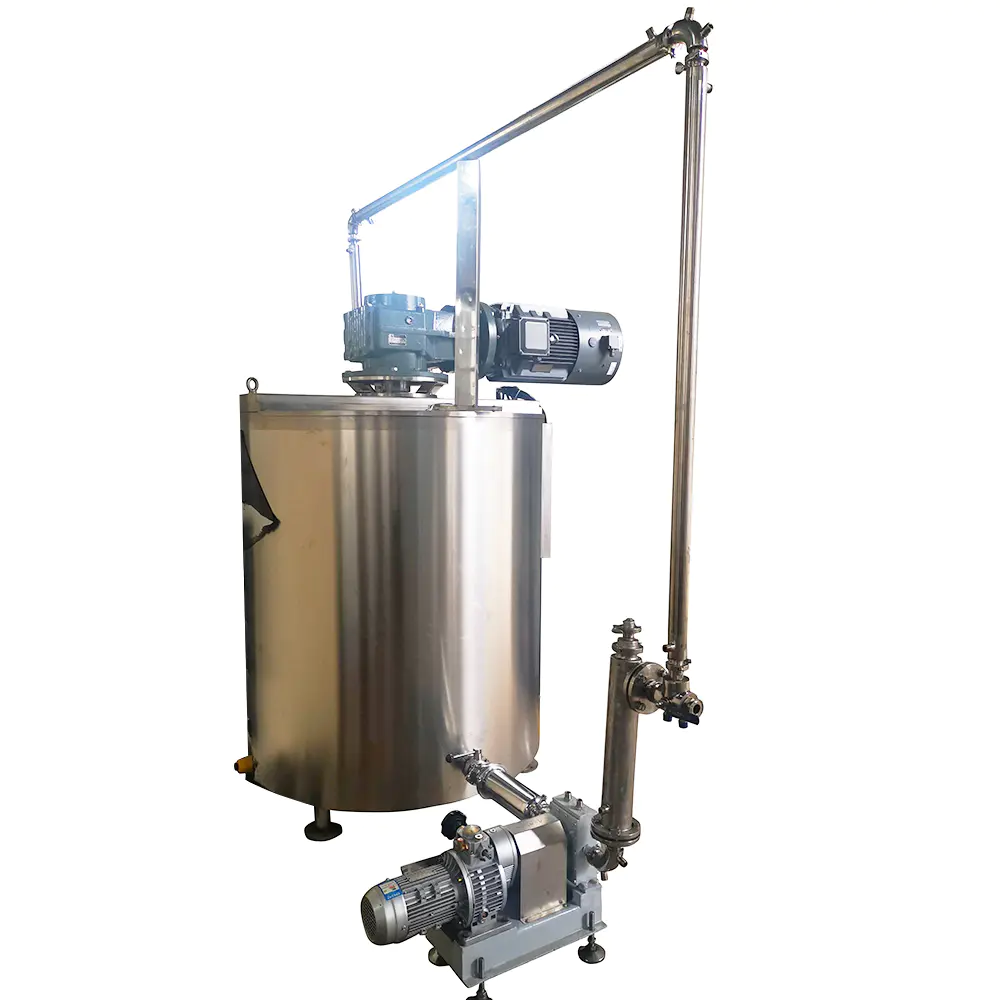
A ball mill normally receives a prepared chocolate mass rather than loose, unmixed ingredients. The incoming material needs a condition that allows it to circulate through the milling system without forming dry pockets or placing unnecessary strain on pumps and drive components.
| Production Stage | Connection With the Milling Process |
|---|---|
| Ingredient preparation | Provides weighed and screened materials |
| Fat melting | Supports blending and pumpable consistency |
| Mixing | Distributes ingredients before milling |
| Ball milling | Reduces particles and develops the chocolate mass |
| Holding | Keeps processed chocolate available for later use |
| Further processing | Prepares the mass for molding, coating, or another operation |
The arrangement may differ between factories, but each transfer point needs a defined purpose. Repeated movement between open containers creates extra handling, product loss, contamination risk, and cleaning work.
Ball milling is part of a process, not a stand-alone cure
A mill cannot correct every issue created upstream. Poor ingredient dispersion, unsuitable fat condition, foreign material, or unstable feeding can affect circulation and milling behavior.
Operators need clear acceptance conditions for the incoming mass. These conditions may cover temperature, visible uniformity, flow behavior, ingredient status, and confirmation that the correct recipe has entered the line.
Why Does Feed Preparation Matter?
The condition of the feed influences how easily the chocolate moves through pumps, pipes, valves, and the milling chamber. A mixture that is too stiff may circulate poorly, while an unsuitable temperature can change flow behavior during production.
Ingredient preparation also affects particle distribution. Sugar, cocoa ingredients, milk ingredients, fats, and minor additions need to enter the process in a controlled manner based on the recipe and equipment instructions.
Dry ingredients need controlled handling
Powders can form lumps or remain on vessel walls when added without a suitable mixing pattern. Dust may also create housekeeping and worker-exposure concerns around the charging area.
A practical preparation area can include:
- Protected ingredient opening and weighing
- Screening or foreign-material controls where required
- Local dust management
- Confirmed recipe identification
- Controlled addition into the mixer
- Tools assigned to the relevant product area
- Records for ingredients and production batches
Operators should not use the ball mill as the main device for breaking down large ingredient lumps. Mixing and preparation equipment should create a reasonably uniform feed before milling begins.
Fats affect movement through the line
Fat condition influences whether the mass can be mixed and pumped. Solid pieces entering an unsuitable transfer route may obstruct screens, valves, or pipe sections.
Heating should be controlled around the product requirement rather than used as a general response to poor flow. Excessive heat can affect flavor, process behavior, and later production stages.
How Should the Mixer and Ball Mill Be Coordinated?
A mixer and ball mill may operate at different rhythms. Mixing prepares a quantity of chocolate mass, while milling may require a steadier feed over time.
A buffer vessel between the stages can separate these operating patterns. It allows mixing to finish without forcing the ball mill to stop immediately whenever another batch is being prepared.
| Upstream Condition | Possible Line Response |
|---|---|
| Mixer discharges intermittently | Use controlled intermediate holding |
| Feed temperature changes | Apply monitored temperature management |
| Powder remains poorly dispersed | Review mixing sequence and equipment condition |
| Foreign material is suspected | Stop transfer and follow the site procedure |
| Feed rate changes | Coordinate pump and mill controls |
| Recipe changes | Separate, clear, or clean the route as required |
A holding vessel is not a place to leave unidentified material. It needs batch identification, agitation where required, temperature control, covered access, and a planned cleaning method.
Avoid uncontrolled surges
A sudden large discharge from the mixer can overwhelm the transfer system. Product may back up, the feed vessel may overfill, or the mill may receive material in a condition that differs from its planned operation.
Level monitoring and controlled pumping can help regulate the handover. Alarm responses should tell operators what action to take rather than only announcing that a condition has changed.
Prevent the feed vessel from running dry
A circulation pump should not continue operating without adequate product unless its design specifically permits that condition. Dry running can damage equipment and introduce air into the chocolate mass.
Low-level detection, interlocks, and operator checks can protect the transfer stage. Their settings and response logic need validation during commissioning.
What Material-Flow Layout Works in Daily Production?
A practical layout moves ingredients and chocolate in a clear direction. Operators should not need to carry open product repeatedly across traffic routes or move hoses through unrelated work areas.
A common process relationship may include:
- Ingredient preparation and identification
- Fat conditioning and controlled addition
- Mixing and feed development
- Intermediate holding where required
- Pumped transfer into the milling circuit
- Ball milling and circulation
- Discharge into a receiving vessel
- Holding or further chocolate processing
- Cleaning, inspection, and production release
The physical arrangement should also provide room around valves, access covers, motors, pumps, and electrical panels. A compact installation becomes troublesome when a technician cannot remove a pump or inspect a seal.
Keep transfer routes understandable
Pipe routes should be identifiable from the equipment area. Operators need to know which valve sends material to each vessel and whether a route contains product from an earlier recipe.
Clear line identification reduces errors during startup, changeover, and cleaning. Valve position feedback may also be useful where several products share part of the transfer system.
Reduce stagnant areas
Chocolate can remain in dead ends, unused branches, poorly drained hoses, and valve cavities. Residue can later mix with another recipe or harden during a shutdown.
Line design should review:
- Pipe routing
- Hose length
- Valve construction
- Drainability
- Low points
- Unused branches
- Instrument connections
- Sampling points
- Cleaning access
Product-contact connections should suit food production and the cleaning method used by the facility. Temporary repairs or improvised fittings can introduce hygiene and leakage concerns.
How Does the Ball Mill Process Chocolate Mass?
Inside the mill, grinding media move against the chocolate mass and reduce solid particles through repeated contact. The equipment may use circulation so the product passes through the working zone many times before reaching the intended process condition.
The result depends on more than operating time. Ingredient characteristics, initial particle condition, product temperature, fat content, media condition, circulation behavior, and mill loading all influence the process.
Particle size is only one process check
A measurement may indicate particle reduction, but the eating quality of chocolate also involves particle distribution, flow behavior, flavor, and downstream performance.
Production teams may review:
- Particle condition
- Product temperature
- Circulation stability
- Motor behavior
- Pump condition
- Sample appearance
- Flow properties
- Flavor and aroma
- Compatibility with later processing
Sampling needs a defined method. A sample taken from a poorly mixed point may not represent the product circulating through the system.
Temperature requires active attention
Milling creates heat through mechanical action. Chocolate viscosity also changes with temperature, so thermal control affects both product quality and equipment behavior.
The machine may use a jacket or another temperature-management arrangement. Inlet and outlet conditions should be monitored according to the process plan, with clear responses for unexpected changes.
Adding extra fat simply to make a poorly controlled process flow more easily can alter the recipe. The cause of the difficult movement should be checked before formulation changes are made.
How Can Discharge Stay Coordinated With Downstream Equipment?
Processed chocolate needs somewhere to go when milling reaches its release condition. If the receiving tank is unavailable, the mill may have to continue circulating, slow down, or stop under a controlled procedure.
The receiving vessel should be ready before discharge begins. Operators need confirmation that it is clean, correctly identified, available for the intended recipe, and connected through the right route.
| Downstream Need | Production Arrangement |
|---|---|
| Stable receiving capacity | Confirm vessel availability before milling release |
| Controlled product temperature | Use suitable vessel and transfer management |
| Continued movement | Apply agitation where the process requires it |
| Recipe separation | Verify tank and pipe status |
| Sampling | Provide a hygienic and accessible sampling point |
| Further processing | Coordinate discharge with the next operation |
A receiving tank can act as a buffer between milling and later equipment. It allows the next stage to operate on its own schedule without forcing the mill to match every short interruption.
Holding conditions matter
Chocolate left without suitable agitation or temperature management may become difficult to pump or may develop uneven conditions within the vessel. Holding is therefore an active production stage, not merely waiting.
Vessel surfaces, agitator design, covers, outlets, and heating arrangements should suit the chocolate product and sanitation plan.
Downstream delays need a defined response
A molding, coating, or further-processing machine may stop unexpectedly. The line plan should explain where chocolate can be held and how long it can remain under the approved conditions.
Operators should not redirect product into an unidentified container as an improvised response. Emergency holding arrangements need the same traceability and hygiene controls as routine production equipment.
What Role Do Pumps and Piping Play?
Chocolate does not move through a factory like water. Its flow changes with recipe, temperature, particle condition, and fat content.
Pumps must suit the product and required transfer duty. The piping route should avoid unnecessary distance, inaccessible low points, and abrupt arrangements that make cleaning or draining difficult.
Pump selection needs process information
A pump supplier may need details about product condition, expected flow behavior, temperature range, cleaning method, and transfer route. Selecting a pump from pipe size alone gives an incomplete picture.
The pump should also work with the ball mill’s operating pattern. A circulation pump and a discharge pump may have different duties even when both handle the same chocolate.
Insulation and temperature management
Long transfer routes can lose heat to the surrounding room. Chocolate may thicken inside the pipe, especially during slow movement or a production pause.
Insulation and controlled heating may help maintain process conditions. Surface temperature, worker contact, access to fittings, and cleaning practices still need consideration.
Hoses require management
Flexible hoses can simplify occasional transfers, but they are easy to route poorly or store while product remains inside. Hoses may also be damaged by dragging, tight bending, or vehicle traffic.
Each hose should have an identified use, inspection routine, cleaning method, and storage position. End fittings need protection from floor contact and contamination.
How Should Controls Connect the Production Stages?
A continuous line needs equipment controls that exchange useful information. The ball mill should not begin receiving product when the discharge route is closed, and a transfer pump should not run when the destination vessel is unavailable.
Control logic can coordinate:
- Vessel levels
- Pump operation
- Valve positions
- Product temperature
- Mill drive status
- Cooling or heating systems
- Alarm conditions
- Emergency stops
- Downstream availability
- Cleaning mode
Automation does not remove operator responsibility. It gives operators clearer information and prevents defined unsafe or damaging sequences.
Alarm messages should support action
An alarm described only as “fault” gives little help during production. Messages should identify the affected area and connect with an approved response procedure.
Operators also need training on which alarms allow controlled investigation and which require shutdown. Repeatedly resetting a fault without finding its cause can damage equipment or compromise product.
Manual operation needs boundaries
Maintenance and cleaning may require selected components to move under manual control. These modes should be restricted, clearly indicated, and covered by site safety procedures.
Manual operation should not bypass food-safety controls without a documented reason and authorization. Any temporary operating state needs to be restored before production release.
How Does Cleaning Fit a Connected Chocolate Line?
Chocolate cleaning can involve product recovery, scraping, purging, controlled warming, food-compatible cleaning materials, or another validated method. The suitable approach depends on the equipment, recipe, allergen program, and factory sanitation plan.
A line handling different formulations needs particular attention to carryover. Residual milk ingredients, nuts, flavors, colors, or other recipe components may create allergen and labeling concerns.
| Cleaning Area | Points to Review |
|---|---|
| Mill chamber | Access, residue removal, and inspection |
| Grinding media | Product retention and approved cleaning method |
| Feed vessel | Corners, agitator, outlet, and cover |
| Pumps | Seals, housings, and internal product areas |
| Valves | Cavities and product-retention points |
| Pipes and hoses | Drainage, flushing, and visual access |
| Receiving tank | Outlet, agitator, lid, and sampling point |
Cleaning should follow a written sequence. Operators need to know which valves to open, where recovered product may go, how waste is handled, and how the line is released afterward.
Product recovery is not the same as sanitation
Recovering chocolate from pipes can reduce waste, but it does not confirm that the equipment is ready for another recipe. Residue may remain around seals, valve cavities, media, and low points.
Production release should follow the facility’s approved inspection and verification process. The method may differ between same-recipe restart, color change, flavor change, and allergen change.
Access affects cleaning work
Covers, guards, platforms, lights, and drain locations influence whether operators can inspect the machine properly. Difficult access encourages rushed work and missed areas.
Cleaning access should be reviewed during line design. Adding a platform after installation may interfere with pipes, doors, or maintenance removal paths.
How Can Changeovers Be Planned?
Continuous production does not mean running one recipe indefinitely. Many factories change cocoa content, milk ingredients, flavors, colors, or customer specifications.
Changeover planning decides which products can follow one another and what cleaning work is required between them. A sensible sequence may reduce unnecessary cleaning while maintaining allergen and product controls.
Production order influences downtime
Recipes with similar characteristics may be grouped where the food-safety program permits. Products with a strong flavor, distinct color, or declared allergen may need additional separation.
The schedule should consider:
- Ingredient status
- Allergen classification
- Color carryover
- Flavor carryover
- Cleaning requirements
- Holding-vessel availability
- Packaging readiness
- Rework policy
- Laboratory or quality release
Scheduling cannot replace cleaning. It can only arrange production in a way that works with the approved sanitation plan.
Rework needs clear identification
Recovered chocolate or approved rework should remain traceable. Containers need product identity, status, date information, and permitted use according to factory procedures.
Unlabeled chocolate should not be returned to the line based on appearance or memory. Many formulations look similar after milling.
How Does Maintenance Affect Production Continuity?
Ball mills, pumps, agitators, seals, bearings, drives, valves, and instruments all experience wear. A planned maintenance routine reduces the chance that one small component will interrupt several connected stages.
Inspection can be coordinated with cleaning and recipe changes. Product-contact work still requires sanitation and release before production resumes.
Daily observations provide useful warning
Operators are close to the machine during routine production. Changes in sound, vibration, temperature, leakage, flow, or motor behavior can indicate developing problems.
Useful observations include:
- New mechanical noise
- Unstable circulation
- Product leakage
- Seal staining
- Rising operating temperature
- Irregular pump sound
- Loose guards or covers
- Changes in discharge behavior
- Damaged cables or sensors
These findings should be recorded and reviewed rather than passed informally between shifts. A gradual change may be easy to miss when each operator sees only part of its development.
Service access belongs in the layout
Technicians need room to remove pumps, motors, seals, or other serviceable parts. Access routes should not require cutting fixed pipework or dismantling unrelated equipment.
Isolation points also need to be reachable. Electrical, pneumatic, hydraulic, thermal, and mechanical energy should be controlled under the facility’s safety procedures before maintenance begins.
Spare parts should reflect operating risk
Not every part needs to be stored beside the machine. Components that wear regularly, have a long replacement process, or can stop the connected line deserve review.
Spare seals, sensors, gaskets, pump parts, and approved product-contact items should be identified correctly. Storage conditions must protect them from dirt, damage, and material deterioration.
What Layout Details Affect Operators?
Operators interact with the line during charging, sampling, observation, cleaning, and changeover. Poor layout can create repeated lifting, long walking routes, awkward hose handling, or unsafe access around hot surfaces.
A practical layout considers both production movement and human movement.
| Layout Area | Practical Question |
|---|---|
| Ingredient charging | Can materials be added without awkward lifting? |
| Control station | Can the operator see relevant equipment? |
| Sampling point | Can a sample be taken without contamination or splashing? |
| Cleaning access | Can product-contact areas be reached safely? |
| Maintenance route | Can service parts be removed without obstruction? |
| Walking route | Are hoses, pipes, and frames kept away from foot traffic? |
| Emergency access | Can isolation and stop controls be reached quickly? |
Floor condition also matters. Chocolate and fat can make a surface slippery, while wash water may collect around poorly placed drains.
Housekeeping should be built into the work routine. Waiting until the end of a shift allows small spills to spread through footwear and equipment wheels.
How Can Line Interruptions Be Investigated?
When production slows, attention often turns immediately to the ball mill. The actual cause may be upstream feed preparation, a restricted transfer line, an unavailable receiving tank, or an instrument giving unreliable information.
A structured check can separate the problem by process stage:
- Confirm the recipe and material status.
- Review mixer discharge and feed-vessel condition.
- Check pump operation and valve positions.
- Observe circulation through the milling stage.
- Review temperature-management equipment.
- Confirm receiving-vessel availability.
- Check downstream equipment status.
- Review alarms and recent maintenance work.
- Record the cause and corrective action.
Operators should avoid changing several settings at once. Multiple unrecorded changes make it difficult to identify what caused the condition or what corrected it.
Bottlenecks can move
After one restriction is corrected, another stage may become the limiting point. Increasing mill output may simply fill the receiving vessel sooner when downstream processing remains unchanged.
Line improvement should review the whole process. Production rate, cleaning time, changeover work, holding capacity, labor, quality release, and packaging availability all influence usable output.
Where Could Nylon Gear Components Appear?
The specified terms Nylon Gear Rack Factory, Nylon Gear Rack, and Helical Gear Rack Factory relate to motion-control components rather than the chocolate-refining chamber itself. Such components may appear in external positioning systems, guarded handling equipment, doors, or packaging machinery connected with a wider production area.
A Nylon Gear Rack should not be placed in a food-processing application merely because it is lightweight or quiet. Material suitability, lubrication, wear particles, cleaning chemicals, load, guarding, and separation from exposed food all require engineering review.
When working with a Nylon Gear Rack Factory, a machinery builder may need to provide information about movement, mounting, environmental exposure, sanitation chemicals, and whether the component sits near an open-product zone.
A Helical Gear Rack Factory may support equipment requiring angled tooth engagement. Helical geometry can create forces along the gear axis, so bearings, shafts, mounts, guards, and maintenance access need to suit the arrangement.
| Gear-Rack Application Area | Review Point |
|---|---|
| Packaging adjustment | Position accuracy and guarding |
| Automatic access panel | Safe movement and cleaning access |
| Handling equipment | Load, alignment, and wear control |
| External machine positioning | Separation from product-contact areas |
| Guarded conveyor adjustment | Locking method and inspection access |
These terms should remain separate from the food-process specification unless the line genuinely includes such motion components. Accurate equipment records prevent an automation part from being confused with the product-contact milling system.
What Should Be Reviewed Before Installation?
A ball mill project should begin with product and process information rather than floor space alone. The line team needs to understand how material arrives, how it leaves, and what happens during an interruption.
A useful integration review covers:
- Chocolate formulations to be processed
- Ingredient and allergen controls
- Incoming mass condition
- Feed-vessel arrangement
- Pump and pipe suitability
- Milling and circulation method
- Temperature management
- Receiving-vessel capacity
- Downstream operating pattern
- Cleaning and changeover procedures
- Product recovery arrangements
- Maintenance access
- Operator routes
- Utility connections
- Control-system communication
- Sampling and quality checks
- Packaging and storage coordination
Installation drawings should show service clearances, not only equipment footprints. Space that appears unused on a plan may be necessary for opening a cover, removing a motor, or positioning cleaning equipment.
Commissioning should use realistic material
A water test can identify leaks and basic control behavior, but it does not reproduce the way chocolate flows. Commissioning should include approved product trials under controlled conditions.
The team can observe feeding, circulation, temperature response, discharge, holding, cleaning, and restart. Findings should be converted into operating procedures and training rather than kept only in commissioning notes.
Train operators around the whole line
An operator responsible for the ball mill still needs to understand the mixer, feed vessel, transfer route, and receiving tank. Connected equipment creates connected consequences.
Training should include normal startup, shutdown, recipe checks, alarm response, sampling, cleaning, changeover, and isolation. Practical demonstrations are useful because valve routes and circulation patterns are easier to understand at the equipment than on paper.
Building a Workable Continuous Process
A chocolate ball mill fits a continuous production line when it receives a prepared, pumpable mass and discharges into an available, controlled downstream stage. Buffer vessels can separate different equipment rhythms, while coordinated pumps, valves, temperature systems, and controls keep material moving through the intended route.
Cleaning and maintenance need dedicated time, access, and written procedures. They are part of production planning because residue, worn components, or inaccessible service points can interrupt several linked operations.
The milling machine is only one part of the result. Ingredient preparation, mixing, transfer, holding, operator practice, sanitation, and downstream scheduling determine whether the line behaves as a connected process during everyday chocolate production.