

 English
 Español

Setting up a chocolate production line for the first time comes with a lot of unknowns, and the grinding stage tends to generate the most questions. Getting the particle size right, controlling temperature during extended runs, knowing when the batch is actually finished — these are the things that keep new equipment buyers up at night. A Ball Mill Chocolate Machine is not complicated once you understand its logic, but skipping the fundamentals in the early runs tends to cause exactly the problems new operators worry about.
Content
- 1 How a Ball Mill Chocolate Machine Actually Works
- 2 What to Check Before the First Run
- 3 Loading Procedure: How to Start a Batch Correctly
- 4 Temperature Control During Operation
- 5 How Do You Know When Grinding Is Complete?
- 6 Common Mistakes in the First Weeks of Operation
- 7 Cleaning Protocol After Each Run
- 8 Maintenance Habits That Prevent Downtime
- 9 Matching the Mill to Your Production Scale
- 10 Scaling Up: What Changes as Production Volume Grows
How a Ball Mill Chocolate Machine Actually Works
The Grinding Mechanism in Simple Terms
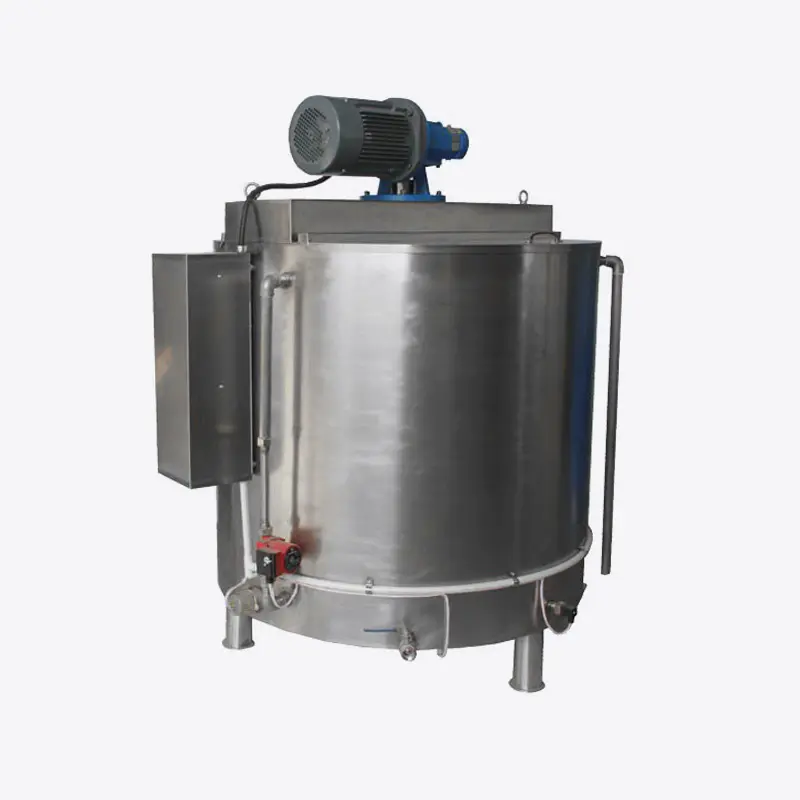
A Ball Mill Chocolate Machine uses steel balls inside a cylindrical vessel to reduce chocolate mass to the target particle size. As the shaft rotates, the balls move through the chocolate, creating friction and impact that progressively breaks down solid particles. Heat is generated during this process, which is why temperature control is built into the system rather than added on.
The chocolate circulates through the ball-filled zone repeatedly until it reaches the desired fineness. In continuous systems, fresh material enters as finished product exits. In batch systems, the full charge is processed until the run is complete.
Why Particle Size Matters
Particle size directly affects how chocolate feels in the mouth. Coarser particles produce a gritty texture that no amount of recipe adjustment can fully mask. Reaching a smooth, fine particle size is what separates industrial-quality chocolate from rough, unrefined product.
The ball mill achieves this through accumulated contact time between the chocolate mass and the grinding media — the longer the material stays in contact with the moving balls under controlled conditions, the finer the result.
What to Check Before the First Run
Equipment Inspection Before Loading
Before introducing any chocolate mass, run through the following:
- Confirm that all bolts, shaft seals, and couplings are secure
- Check that the cooling water circuit is connected and flowing
- Verify that the grinding balls are loaded to the correct fill level for your vessel size — consult the equipment manual for the specific ratio
- Confirm that the discharge valve or outlet is closed before loading product
- Check that the temperature sensor and control system are reading correctly
Starting a run with a leak in the cooling circuit or an incorrect ball fill creates problems that are harder to fix mid-run than before the material goes in.
Pre-Warming the System
Running the empty mill briefly before loading chocolate allows the mechanical components to reach operating temperature and confirms that everything is running without unusual vibration or noise. This also pre-conditions the vessel to reduce the temperature shock when warm chocolate mass is introduced.
Loading Procedure: How to Start a Batch Correctly
Sequence for Loading Chocolate Mass
Loading sequence affects both processing efficiency and equipment longevity:
- Confirm the cooling water is flowing and the mill is running at low speed
- Introduce pre-tempered or pre-melted chocolate mass at a temperature within the recommended range for the recipe
- Feed the material gradually rather than all at once — a sudden large charge increases the load on the motor and can cause uneven ball distribution
- Once the material is loaded, bring the shaft speed to the target operating speed
- Monitor temperature and viscosity during the initial warming period before assessing the process state
Chocolate mass that is too cold when loaded increases viscosity sharply, which puts excess mechanical load on the system. Pre-warming the chocolate to the appropriate loading temperature is not optional — it is part of the process.
Temperature Control During Operation
Why Temperature Management Is the Core Skill
Temperature is the variable that has the largest effect on grinding outcome and the most immediate consequences when it goes wrong. If the chocolate gets too hot, cocoa butter changes its behavior, flavor compounds degrade, and the mass can seize. If the temperature drops too low, viscosity increases and grinding efficiency falls sharply.
The cooling jacket around the vessel removes heat generated by the grinding action. The control system needs to be set to maintain the target processing temperature for the specific recipe being run.
Key temperature management habits:
- Set the cooling water flow rate before starting the run, not after problems appear
- Monitor the temperature reading continuously during the first run with any new recipe
- Do not assume a setting that worked for one recipe will transfer directly to another — different formulations behave differently under the same grinding conditions
- If temperature rises unexpectedly, check cooling water flow before adjusting speed or other parameters
What Over-Temperature Looks Like in Practice
When the chocolate mass overheats during a ball mill run, the signs are usually:
- Sudden increase in viscosity or a pasty, stiff consistency
- Unusual motor load increase visible on the control panel
- Product color or aroma change
- In severe cases, the mass sticking to the vessel walls or balling up around the shaft
Catching the temperature early — before it reaches the point where the mass changes — is what separates a recoverable situation from a ruined batch.
How Do You Know When Grinding Is Complete?
Reading the Process Without Laboratory Equipment
For a first-time buyer without in-line particle measurement tools, several practical indicators signal that the grinding process is progressing correctly:
- The chocolate mass transitions from a grainy, rough texture when rubbed between fingers to a smooth, uniform feel
- Viscosity stabilizes — it stops changing noticeably between readings taken at intervals
- The sound of the mill changes slightly as the mass becomes finer and the resistance on the balls reduces
In continuous operations, sampling the discharge stream at intervals and performing a finger-rub test gives a practical real-time indication of particle size progress.
Using Residence Time as a Starting Point
For batch operations without measurement tools, establishing a baseline residence time through initial testing and then holding to that time consistently across batches produces more uniform results than trying to judge each batch individually. Run a test batch, assess the result, adjust the time, and repeat until the outcome meets the target. Then use that time as the standard.
Common Mistakes in the First Weeks of Operation
What New Operators Get Wrong
A few errors appear repeatedly across new Ball Mill Chocolate Machine installations:
| Common Mistake | What Causes It | How to Prevent It |
|---|---|---|
| Loading cold chocolate mass | Skipping pre-melt stage | Pre-warm to target loading temperature before introducing to mill |
| Running at too high a speed | Assuming faster means faster results | Follow speed recommendations for the vessel and fill level |
| Ignoring cooling water flow | Treating temperature as self-regulating | Set and verify cooling flow rate before each run |
| Stopping the run too early | No clear endpoint criterion | Establish a residence time baseline through initial testing |
| Insufficient cleaning between batches | Underestimating residue buildup | Follow a structured cleaning protocol after every run |
| Overloading the vessel | Trying to maximize batch size immediately | Start at the recommended fill level and adjust from there |
Most of these mistakes come from reasonable assumptions that do not account for how the process actually behaves under operating conditions. The equipment follows its own logic, and the first weeks of operation are fundamentally about learning that logic.
Cleaning Protocol After Each Run
Why Cleaning Consistency Matters
Residual chocolate mass left in the vessel between runs oxidizes, picks up off-flavors, and can introduce old product into new batches. For factories producing multiple recipes or flavors, cross-contamination between runs is a direct quality problem.
A structured post-run cleaning approach:
- Drain the chocolate mass completely through the discharge outlet
- Run a small quantity of cocoa butter or other appropriate fat through the system to flush residual mass from the balls and vessel interior
- Drain the flush material and inspect the interior for residue
- If a full production day is ending, follow with a more thorough wash-down according to the equipment supplier's protocol
- Leave the vessel in a condition that prevents moisture ingress — residual water in a chocolate processing vessel causes immediate viscosity problems in the next batch
For multi-recipe facilities, the cleaning protocol between runs of different recipes needs to be stricter than between runs of the same recipe.
Maintenance Habits That Prevent Downtime
Routine Checks That Take Minutes and Save Hours
Most equipment failures in ball mills trace back to maintenance items that were skipped rather than to inherent equipment problems:
- Check cooling water connections and seals weekly — a small leak that is ignored becomes a large one
- Inspect shaft seals periodically for signs of wear or chocolate mass leakage
- Verify that the grinding ball fill level has not changed significantly over time — balls wear gradually and the fill level needs to be topped up to maintain consistent grinding performance
- Check drive belt tension and motor mount bolts at the intervals specified in the equipment manual
- Keep a maintenance log with dates and findings — patterns in the log reveal developing problems before they become failures
When to Call the Supplier
Some issues are straightforward to address in-house. Others warrant a call to the equipment supplier before attempting a repair:
- Unusual vibration that does not resolve after checking obvious mechanical causes
- Motor temperature running above normal range
- Shaft seal failure allowing chocolate mass into the motor housing
- Control system faults that do not clear after a standard restart
Attempting to resolve these without guidance can turn a minor issue into significant equipment damage.
Matching the Mill to Your Production Scale
Batch vs Continuous Operation
The choice between batch and continuous operation affects how the mill fits into the broader production line:
Batch operation suits smaller production volumes, recipe development, and facilities producing a range of different chocolate formulations. Each batch can be adjusted individually, and cleaning between batches is straightforward. The trade-off is that output is limited by batch size and cycle time.
Continuous operation suits higher-volume production lines where the same or similar recipe runs for extended periods. Material enters and exits the mill continuously, which allows the grinding stage to keep pace with upstream and downstream equipment. The operational requirements — maintaining consistent feed material quality and temperature — are more demanding but the output capacity is higher.
For a first-time buyer, the honest answer is that the right choice depends on the production volume you are planning for and the degree of recipe variation in your product range. Starting with a configuration that matches current needs and has a clear upgrade path is more practical than trying to anticipate future volumes accurately before the business has established itself.
Scaling Up: What Changes as Production Volume Grows
Operational Complexity Increases with Scale
A single small-batch unit is straightforward to operate and troubleshoot. Scaling to multiple units, larger vessels, or continuous operation introduces coordination and monitoring requirements that need to be accounted for in the production setup.
Points to plan for as scale increases:
- Temperature control becomes more critical at higher throughput because heat generation increases with volume
- Cleaning protocols need to be faster and more systematic to fit into production schedules
- PLC-based control systems become more valuable as the number of parameters to manage grows — manual monitoring of multiple units simultaneously is not practical
- Preventive maintenance scheduling needs to be formalized rather than reactive
Understanding these dynamics before the scale-up rather than during it allows the production setup to absorb the growth without disruption.
Operating a Ball Mill Chocolate Machine well is largely about developing consistent habits — loading at the right temperature, managing cooling water proactively, establishing clear endpoints for each batch, and following a cleaning protocol without shortcuts. The equipment itself is robust when operated within its design parameters, and most of the problems that new users encounter trace back to the early learning period rather than to inherent equipment complexity. Building those habits in the first weeks sets the foundation for stable, predictable production. Gusu Food Processing Machinery Suzhou Co.,Ltd. manufactures Ball Mill Chocolate Machine equipment for production lines ranging from small-batch development setups to continuous high-volume configurations, and works with buyers on equipment selection, technical specifications, and operational support. If you are planning a chocolate production line and want to discuss which configuration fits your production volume and recipe range, reaching out to their team is a practical next step.