

 English
 Español

Choosing between a ball mill and a conche is one of those decisions that seems straightforward until the details come into focus. Both machines are used in chocolate processing, and both influence texture and consistency, but they serve different purposes, and using one in place of the other without understanding that difference can create results that do not match the needs of the production line. When comparing these two pieces of equipment, the question is not only about speed or cost. It is about which stage of chocolate processing each machine handles, and what the finished product requires. The Ball Mill Chocolate Machine belongs in this discussion because it plays a distinct role in refining chocolate, while the conche handles a different part of the process.
Content
- 1 What Is a Ball Mill Chocolate Machine and What Does It Do?
- 2 What Is a Chocolate Conche and What Does It Do?
- 3 How Does Particle Size Reduction Differ Between the Two?
- 4 Does a Ball Mill Replace a Conche?
- 5 Processing Speed and Efficiency: A Practical Comparison
- 6 Which Type of Chocolate Production Benefits from Each Machine?
- 7 What Factors Should Drive the Equipment Selection Decision?
- 8 Can the Two Machines Work Together?
- 9 What Are the Maintenance and Operational Differences?
- 10 Long-Tail Considerations: Texture, Viscosity, and Mouthfeel
What Is a Ball Mill Chocolate Machine and What Does It Do?
A Ball Mill Chocolate Machine is a grinding machine that reduces particle size by using steel or ceramic balls inside a rotating chamber. As the chamber turns, the balls collide with each other and with the chocolate mass, breaking down solid particles — primarily sugar, cocoa solids, and milk powder — until they reach a target fineness.
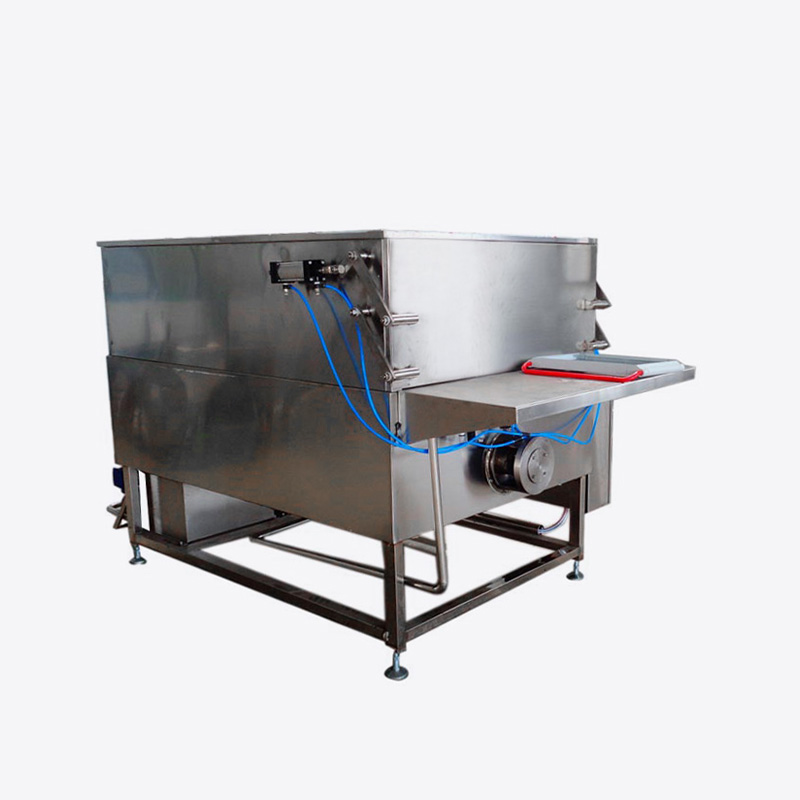
The key function is particle size reduction. The machine works continuously, recirculating the chocolate mass through the grinding zone until the desired particle size is reached. This process affects:
- Texture — smaller particles produce a smoother mouthfeel
- Viscosity — particle size influences how the chocolate flows during processing
- Consistency — uniform grinding produces repeatable results across batches
A ball mill does not develop flavor. It refines. The distinction matters because flavor development requires a different set of conditions — time, heat, airflow, and mechanical shearing — that grinding alone does not provide.
What Is a Chocolate Conche and What Does It Do?
A conche is a mixing and shearing machine used in chocolate processing, typically after initial grinding. It works by applying prolonged mechanical agitation to the chocolate mass while allowing volatile compounds to evaporate.
The conching process achieves several things that ball milling does not:
- Volatile acids and unwanted flavor compounds are driven off through heat and airflow
- The chocolate develops a smoother, more rounded flavor profile over time
- Lecithin and other emulsifiers are worked into the mass more thoroughly
- Residual moisture is reduced
Conching time varies depending on the product target. Shorter conching times produce chocolate with a more pronounced acidic character; longer times develop a mellower, more complex profile. This flexibility is one of the reasons conching remains relevant in premium chocolate production.
How Does Particle Size Reduction Differ Between the Two?
This is where the functional difference becomes clearest.
A Ball Mill Chocolate Machine is designed specifically for particle size reduction. It produces consistent, measurable fineness across the batch and can be set up to run continuously, which suits high-volume production. The grinding is mechanical and efficient.
A conche does not reduce particle size in any significant way. It works on chocolate that has already been refined and uses shearing and friction to improve texture and flavor — not to make particles smaller. If a chocolate mass enters a conche with insufficient fineness, the conche will not correct that.
Practical implications:
- If particle fineness is the production bottleneck, a ball mill addresses it directly
- If flavor profile is the gap between current output and target product, conching time needs attention
- Using a conche to compensate for under-refined chocolate does not work
Does a Ball Mill Replace a Conche?
This question comes up regularly, and the answer is: partially, in some production contexts.
Modern ball mills, particularly continuous systems with temperature control, can perform some of the functions traditionally associated with conching. Extended processing time in a ball mill does contribute to flavor development to a degree — the mechanical energy and heat generated during grinding have some effect on volatile compounds and texture.
However, a ball mill does not replicate the full conching process. Specifically:
- Airflow-assisted evaporation of volatile acids does not occur in a closed ball mill system
- The extended, low-shear mixing that develops flavor complexity in a conche is different from the high-impact grinding in a ball mill
- Emulsification of lecithin is less thorough in ball milling alone
For some applications — nut pastes, spreads, compound coatings, and products where flavor development is less critical — a ball mill alone is sufficient. For craft or premium chocolate where flavor profile is a key differentiator, conching remains relevant.
Processing Speed and Efficiency: A Practical Comparison
| Factor | Chocolate Ball Mill | Chocolate Conche |
|---|---|---|
| Primary function | Particle size reduction | Flavor development and refinement |
| Processing time | Faster — hours depending on target fineness | Longer — can run many hours for premium product |
| Energy use | Higher during active grinding | Lower per hour but extended duration |
| Automation potential | High — continuous processing possible | Moderate — requires parameter monitoring |
| Particle size control | Direct and measurable | Indirect — not the primary function |
| Flavor development | Limited | Significant |
| Volatile removal | Minimal | Active — heat and airflow assist |
| Suitable scale | Industrial to mid-scale | Artisan to industrial |
What is reflected is the functional roles of each machine, not their relative value — both serve genuine purposes in a chocolate production line.
Which Type of Chocolate Production Benefits from Each Machine?
High-Volume Industrial Production
At scale, speed and consistency are the dominant requirements. A continuous ball mill system processes large volumes with repeatable fineness and can be integrated into automated production lines. For industrial chocolate used in confectionery, baking, and coatings, ball milling is typically the more practical choice for the refining stage.
Conching may still be used at industrial scale, but it is often shortened or optimized — running long enough to achieve a specific flavor target without extending the production cycle unnecessarily.
Craft and Artisan Chocolate
Craft producers working with single-origin beans and emphasizing flavor complexity tend to rely more heavily on conching. The flavor profile of the cacao is developed and refined through extended processing time — something that is part of the product's value proposition. Here, the conche is not just a processing step; it is where the product character is shaped.
Some craft producers use a ball mill for initial refining and then move the chocolate to a conche for flavor development — combining both approaches in sequence.
Spread and Paste Production
Products like chocolate hazelnut spreads, praline pastes, and similar fat-continuous products benefit strongly from ball milling. The machine reduces particle size effectively in these formulations, and the flavor development considerations are less critical than in couverture or eating chocolate. Conching adds less value in this context.
Bean-to-Bar Operations
Bean-to-bar producers, who control the full process from roasted beans to finished chocolate, often use both machines at different stages — milling for efficiency and particle control, conching for the flavor work that makes each origin distinct. The combination gives flexibility across product lines.
What Factors Should Drive the Equipment Selection Decision?
Rather than asking which machine is better, the more useful question is which machine addresses the actual gap in your current process.
Work through these considerations:
- What is the target product? A compound coating has different requirements than a single-origin dark chocolate. Define the product before the equipment.
- Where is the current process falling short? If particle fineness is the problem, refining equipment is the answer. If flavor is the issue, look at conching time and conditions.
- What is the production volume? Higher volumes favor continuous processing and automation — areas where ball mills generally have more built-in flexibility.
- Is flavor development a differentiating factor for the product? For products where flavor complexity is part of the brand or the price point, investing in conching capacity makes sense. For commodity-grade or ingredient chocolate, it may not.
- What is the existing line configuration? Adding a ball mill to a line that already conches changes the process differently than replacing one with the other.
Can the Two Machines Work Together?
Yes, and in many production environments they do. A common configuration in both mid-scale and larger operations is:
- Initial grinding to reduce particle size — often done with a ball mill or pre-mill
- Transfer to a conche for flavor development, moisture reduction, and emulsification
This approach uses each machine for what it does well. The ball mill handles the particle work efficiently; the conche handles the flavor and texture refinement that follows. The total processing time may be shorter than using a conche alone from a coarser starting point, and the flavor outcome can be more controlled than ball milling alone.
The decision to use both depends on product requirements and production economics — not on any general rule about which is better.
What Are the Maintenance and Operational Differences?
Day-to-day operational requirements differ between the two machine types in ways that affect staffing, scheduling, and total cost of ownership.
Ball mill considerations:
- Grinding media (balls) wear over time and need periodic inspection and replacement
- The grinding chamber requires cleaning between product types or flavors
- Temperature management during grinding affects viscosity and processing behavior
- Continuous operation requires consistent feed conditions
Conche considerations:
- Processing parameters — temperature, duration, airflow — need to be matched to each recipe
- Longer cycles mean the machine is occupied for extended periods per batch
- Cleaning between batches is thorough given the extended contact time
- Recipe development for conching conditions requires some trial and optimization
Neither machine is particularly maintenance-intensive by industrial equipment standards, but the operational rhythms are different, and production planning needs to account for those differences.
Long-Tail Considerations: Texture, Viscosity, and Mouthfeel
Particle size and flavor are the primary comparison points, but texture and viscosity involve both machines in ways that interact.
A finely ground chocolate from a ball mill has lower viscosity at a given fat content than coarsely ground material. This affects how the chocolate behaves in tempering, molding, enrobing, and coating applications. Fineness achieved in ball milling directly affects downstream process performance.
Conching, by improving emulsification and driving off moisture, also affects viscosity — often reducing it and making the chocolate easier to work with. The two effects are complementary, which is one reason the combination of both processes produces a more workable finished product than either alone in certain formulations.
For producers focused on applications where flow behavior matters — enrobing lines, hollow figure production, thin-walled molding — both particle size control and conching quality contribute to the outcome.
Understanding the functional boundary between a Ball Mill Chocolate Machine and a conche is the foundation for any equipment decision in chocolate processing. They are not interchangeable, and they are not in competition — they serve different stages of the process, and the right configuration depends on what the product requires and what the production line needs to accomplish. For manufacturers evaluating equipment for refining, conching, or a combined line, Gusu Food Processing Machinery Suzhou Co., Ltd. manufactures chocolate processing equipment including ball mill systems and conching solutions for a range of production scales. If you are assessing whether your current setup addresses both particle fineness and flavor development, or evaluating a new line configuration, reaching out to their technical team is a practical way to match equipment capabilities to your specific production requirements.