

 English
 Español

Bite into a cheap chocolate bar and you'll sometimes feel it before you even taste it — a faint grittiness, like the sugar never quite dissolved into the rest of the mixture. That's not a flavor problem. It's a grinding problem. Somewhere upstream, sugar or cocoa particles didn't get broken down small enough, and no amount of good cocoa sourcing fixes that afterward.
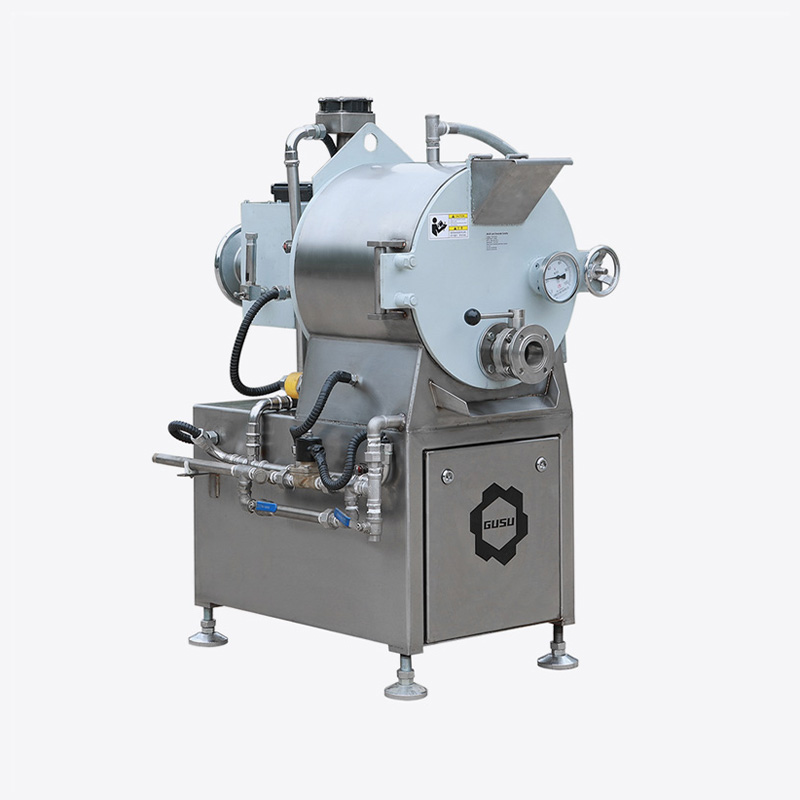
This is where a Ball Mill Chocolate Machine earns its place on a production floor. Whether it's a two-person workshop selling truffles at a weekend market or a mid-sized factory shipping bars to grocery chains, the underlying problem is the same: cocoa solids, sugar crystals, sometimes milk powder, all need to be ground down until nobody can feel them anymore. Inside the machine, steel balls tumble around a rotating drum, crashing into the chocolate mixture over and over, essentially doing what a mortar and pestle does — just at a scale nobody's arm could keep up with.
A lot of the complaints that get blamed on "bad batches" or "off ingredients" actually trace back to this one stage, long before tempering or molding ever comes into the picture.
Content
- 1 What Is a Ball Mill Chocolate Machine?
- 2 Why Texture Keeps Being a Sticking Point
- 3 How It Actually Improves Processing
- 4 Where Manual Processing Starts Breaking Down
- 5 Why Consistency Matters More Than It Sounds Like It Should
- 6 Supporting More Than One Kind of Chocolate Product
- 7 What Efficiency Actually Looks Like on the Floor
- 8 Keeping Up With What Customers Keep Asking For
- 9 Choosing Equipment Isn't Just a Purchase — It's a Bet on the Future
- 10 Where This Fits Into Broader Production Trends
- 11 The Bigger Picture
What Is a Ball Mill Chocolate Machine?
Picture a drum, half full of small steel balls, turning slowly while chocolate paste moves through it. Every rotation throws those balls against each other and against the particles suspended in the mixture. Cocoa mass and sugar don't want to become smooth on their own — left alone, they clump, settle unevenly, or leave larger particles scattered through what should be a uniform paste. The ball mill's whole purpose is grinding that resistance down until the mixture feels silky rather than sandy.
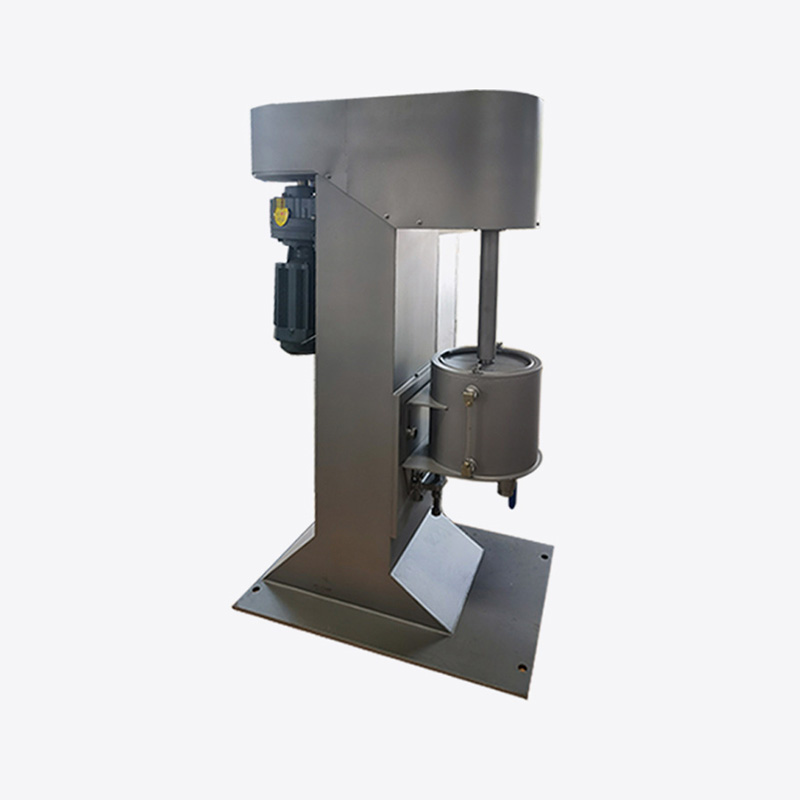
It's not doing one single job so much as several at once: breaking particles down, keeping the mixture moving so nothing settles, and blending everything into something consistent enough that one spoonful tastes the same as the next. A small batch of truffle filling and a run of bar-grade chocolate go through more or less the same process, just at very different volumes.
Why Texture Keeps Being a Sticking Point
Texture is one of those things customers notice without being able to explain why. Nobody says "the particle size distribution feels off" — they just say the chocolate feels weird, or cheap, or not quite right. That reaction usually comes from sugar particles that were never ground fine enough.
The frustrating part is how inconsistent this can be even within one kitchen or one factory. A batch made Tuesday morning turns out silky. The same recipe made Tuesday afternoon feels slightly grainy, and nobody can point to exactly what changed. Manual mixing depends on how long someone stirred, how attentive they were, whether they got distracted halfway through — none of which shows up on paper but all of which shows up on the tongue.
A ball mill takes a lot of that variability out of the equation simply by grinding the same way every single time, whether it's run by a tired employee at the end of a long shift or someone fresh in the morning.
How It Actually Improves Processing
Cocoa and sugar are stubborn ingredients. Thrown into a basic paddle mixer, they'll blend on the surface while still hiding larger particles deeper in the mix — the kind of thing that looks fine visually but fails the moment someone actually eats it.
A ball mill solves this differently. Instead of stirring ingredients past each other, it keeps steel balls and chocolate paste in constant, grinding contact, wearing particles down rather than just pushing them around. Want a filling smooth enough for a ganache? Run it longer. Want a praline with a bit more texture and crunch? Pull it out earlier, or adjust the ball size. Same machine, different outcome, depending on what the recipe actually calls for.
Where Manual Processing Starts Breaking Down
Hand-mixing works fine for a small operation — a few kilograms here, a batch of truffles there. The trouble starts once a business tries to grow past that.
Suddenly you're relying on one person's judgment for consistency. Mixing time gets adjusted "by feel," which sounds fine until that one experienced employee calls in sick and someone else runs the batch differently. Preparation starts eating up more time than the actual chocolate-making. And batches that should be identical start drifting apart from each other for reasons nobody can quite pin down.
Bringing in a ball mill doesn't eliminate the craft involved in chocolate-making, but it does take the grinding stage out of guesswork. That alone frees up a surprising amount of time that used to go toward fixing texture problems after the fact.
Why Consistency Matters More Than It Sounds Like It Should
Someone who buys the same chocolate bar every week notices immediately if this month's batch feels off compared to last month's — even if they can't articulate exactly why. That kind of inconsistency erodes trust faster than almost anything else in food production, because it makes the product feel unreliable even when the recipe hasn't changed at all.
Consistency touches more than just taste. It shapes how a brand gets remembered, whether customers come back, how smoothly daily production runs without constant firefighting, and whether a business can expand into new markets with any confidence that what worked in one place will hold up in another. Running the same grind cycle every time, rather than depending on manual feel, removes a lot of that unpredictability at the source.
Supporting More Than One Kind of Chocolate Product
A coating meant to cover a cookie doesn't need the exact same consistency as a filling meant to sit inside a truffle shell — but both rely on the same underlying grinding process to get sugar and cocoa particles down to size. That's part of why one ball mill can end up supporting several different product lines at once: cookie and fruit coatings, truffle and filled-chocolate centers, standard bars meant to bite evenly, and specialty items built around unusual flavors or textures.
Running one flexible machine across all of that tends to save a business from needing separate, dedicated equipment for every single product — which adds up fast in both floor space and cost.
What Efficiency Actually Looks Like on the Floor
Speed gets talked about a lot, but efficiency is really about something quieter — how much rework happens after a batch finishes, how often a machine needs someone hovering over it, how cleanly one batch hands off to the next without a pile-up.
A ball mill designed with that flow in mind keeps grinding continuous instead of stop-and-start, trims out a lot of the manual intervention between stages, adapts to different recipes without needing a total reset, and doesn't demand extensive training just to operate day to day. None of that shows up as a dramatic number on a spreadsheet, but it shows up in how smoothly a shift actually runs — and in how much less time gets spent troubleshooting texture instead of just hitting the day's output target.
Keeping Up With What Customers Keep Asking For
Chocolate buyers don't stay still. Single-origin bars, odd flavor pairings nobody would have suggested a decade ago, textured fillings, coatings built for snacks that didn't exist last year — the requests keep shifting, and a business stuck with rigid equipment struggles to keep pace.
A ball mill gives some room to breathe here. New flavor combinations, requests for a smoother or slightly grainier finish, custom orders from clients wanting something specific, a general push toward tighter quality control — all of it can get tested and adjusted without tearing apart the whole production line every time a new idea comes along.
Choosing Equipment Isn't Just a Purchase — It's a Bet on the Future
Buy the wrong machine and it doesn't just cost money upfront. It quietly limits what a business can produce for years afterward, since replacing major equipment isn't something businesses do lightly.
Before committing, many manufacturers end up asking a handful of practical questions: does this match current volume and where we expect to be in a couple of years? Can it handle more than one recipe, or will we need a second machine the moment we add a new product? How much maintenance does it actually demand once the warranty period ends? Does it fit into the workflow we already have, or will it create a bottleneck somewhere else on the floor?
A workshop that thinks through these questions upfront tends to avoid the expensive, frustrating experience of outgrowing a machine within a year or two of installing it.
Where This Fits Into Broader Production Trends
Food manufacturing generally has been drifting toward setups that can pivot without much drama — switching recipes, resizing batches, responding to a sudden spike in demand for one product without grinding the whole operation to a halt. Chocolate makers feel that same pressure. Customers want the reliability of a consistent product, but they also keep wanting new things, and satisfying both at once is hard with equipment that only does one narrow job well.
A ball mill fits that shift reasonably well, since it handles the grinding stage across different recipes, batch sizes, and product types rather than being locked into one use case.
The Bigger Picture
Whether it's a small workshop turning out truffles a few dozen at a time or a factory running bars around the clock, the core problem stays the same: turning rough, uneven ingredients into something smooth and dependable, over and over, without losing the flexibility to try something new. A Ball Mill Chocolate Machine handles a large chunk of that problem by pulling the grinding and mixing stage out of guesswork and into something repeatable.
For anyone dealing with gritty texture complaints, batches that don't match each other, or a production line that can't keep pace with new ideas — that grinding stage, more often than not, is where the problem usually starts.