

 English
 Español

The gap between cocoa beans and finished chocolate is wider than it looks from the outside. Two factories can use the same cocoa origin, the same roasting profile, and the same recipe — yet produce chocolate that tastes and feels completely different. More often than not, the explanation sits in the grinding and conching stages. These are the processes that determine particle fineness, texture development, and flavor expression, and they are where a properly matched Chocolate Conching Refining Machine makes the difference between a product that meets specifications and one that genuinely stands out in the market.
Content
- 1 What Happens to Cocoa Beans Before Grinding Begins?
- 2 What Is Cocoa Bean Grinding?
- 3 What Is Chocolate Conching?
- 4 Grinding vs Conching: What Is the Difference?
- 5 How Grinding and Conching Together Affect Chocolate Quality
- 6 Equipment Used for Grinding and Conching Cocoa Beans
- 7 Ball Mill vs Traditional Conche: Which Approach Fits Which Production?
- 8 How to Choose the Right Chocolate Refining Machine
- 9 Questions Buyers and Producers Commonly Ask
- 9.1 What Is the Purpose of Chocolate Conching?
- 9.2 What Is the Difference Between Refining and Conching?
- 9.3 Can a Ball Mill Replace a Traditional Conche?
- 9.4 What Is a Chocolate Refiner Conche?
- 9.5 How Long Does Chocolate Conching Take?
- 9.6 What Equipment Is Needed for Industrial Chocolate Production?
- 9.7 Can One Machine Handle Both Grinding and Conching?
What Happens to Cocoa Beans Before Grinding Begins?
The Processing Steps That Set Up Grinding and Conching
Grinding and conching do not happen in isolation. They are part of a sequence that begins with the raw bean and moves through several distinct transformation stages before chocolate is ready for tempering and moulding.
The typical production sequence looks like this:
- Roasting: heat develops flavor precursors and reduces moisture
- Cracking and winnowing: the shell is removed to leave cocoa nibs
- Pre-grinding: nibs are broken down into a rough mass
- Fine grinding: particle size is reduced to the target fineness
- Refining: the mass is further processed to achieve smooth texture
- Conching: continuous mixing, heating, and aeration develop the final flavor and mouthfeel
- Tempering and moulding: the finished chocolate is stabilized and shaped
Grinding and conching are distinct in their purpose, but they build directly on each other. A poorly executed grind creates extra work for the conche. A good conching process cannot compensate for inadequate particle reduction upstream.
What Is Cocoa Bean Grinding?
Why Grinding Defines the Physical Foundation of Chocolate
When cocoa nibs are ground, the cell walls break open and release cocoa butter — the fat that gives chocolate its characteristic melting behavior. The result is cocoa liquor, sometimes called cocoa mass, which is a thick fluid containing both cocoa solids and cocoa butter in suspension. Everything downstream in chocolate production depends on the quality of this grinding stage.
The mechanical process involves applying pressure and shear forces to progressively smaller cocoa particles. The grinding equipment controls how finely those particles are reduced, how evenly that reduction is distributed, and how efficiently the cocoa butter is released in the process.
Grinding matters because:
- Particle size directly affects how chocolate feels in the mouth — coarser particles produce a rough, gritty sensation that no amount of conching fully eliminates
- Uneven particle distribution creates inconsistency in texture across the batch
- Incomplete fat release makes the subsequent refining and conching stages less effective
- The fineness achieved at the grinding stage determines the baseline quality ceiling for everything that follows
How Fine Does Chocolate Need to Be Ground?
The target particle size for commercial chocolate production falls within a range where individual particles are below the threshold that the human palate can detect as texture. Above that threshold, chocolate feels rough regardless of how it was conched. Below it, the difference between chocolate types lies in aroma, flavor balance, and melt rate rather than granularity.
Different chocolate categories have different particle size requirements. Premium single-origin chocolate often aims for a finer grind than industrial compound chocolate, partly because the flavor profile depends on a cleaner, more complete sensory experience. Industrial production prioritizes throughput consistency, which means maintaining a stable particle range across large batches rather than chasing the absolute lower end of the fineness scale.
A Ball Mill Chocolate Machine handles this task efficiently in industrial contexts by circulating the chocolate mass through a chamber filled with steel balls that apply consistent shear and impact forces. The contact between the balls and the chocolate mass reduces particle size progressively and with high uniformity — which is why ball mill refining has become the standard approach in mid-to-large scale chocolate production.
What Is Chocolate Conching?
The Process That Transforms Refined Mass Into Finished Chocolate
Conching is a post-grinding process that involves continuous mixing, aeration, and controlled heating of the refined chocolate mass over an extended period. The word itself comes from the shell-shaped vessels that were historically used for the process, though modern conching equipment looks nothing like that original design.
What conching actually accomplishes is more complex than the simple "smoothing" description that often appears in introductory accounts. The process works on several dimensions simultaneously:
- Volatile acid removal: Undesirable acidic compounds that develop during fermentation and roasting are driven off during the aeration phase, reducing sharpness and bitterness in the finished flavor
- Moisture reduction: Residual moisture in the chocolate mass is evaporated, which affects both flavor stability and flow properties
- Flavor development: Extended thermal and mechanical processing causes chemical reactions that build depth and complexity in the aroma profile
- Texture refinement: Even after grinding has achieved the target particle size, conching further improves how the particles are coated with cocoa butter, which changes the mouthfeel from grainy to genuinely smooth
- Emulsification support: The mechanical action helps lecithin or other emulsifiers distribute evenly through the mass, which improves flow characteristics in the next processing stages
How Long Does Conching Take?
Conching duration is one of the most variable parameters in chocolate production, and the right answer depends heavily on the production scale, chocolate type, and quality target.
Artisan and craft producers who prioritize flavor complexity often conch for extended periods — the slow, thorough processing allows subtle aromatic development that faster industrial processes do not achieve. Industrial producers working with compound chocolate or high-volume mass-market chocolate use much shorter conching cycles, relying on the efficiency of modern equipment to achieve adequate results in less time.
Neither approach is categorically right or wrong. The duration question is ultimately about matching the process to the product specification and the production economics. A Chocolate Refiner Conche designed for premium craft production operates under different parameters than one configured for continuous industrial output.
Grinding vs Conching: What Is the Difference?
Two Processes, Two Distinct Jobs
A persistent confusion in discussions about chocolate production is treating grinding and conching as interchangeable or assuming one can substitute for the other. They cannot. They address different problems at different stages of production.
| Process | Primary Purpose | Effect on Product | Typical Equipment |
|---|---|---|---|
| Grinding | Reduce particle size | Physical texture | Ball mill chocolate machine, pre-grinder |
| Conching | Develop flavor and refine mouthfeel | Aroma, smoothness, bitterness reduction | Chocolate refiner conche, continuous conche |
| Combined refining | Particle reduction with simultaneous mixing | Efficiency in continuous production | Chocolate conching refining machine |
| Melting / tempering | Prepare mass for further processing | Flow properties, crystal structure | Industrial chocolate melter, tempering unit |
A common misunderstanding is that longer conching can compensate for coarse grinding. It cannot — at least not fully. Conching improves the distribution of cocoa butter around existing particles, but it does not meaningfully reduce particle size. If the grind is too coarse, the chocolate will retain perceptible roughness regardless of conching duration.
The reverse is equally true. Achieving very fine particle size through grinding does not replace the flavor and texture benefits of conching. A finely ground but unconched chocolate mass still carries harsh acids and lacks the rounded mouthfeel that conching develops.
How Grinding and Conching Together Affect Chocolate Quality
Texture: The Result of Getting Both Stages Right
Smooth texture in chocolate is the combined result of fine, even particle reduction in the grinding stage and thorough cocoa butter distribution in the conching stage. Neither contributes fully to smoothness without the other. The grinding stage sets the physical ceiling; the conching stage brings the product up to that ceiling through mechanical and thermal action.
Producers who invest in a high-quality Ball Mill Machine for Chocolate and pair it with adequate conching capacity consistently produce more uniform results than those who over-rely on one stage to compensate for limitations in the other.
Flavor Development Across Both Stages
Flavor in chocolate is not fixed at the point of roasting. It continues to develop — and in some cases to be damaged — through everything that happens afterward. Grinding generates heat through mechanical friction, which can drive off delicate aromatic compounds if temperatures are not controlled. Conching generates both beneficial flavor development through controlled heating and beneficial removal of undesirable volatiles through aeration.
Managing both stages with appropriate temperature profiles is what separates chocolate with a clean, developed flavor from chocolate that tastes flat, harsh, or inconsistent across batches.
Mouthfeel: Where Conching Does Its Most Recognizable Work
The way chocolate melts on the tongue — whether it feels silky, waxy, grainy, or rich — is where conching has its most noticeable effect. The coating of cocoa butter around individual cocoa and sugar particles changes fundamentally during conching. Properly conched chocolate melts more evenly and fully because the fat distribution is more complete.
This is particularly relevant for producers targeting premium market segments where mouthfeel is as important as flavor in the sensory experience. A Chocolate Refiner Conche designed for premium production allows precise control over temperature, duration, and aeration rate — which gives the producer the ability to tune mouthfeel characteristics for different product lines.
Equipment Used for Grinding and Conching Cocoa Beans
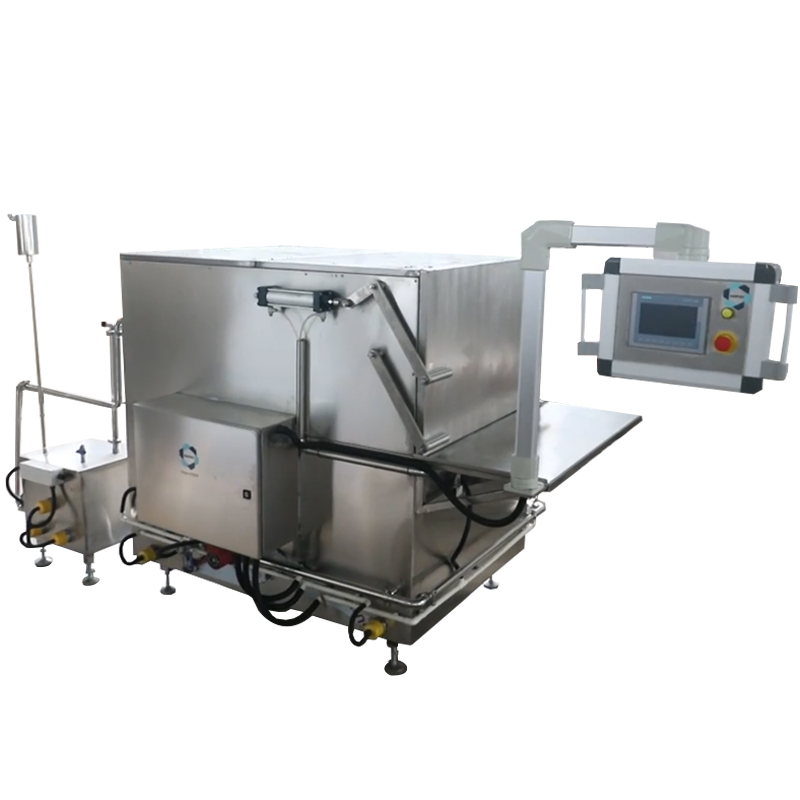
Chocolate Conching Refining Machine
The Chocolate Conching Refining Machine combines refining and conching functions in a single integrated system. Rather than processing the chocolate through separate grinding and conching stages with transfers between equipment, this configuration handles both particle refinement and flavor development in a continuous or semi-continuous process.
This integration is particularly well-suited to:
- Mid-to-large scale production facilities where throughput consistency is a priority
- Operations that want to reduce equipment footprint without sacrificing quality
- Producers running continuous production schedules where transfer time between machines represents real output loss
- Facilities producing multiple chocolate types that benefit from a flexible, adjustable system
The efficiency advantage is real. Eliminating inter-stage transfers reduces handling, reduces temperature fluctuation, and keeps the process tighter. For industrial chocolate production, this translates directly to more consistent output per shift.
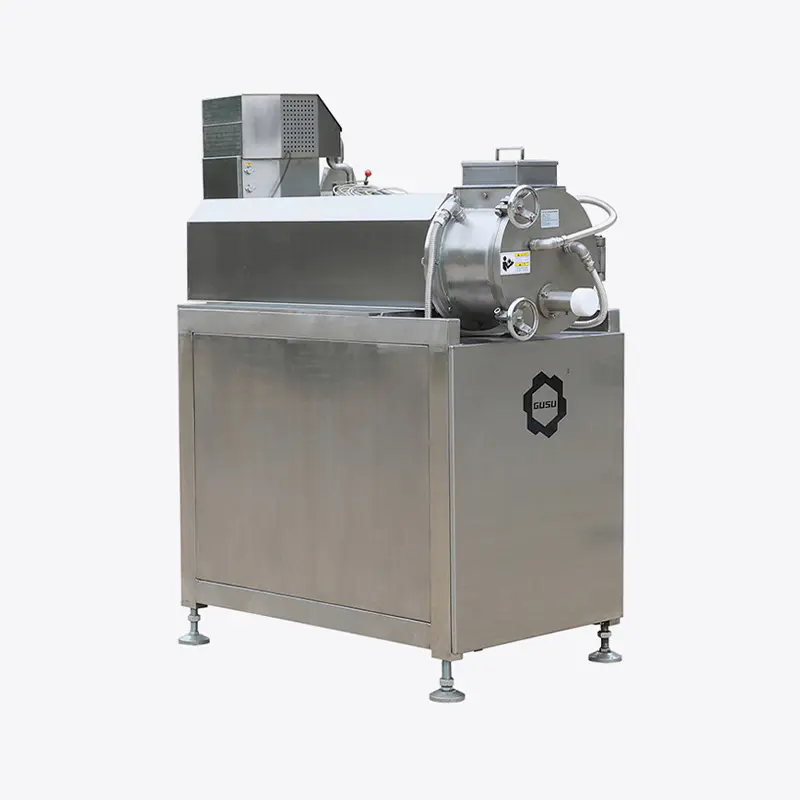
Ball Mill Chocolate Machine
A Ball Mill Chocolate Machine refines chocolate mass by circulating it through a chamber containing steel balls of controlled size. The collision and shear forces between the balls and the chocolate mass progressively reduce particle size with a high degree of uniformity.
Key advantages in industrial chocolate production:
- High throughput relative to equipment footprint
- Consistent particle size distribution across batches
- Adjustable processing time allows the producer to tune fineness to the specific chocolate type
- Suitable for continuous production configurations where the output feeds directly into downstream stages
- Lower labor intensity than traditional stone grinding equipment
Ball Mill for Chocolate Making is the standard approach in factories producing at scale precisely because the particle size control is predictable and the energy consumption per kilogram of output is favorable compared to alternatives.
Chocolate Refiner Conche
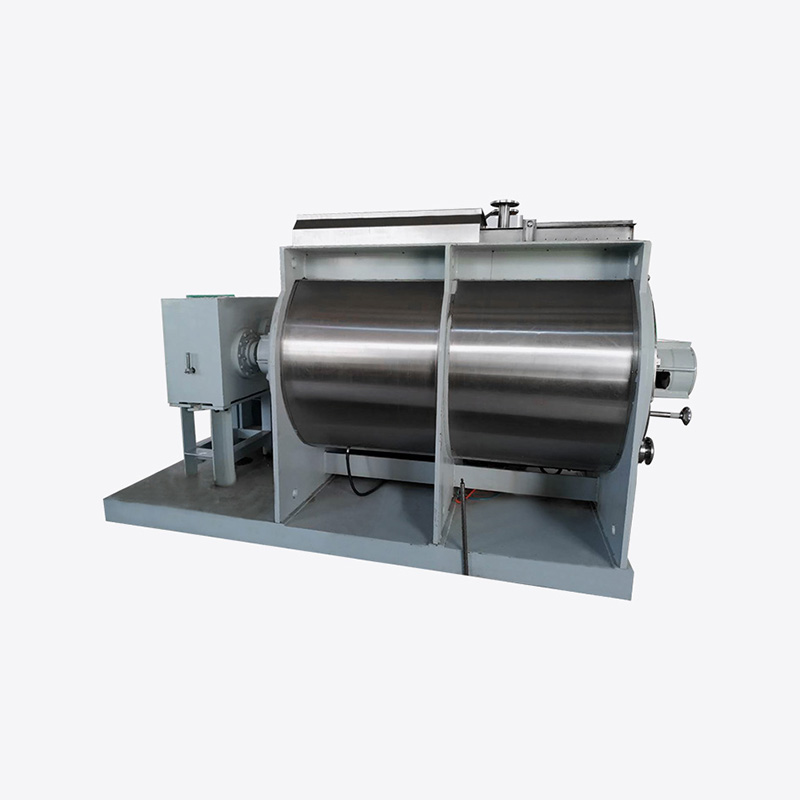
The Chocolate Refiner Conche is the category of equipment that handles the combined functions of refining residual particle irregularities and developing flavor through conching action. Modern designs incorporate heating and cooling control, aeration mechanisms, and mixing geometries that allow the operator to run different phases of the conching process with different parameters.
For premium chocolate production where flavor complexity is a priority, the refiner conche offers the control that batch-oriented craft producers need. The extended processing capability — with the ability to adjust temperature and aeration over long cycles — supports the kind of flavor development that high-value chocolate commands in the market.
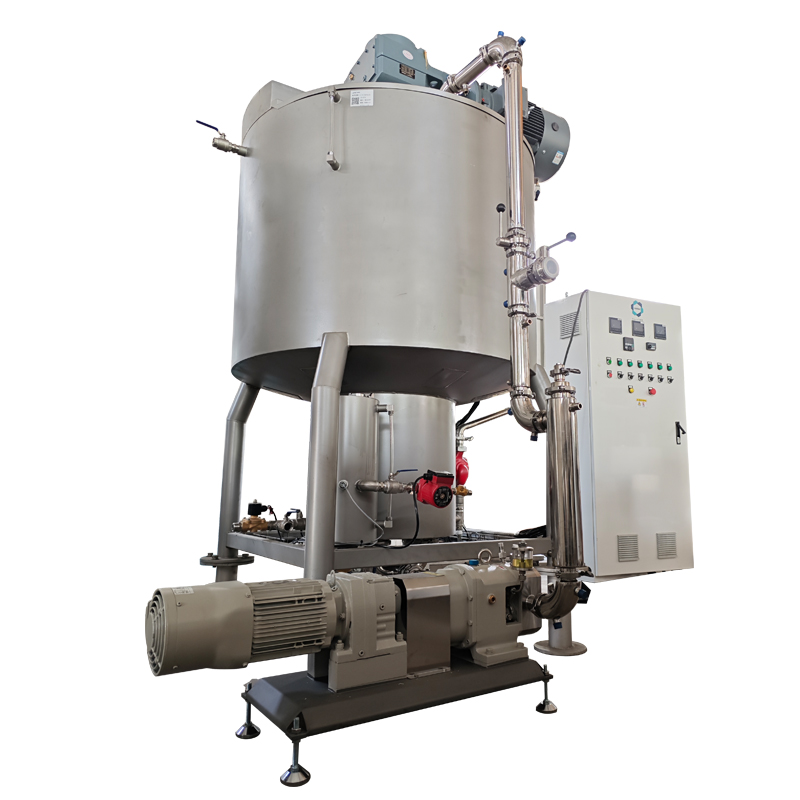
Industrial Chocolate Melter
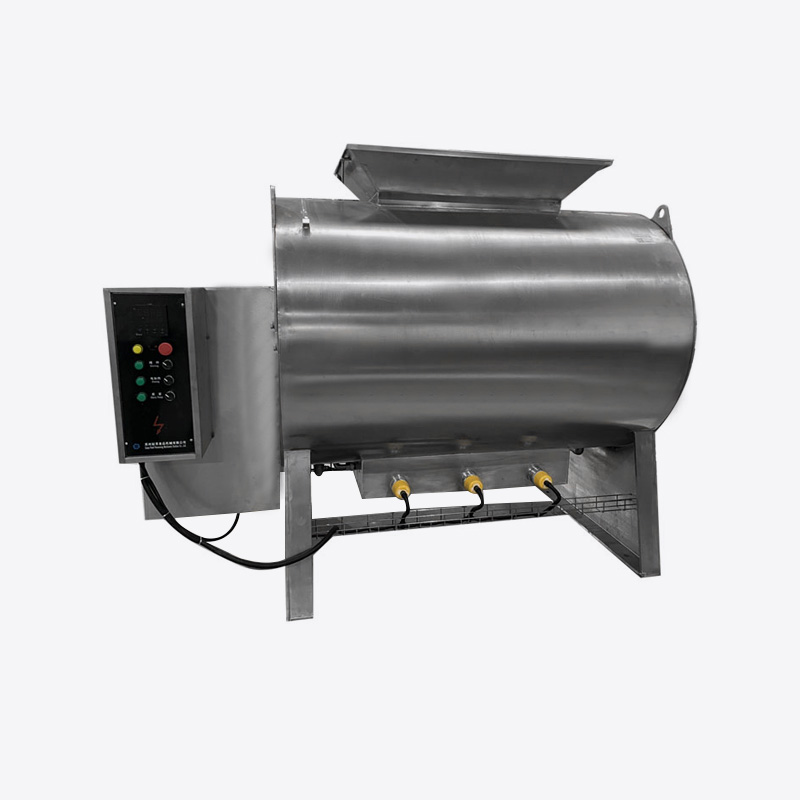
An Industrial Chocolate Melter is not a refining or conching device, but it occupies a critical position in the processing line. It handles the initial melting of cocoa mass and other ingredients before they enter the refining system, and it maintains the chocolate mass in a fluid state between processing stages.
The relevance of the melter to refining and conching quality is indirect but real: if the chocolate mass entering the refining system has inconsistent temperature, uneven fat distribution from incomplete melting, or moisture contamination from inadequate heating control, the refining and conching stages start at a disadvantage. Matching the melter specification to the downstream refining system is part of configuring a production line that delivers consistent quality.
Ball Mill vs Traditional Conche: Which Approach Fits Which Production?
Different Tools for Different Quality and Scale Targets
The question of ball mill versus traditional conche comes up regularly in equipment evaluation discussions, and it reflects a genuine difference in production philosophy rather than a simple better-or-worse comparison.
FactorBall Mill SystemTraditional Conche
Processing speedFaster — continuous operation is efficientSlower — extended batch processing
Automation capabilityHigh — minimal manual interventionMedium — more operator involvement in long cycles
Flavor developmentGood — less extended aeration than conchingStrong — extended aeration develops complex aroma
Particle size controlPrecise and consistentLess precise — depends on cycle management
Energy efficiencyFavorable for continuous productionHigher per-unit energy in extended batch cycles
Suited toIndustrial, compound, and mid-range premiumCraft, single-origin, and high-end premium
Investment scaleSuited to high-volume operationsSuited to lower-volume or artisan production
The practical answer for most producers is that ball mill refining and conching are not competing approaches — they serve different production models. A high-volume industrial producer running compound chocolate for food manufacturing clients has different equipment requirements from a craft producer making small-batch single-origin bars. Neither machine is wrong; they address different specifications.
For producers in between — mid-scale operations producing both volume products and premium lines — a Chocolate Conching Refining Machine that combines functionality offers a practical middle path.
How to Choose the Right Chocolate Refining Machine
Production Capacity Must Be Defined Clearly Before Specifying Equipment
Equipment selection that starts from product specification rather than equipment features consistently produces better outcomes. The right sequence involves defining what the chocolate needs to be — particle size target, flavor profile, production volume, and number of product variations — before working backward to the machine configuration that delivers those outcomes.
A structured evaluation covers:
- Target daily or hourly output: The equipment needs to handle projected volume with adequate margin for maintenance downtime and production variability
- Chocolate types being produced: Dark, milk, white, compound, and specialty chocolates have different processing requirements — equipment that handles all of them requires more flexibility in parameter control
- Particle size target: Finer targets require more processing time or more aggressive ball mill configurations
- Automation level: Continuous production with minimal operator involvement requires more sophisticated control systems than batch processing
- Integration with existing equipment: New refining equipment needs to fit into the existing production flow without creating bottlenecks or temperature management problems
- Future capacity: Equipment specified for current volume that cannot scale creates a replacement decision sooner than the investment justifies
Questions Buyers and Producers Commonly Ask
What Is the Purpose of Chocolate Conching?
Conching serves several purposes simultaneously — it removes volatile acidic compounds that produce harshness, develops aromatic complexity through controlled thermal and mechanical action, refines how cocoa butter is distributed around particles, and improves the mouthfeel characteristics of the finished chocolate. These outcomes cannot be achieved through grinding alone.
What Is the Difference Between Refining and Conching?
Refining focuses on physical particle reduction — making the solid components of chocolate smaller and more uniform. Conching focuses on flavor and texture development through mixing, heating, and aeration. Modern equipment often combines both functions, but they address fundamentally different quality dimensions.
Can a Ball Mill Replace a Traditional Conche?
For most industrial and mid-range production, yes — a ball mill system produces adequately refined chocolate with appropriate process management. For high-end premium production where extended aeration and slow flavor development are part of the product identity, a traditional conche or a Chocolate Refiner Conche with extended cycling capability remains relevant.
What Is a Chocolate Refiner Conche?
A Chocolate Refiner Conche is equipment that performs both the physical refinement of particle size and the conching functions of flavor and texture development in a single system. It reduces the number of processing steps and equipment pieces required while maintaining control over both dimensions of quality.
How Long Does Chocolate Conching Take?
Duration varies considerably depending on production scale, chocolate type, and quality target. Artisan and craft production often involves extended cycles measured in days. Industrial production with modern equipment achieves adequate results in hours. The right duration is determined by the flavor and texture target, not by a fixed rule.
What Equipment Is Needed for Industrial Chocolate Production?
A complete industrial chocolate processing line typically includes pre-grinding equipment, a Ball Mill Chocolate Machine or Chocolate Conching Refining Machine for refining and conching, an Industrial Chocolate Melter for mass management, tempering equipment, and moulding or enrobing systems. The configuration depends on the product type and production volume.
Can One Machine Handle Both Grinding and Conching?
A Chocolate Conching Refining Machine is specifically designed to handle both in an integrated process. This configuration is common in industrial operations because it reduces handling, maintains temperature stability, and allows continuous production without inter-stage transfer.
Grinding and conching are where the character of chocolate is fundamentally shaped, and the equipment that handles those stages determines the quality ceiling for everything a production facility can achieve. Choosing refining and conching equipment based on production volume, chocolate type, and quality targets — rather than simply on price — is what separates facilities that produce consistently good chocolate from those that struggle with batch-to-batch variation and customer complaints about texture or flavor. The connection between process understanding and equipment selection is direct: producers who understand what each stage accomplishes make better machine choices, configure their production lines more effectively, and get more consistent results from the investment they make in processing capacity. Gusu Food Processing Machinery Suzhou Co.,Ltd. designs and manufactures chocolate processing equipment including Chocolate Conching Refining Machines, Ball Mill Chocolate Machines, and integrated production line configurations suited to industrial, mid-scale, and craft production. For producers evaluating equipment options or planning new production capacity, reaching out to their technical team for a consultation on equipment selection and line configuration is a practical starting point.