

 English
 Español

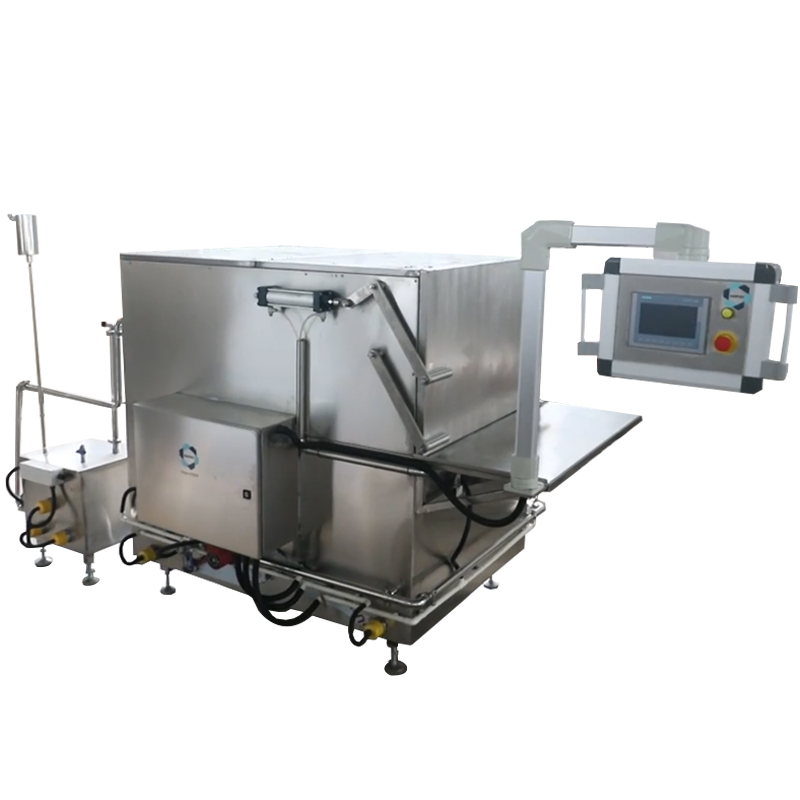
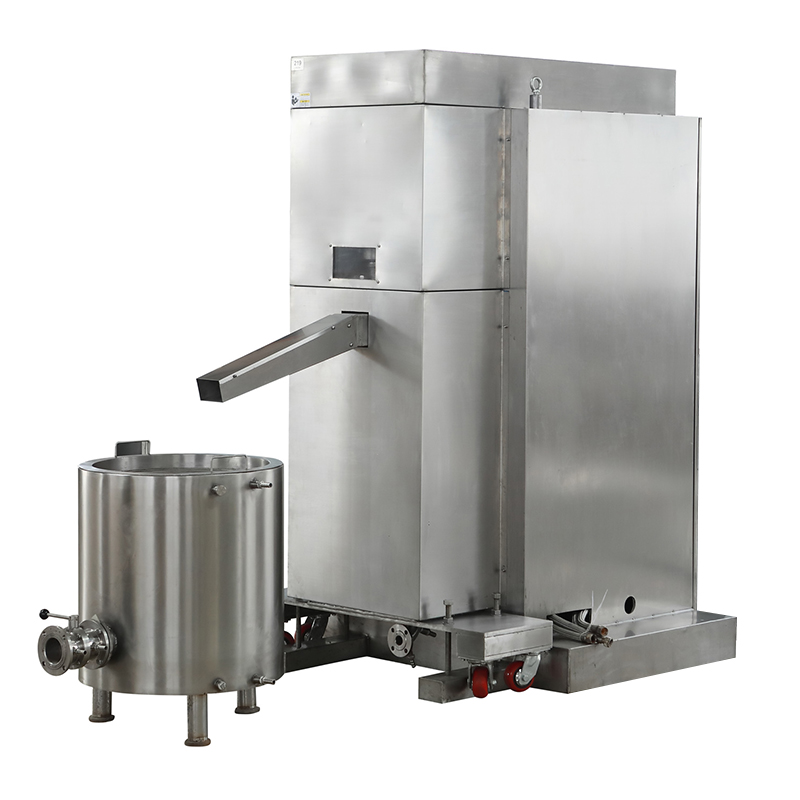
Procurement decisions for chocolate processing equipment rarely fail on price alone. More often, they fail because the capacity figure on a specification sheet did not translate into the actual throughput a factory needed once the machine was running under real production conditions. A Chocolate Ball Mill may be listed with a given output range, but that number shifts depending on formulation density, grinding fineness targets, cycle time, and whether the machine is running in batch or continuous mode. Buyers who understand how to read and compare these variables before committing to a purchase are far less likely to face the costly outcome of a machine that either bottlenecks the line or sits underutilized for years.
Content
- 1 Why Output Capacity Is Not a Single Number
- 2 How Do Buyers Determine the Right Capacity Range?
- 3 Batch Type vs. Continuous Type: Which Fits Your Capacity Needs?
- 4 Key Technical Factors That Affect Actual Output
- 5 A Practical Comparison Framework for Buyers
- 6 What to Verify Before Finalizing a Capacity Decision
- 7 Common Capacity Comparison Mistakes to Avoid
- 8 Long-Term Capacity Planning Considerations
- 9 Selecting a Supplier Who Can Support Your Capacity Requirements
Why Output Capacity Is Not a Single Number
Nominal Capacity vs. Effective Throughput
The capacity figure quoted by a manufacturer typically describes a reference condition - a standard chocolate mass at a standard fat content and viscosity, refined to a standard particle size target. Change any of those variables and the effective throughput changes too.
Factors that compress effective output below the nominal figure:
- Higher cocoa solid content increases viscosity, slowing circulation through the grinding media
- Lower fat content reduces flowability and extends cycle time per batch
- Finer particle size targets require longer grinding time, reducing the number of cycles per shift
- Higher ambient temperatures affect cooling system load, which can limit machine speed
Buyers should ask suppliers to confirm capacity under conditions that reflect their actual formulation, not a generic reference product.
Batch Capacity vs. Hourly Output
Batch machines are specified by volume or weight per cycle. Continuous machines are specified by throughput per hour. These two figures are not directly comparable without accounting for:
Loading and discharge time in batch systems
- Pre-mixing or pre-refining requirements before feeding a continuous system
- Downtime between batches for cleaning, temperature stabilization, or ball inspection
A batch system with a stated capacity may produce less usable output per shift than its nominal figure suggests once real operating patterns are factored in.
How Do Buyers Determine the Right Capacity Range?
Matching Capacity to Current and Projected Production Volume
A common mistake is sizing a Chocolate Ball Mill to current output needs without accounting for growth. A machine that perfectly fits today's production schedule may become the bottleneck within two or three years if demand increases. Experienced buyers typically evaluate capacity against:
- Current daily or weekly production volume in finished product weight
- Projected volume over the equipment's expected service life
- Whether the machine needs to handle multiple product lines or a single recipe
Oversizing creates underutilization and unnecessary energy cost. Undersizing creates a production ceiling that is expensive to break through without purchasing additional equipment.
Production Schedule as a Capacity Variable
The number of shifts a machine runs per day is as important as the machine's rated output. A machine with a lower hourly throughput running three shifts may outperform a higher-capacity machine running one shift. Before comparing equipment specifications, buyers should define:
- How many shifts per day the machine will run
- Whether production is seasonal or year-round
- Whether the line will run continuously or with scheduled breaks for changeovers or cleaning
These parameters convert capacity figures into real production volumes that can be compared across machines and suppliers.
Batch Type vs. Continuous Type: Which Fits Your Capacity Needs?
The Case for Batch Systems
Batch Chocolate Ball Mills draw material into the grinding chamber for a set period, then discharge the refined product. They are well-suited for operations that:
- Produce multiple product types requiring frequent formulation changes
- Run lower total volumes that do not justify continuous line investment
- Operate with limited downstream infrastructure for tanks and pumps
- Need to isolate each batch for quality verification before releasing to further processing
The flexibility of batch systems makes them practical for mid-scale manufacturers and for any operation where recipe variety matters more than maximum throughput.
The Case for Continuous Systems
Continuous Chocolate Ball Mills receive a constant feed of pre-mixed mass and discharge refined product without interruption. They are designed for operations that:
- Run high volumes of a consistent formulation across long production windows
- Have the upstream infrastructure to supply pre-refined material at a stable feed rate
- Prioritize energy efficiency per kilogram of output over operational flexibility
- Can justify the higher capital cost through volume and reduced per-unit processing cost
Continuous systems do not adapt as easily to formulation changes and typically require a pre-refiner or mixer to prepare the feed material before it enters the grinding chamber.
Key Technical Factors That Affect Actual Output
Grinding Media and Its Role in Throughput
The steel balls inside a Chocolate Ball Mill do the work of reducing particle size through impact and friction. Their diameter, fill level, and wear condition all affect how efficiently the machine converts energy into particle reduction:
- Smaller ball diameter produces finer grinding but at lower throughput per unit of energy
- Higher fill level increases grinding intensity but raises viscosity and can overload the cooling system
- Worn balls reduce grinding efficiency and extend cycle time without changing the machine's rated capacity
Buyers comparing machines from different suppliers should ask how grinding media specifications are matched to their target particle size and formulation.
Cooling System Capacity and Its Link to Output Rate
Grinding generates heat. Managing that heat is not a secondary concern - it directly limits how fast a machine can run. A Chocolate Ball Mill with an undersized cooling system cannot sustain its rated throughput without risking product quality through overheating.
Key questions to ask when evaluating cooling performance:
- Is the jacket cooled by tap water, chilled water, or a closed-loop refrigeration system?
- What is the maximum sustainable throughput at the ambient temperature of the facility?
- Does the machine have internal shaft cooling in addition to jacket cooling?
Facilities in warm climates or those running high-fat formulations with significant heat generation will find that cooling system capacity is a more important specification than it appears on a standard datasheet.
Drive System and Speed Control
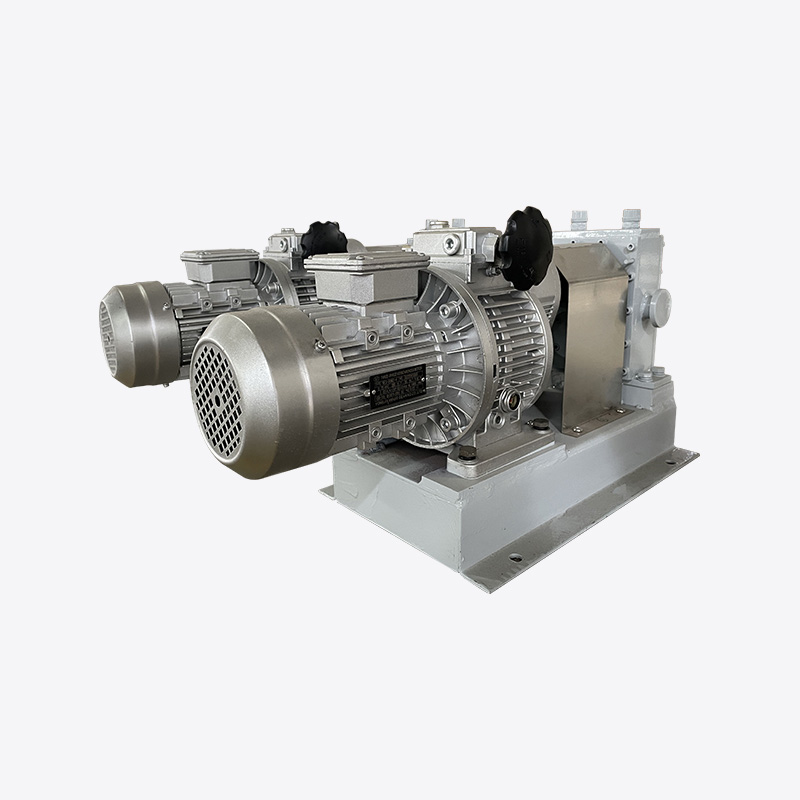
The motor and speed control system determine how consistently the machine can maintain its output under varying load conditions. Variable frequency drives allow operators to adjust shaft speed in response to changes in viscosity or formulation, which supports more stable throughput across different product types.
A machine with only a fixed-speed drive is less adaptable to the real conditions of a production environment where formulations vary or where seasonal ingredient variation affects viscosity.
A Practical Comparison Framework for Buyers
Side-by-Side Evaluation Table
| Evaluation Criterion | Batch System | Continuous System |
|---|---|---|
| Capacity structure | Per-cycle weight or volume | Per-hour throughput |
| Flexibility for recipe changes | High – easy to adapt between cycles | Low – requires full flush and restart |
| Infrastructure requirements | Lower – standalone operation possible | Higher – needs pre-refiner, tanks, pumps |
| Energy efficiency at scale | Moderate | Higher at sustained high volumes |
| Suitable production scale | Small to mid-range | Mid to large industrial |
| Capital investment | Lower | Higher |
| Cleaning and maintenance access | Simpler – open-access batch design | More complex – inline cleaning required |
| Scalability path | Add units or upgrade to continuous | Expand throughput by increasing feed rate or adding lines |
This framework does not produce a single correct answer. It structures the comparison so that the right answer becomes visible based on each buyer's specific production conditions.
What to Verify Before Finalizing a Capacity Decision
Step-by-Step Verification Process
Before committing to a specific machine or capacity rating, buyers should work through the following sequence:
- Define the actual formulation parameters - fat content, solid particle size of incoming material, and target fineness of finished product. These determine real throughput more accurately than any nominal specification.
- Calculate required output per shift - divide total weekly production volume by the number of available production shifts. This converts a vague "we need more capacity" statement into a specific throughput requirement.
- Request supplier confirmation at actual conditions - ask the supplier to confirm their machine's capacity at your formulation parameters, not at their reference condition.
- Evaluate cooling system specifications against your ambient environment - particularly relevant for facilities without temperature-controlled production areas.
- Confirm grinding media specifications - verify that the ball size and fill level are appropriate for your target particle size range.
- Ask about upgrade paths - a machine that can accept higher ball fill levels, additional cooling capacity, or integration into a continuous line later provides more long-term value than one that cannot scale.
- Review actual installation references - suppliers who have delivered machines into operations similar to yours can provide more relevant capacity validation than generic specification sheets.
Common Capacity Comparison Mistakes to Avoid
Comparing Specifications Without Aligning Conditions
Comparing two machines by their stated throughput figures is only meaningful if both figures were generated under the same formulation conditions, fat content, and target particle size. Comparing a nominal figure from one supplier against a real-condition figure from another will systematically misrepresent the difference between them.
Ignoring Integration Requirements
A continuous system may offer higher throughput per hour, but if the facility does not have pre-refining equipment, a buffer tank, and an appropriate pump system, that throughput cannot be realized. The capacity of the machine and the capacity of the surrounding line are not the same thing.
Selecting Based on Current Volume Only
Equipment investment cycles in chocolate manufacturing are long. A machine that fits today's production volume but has no path to accommodate growth will become a constraint well before the end of its mechanical service life.
Underestimating Cleaning and Changeover Time
In operations with multiple product lines, the time spent cleaning between batches or changing formulations reduces effective throughput. Machines with faster, easier cleaning cycles recover more of their rated capacity in a real multi-product environment.
Long-Term Capacity Planning Considerations
Designing for Scalability, Not Just Current Need
Buyers who approach capacity as a fixed requirement at the time of purchase tend to return to the equipment market sooner than those who plan for a range of future volumes. A sensible approach involves:
- Selecting a machine at the lower end of the capacity range that covers projected three-to-five-year volume, rather than current volume
- Confirming that the machine's design supports later integration into a continuous system if batch capacity becomes the bottleneck
- Evaluating suppliers on their ability to support capacity expansion through additional units, upgraded components, or line integration rather than machine replacement
Energy Cost Per Unit of Output
At scale, the energy consumed per kilogram of refined chocolate becomes a meaningful cost variable. Machines with efficient motor design, effective cooling systems, and variable speed control consistently deliver lower energy cost per unit than fixed-speed, less-efficiently cooled alternatives. This factor is often underweighted in initial procurement decisions but becomes significant over a multi-year operating period.
Selecting a Supplier Who Can Support Your Capacity Requirements
Capacity is not just a machine specification - it is a relationship between the machine, the formulation, the production environment, and the supplier's ability to provide guidance across all of these. Equipment that performs as specified in one facility may underperform in another if installation conditions, ingredient variation, or operational practices differ.
Gusu Food Processing Machinery Suzhou Co.,Ltd. designs and manufactures Chocolate Ball Mill equipment across batch and continuous configurations for a range of production scales, with technical support covering formulation matching, cooling system selection, grinding media specification, and integration into existing or new production lines. If you are evaluating output capacity options for a new line or an upgrade, engaging directly with a supplier who can assess your specific formulation and production conditions - rather than applying generic specification figures - is the practical path to a capacity decision that holds up in real operation. Reach out to the team with your production volume targets, formulation parameters, and facility conditions to receive a configuration recommendation grounded in your actual requirements.