

 English
 Español

Getting a chocolate ball mill up and running is one thing. Getting it to produce consistently smooth, fine chocolate at a stable throughput — that is where the real work begins. Many production teams find that output quality fluctuates in the weeks after installation, cycle times run longer than expected, or energy consumption sits higher than it should. These are not signs of a faulty machine. They usually point to process parameters that have not been dialed in yet. A Ball Mill Machine for Chocolate is only as effective as the operating conditions surrounding it, and those conditions require deliberate adjustment after the equipment goes live.
Content
- 1 Why Post-Installation Tuning Matters
- 2 Does Raw Material Preparation Affect Grinding Efficiency?
- 3 Grinding Media: Size, Fill Level, and Material
- 4 How Does Temperature Affect Chocolate Quality Inside the Mill?
- 5 Rotational Speed and Its Role in Fineness
- 6 What Does Throughput Optimization Actually Involve?
- 7 Can Monitoring and Control Systems Improve Consistency?
- 8 Energy Consumption: Is the Mill Running Efficiently?
- 9 A Note on Ongoing Process Improvement
- 10 Closing Thoughts
Why Post-Installation Tuning Matters
Installation gets the equipment physically in place. Calibration aligns its mechanical components. But neither of those steps tells you how the machine will behave under your specific production load, with your specific raw materials, at your specific ambient temperature.
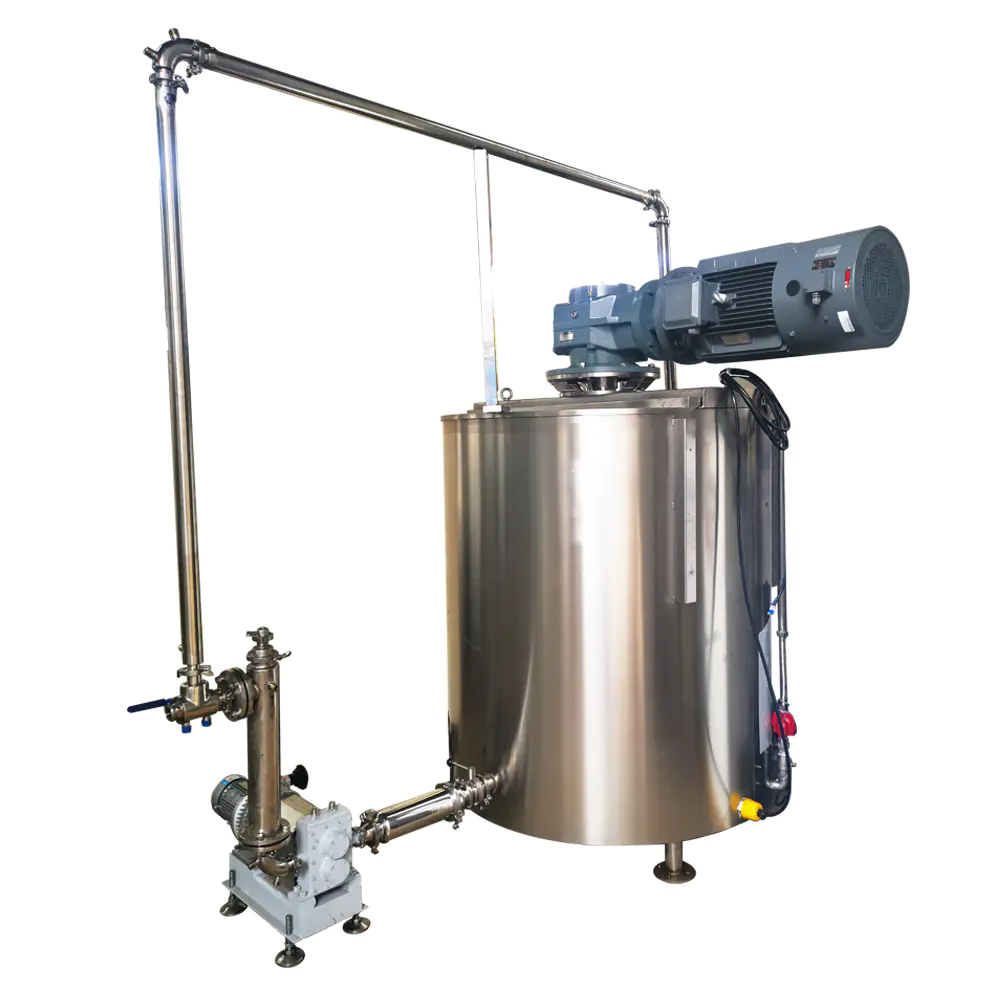
Chocolate is not a uniform product. Recipes vary. Fat content shifts. Cocoa particle size going into the mill depends on how well ingredients were pre-processed. All of these variables interact with how the mill grinds — and none of them are accounted for by the factory settings the equipment ships with.
Skipping the optimization phase often means running a capable machine below its potential for months, sometimes without realizing it.
Does Raw Material Preparation Affect Grinding Efficiency?
It does — more than most production teams expect. The mill does not start its work when the motor switches on. It starts with whatever goes in the feed.
Uneven pre-mixing, inconsistent fat distribution, or oversized cocoa particles entering the chamber all increase the load on the grinding media and extend cycle time. When ingredients are properly blended and particle sizes entering the mill are reasonably uniform, the machine reaches target fineness faster and with less mechanical strain.
A few preparation habits that support consistent mill performance:
- Pre-mix dry and fat-containing ingredients thoroughly before feeding
- Avoid feeding cold or partially solidified chocolate mass into the mill
- Check that upstream refining equipment is producing consistent output before each batch
- Do not vary batch composition significantly between runs without adjusting mill parameters
Small inconsistencies in the feed tend to show up as fineness variation in the finished product — a problem that gets misdiagnosed as a mill issue when the actual source is upstream.
Grinding Media: Size, Fill Level, and Material
The steel balls inside a Ball Mill for Chocolate Making are not interchangeable in terms of how they affect grinding. Size matters. Fill level matters. And the combination of the two shapes the efficiency profile of every production run.
Larger grinding balls apply more impact force, which helps break down coarser particles faster. Smaller balls create more contact points per unit of volume, which improves fine grinding and produces a smoother particle size distribution. In practice, many chocolate producers use a mixed ball charge — a combination of sizes — to handle both coarse breakdown and fine finishing within a single milling cycle.
Fill level is equally worth reviewing. An underfilled chamber reduces grinding contact and extends cycle time unnecessarily. An overfilled chamber restricts ball movement and can cause uneven grinding and elevated temperatures.
| Grinding Media Variable | Effect on Performance |
|---|---|
| Larger ball size | Faster breakdown of coarser feed particles |
| Smaller ball size | Improved fineness and smoother particle distribution |
| Mixed ball charge | Balanced performance across coarse and fine grinding stages |
| Low fill level | Reduced contact frequency; longer cycle time |
| High fill level | Restricted ball movement; risk of heat buildup |
After installation, it is worth running test batches with different fill levels to identify where the machine performs most reliably for your specific recipe.
How Does Temperature Affect Chocolate Quality Inside the Mill?
Temperature management is one of the more nuanced aspects of running a Ball Mill Chocolate Machine, and it is one of the areas where production teams most commonly run into trouble.
Chocolate is sensitive to heat. As the grinding media moves and friction builds inside the chamber, temperature rises. If it rises too quickly or too high, fat separation becomes a risk, cocoa butter migration accelerates, and the resulting texture can be grainy or unstable. Flavor compounds can also be affected by sustained heat exposure during milling.
The cooling system built into the mill needs to be actively managed — not just switched on and left. Factors that influence how well it keeps temperatures in range include:
- Coolant flow rate and inlet temperature
- Ambient temperature in the production space
- Batch size relative to chamber volume
- Milling speed and run duration
It is worth monitoring product temperature at the mill outlet during initial production runs and adjusting cooling parameters accordingly. If outlet temperature is consistently running higher than the recipe requires, the issue may be a combination of milling speed, batch size, and cooling capacity rather than any single factor.
Rotational Speed and Its Role in Fineness
Speed is one of the most directly adjustable parameters on a chocolate ball mill, and also one of the most misunderstood. Faster is not always better. Running the mill at a higher rotational speed increases the kinetic energy of the grinding media — but beyond a certain point, centrifugal force causes the balls to press against the mill wall rather than cascade through the chocolate mass. At that point, grinding efficiency drops rather than rises.
The relationship between speed and fineness is more of a curve than a straight line. There is a range within which the mill grinds effectively, and operating within that range consistently produces better results than pushing toward either end of it.
After installation, it is useful to run test batches at different speed settings, measuring fineness at fixed time intervals, to understand where the machine performs most reliably for your recipe and target particle size. This is not a one-time exercise — if you change recipe, fat content, or batch size significantly, the exercise is worth repeating.
What Does Throughput Optimization Actually Involve?
Throughput is not just about how fast the mill runs. It is about how much usable product comes out per hour of operation — accounting for batch changeovers, cleaning cycles, and any downtime caused by parameter-related issues.
Several factors affect practical throughput beyond just milling speed:
- Batch scheduling — running the mill continuously at a steady load tends to produce more consistent output than frequent start-stop cycles
- Cycle time calibration — milling longer than necessary to reach target fineness wastes energy and reduces the number of batches possible in a shift
- Cleaning frequency — residue from previous batches can affect fineness consistency if cleaning intervals are too long; overly frequent cleaning, on the other hand, cuts into productive time
- Transition between recipes — if the mill handles multiple chocolate types, the sequence in which they run can minimize cleaning time and reduce cross-contamination risk
Mapping out where time actually goes during a production shift often reveals that throughput losses are not coming from the mill itself, but from the processes around it.
Can Monitoring and Control Systems Improve Consistency?
Modern chocolate ball mills often include PLC-based control systems that allow operators to set and track key parameters — speed, temperature, run time — with a reasonable degree of precision. Using these systems actively, rather than as a passive display, makes a meaningful difference to output consistency.
Where automated control is available, consider setting temperature thresholds that trigger cooling adjustments automatically rather than relying on manual checks. Log parameter settings alongside fineness and viscosity measurements from each batch. Over time, this data reveals patterns — which combinations of settings produce the results you want, and which conditions tend to produce variability.
For operations that do not yet have integrated monitoring, even a simple manual log of batch parameters and outcomes builds a useful reference for troubleshooting and process improvement.
Energy Consumption: Is the Mill Running Efficiently?
Energy use is often an afterthought in the optimization process, but it is a real operating cost — and one that reflects process efficiency. A mill that consistently draws higher power than expected is usually telling you something: the load is too heavy, the ball fill is too high, the speed is outside the effective range, or the feed material is not being prepared consistently.
Tracking energy consumption per batch or per kilogram of finished product creates a useful baseline. When consumption drifts upward without a corresponding increase in output, it signals that something in the process has shifted and is worth investigating.
Practical steps that support energy efficiency:
- Maintain grinding media condition; worn or degraded balls reduce efficiency and increase the energy needed to achieve target fineness
- Avoid running the mill empty or at very low fill levels for extended periods
- Align milling cycle length with actual product requirements rather than defaulting to fixed run times
- Service the cooling system at regular intervals so it operates without the motor compensating for temperature drift
A Note on Ongoing Process Improvement
Optimization after installation is not a one-time activity. Production conditions change — recipes evolve, batch sizes shift, ingredient sources vary, ambient temperature fluctuates across seasons. Each of these changes can affect how the mill performs, even when nothing has been deliberately altered.
Building a habit of periodic review — checking whether fineness targets are still being met at current settings, whether energy consumption has drifted, whether cleaning cycles are still appropriately timed — keeps the operation running at a level that reflects the actual capability of the equipment rather than the settings established months ago.
Closing Thoughts
Getting reliable, consistent output from a chocolate ball mill after installation comes down to treating the machine as part of a broader production system rather than an isolated piece of equipment. Feed quality, grinding media configuration, temperature control, and parameter monitoring all interact — and improvement in one area often surfaces opportunities in another. For chocolate manufacturers looking to build stronger process capability around their milling equipment, Gusu Food Processing Machinery Suzhou Co.,Ltd. offers both equipment and technical support tailored to the demands of professional chocolate production. Whether you are commissioning a new line or looking to improve the performance of existing machinery, reaching out with your production requirements is a practical starting point for a more productive conversation.