

 English
 Español

Chocolate production looks deceptively simple from the outside — melt, mix, refine, temper. But anyone running a production line knows the reality is far messier. Gritty texture complaints from buyers, batches that never quite match each other, fat rising to the surface during storage — these problems do not fix themselves, and they tend to get worse as output volume scales up. A ball mill chocolate machine addresses several of these quality failures at their source, which is why manufacturers dealing with recurring defects often find it worth examining what the technology actually corrects.
Content
- 1 Grainy Texture: The Defect That Costs Sales
- 2 Fat Separation: A Stability Problem Rooted in Processing
- 3 Batch-to-Batch Inconsistency: A Production Management Problem
- 4 Uneven Viscosity: A Processing Problem With Real Consequences
- 5 Poor Flavor Development: What Refining Has to Do With Taste
- 6 A Practical Comparison: Quality Problems and Processing Responses
- 7 Does Switching to Ball Milling Require a Full Line Overhaul?
- 8 Reducing Rework and Waste Through Better Refining
- 9 Application Scenarios Where Ball Milling Delivers Noticeable Improvement
- 10 Moving From Quality Problems to Production Confidence
Grainy Texture: The Defect That Costs Sales
Why Chocolate Feels Rough on the Palate
Graininess in chocolate is almost always a particle size problem. When cocoa solids, sugar crystals, or milk powder particles remain too large after processing, the tongue detects them individually. The result is a texture that consumers associate with low-quality or improperly made chocolate — even when the flavor profile is otherwise well-developed.
Conventional refining approaches can reduce particle size, but the distribution of those particles is where things get complicated. Uneven refining leaves a mix of fine and coarse particles together, and the coarser fraction dominates the mouthfeel. Consistency across the full particle population matters as much as the average size.
How Ball Milling Targets This Specific Problem
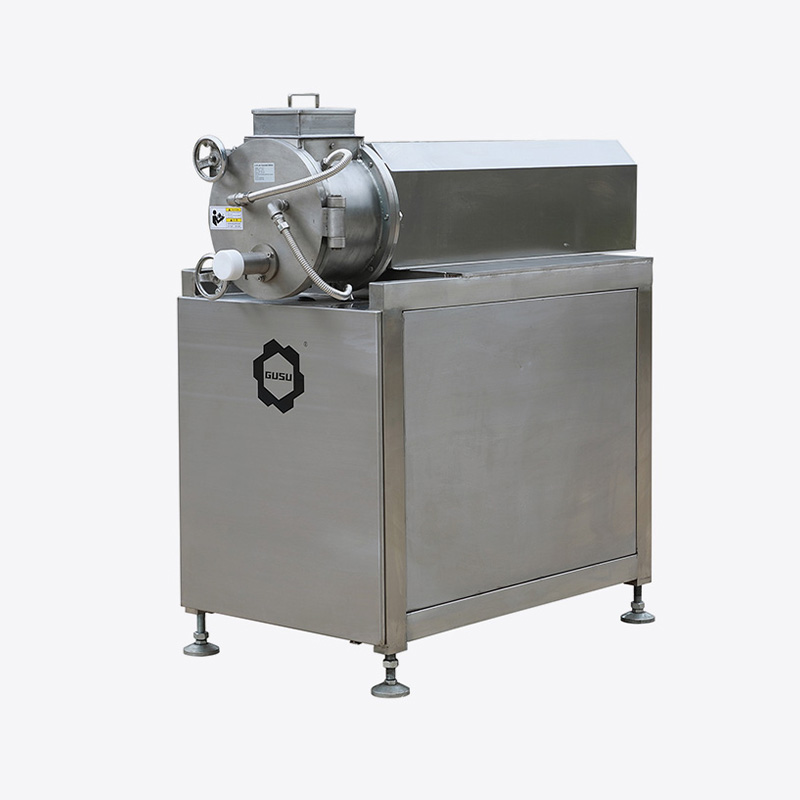
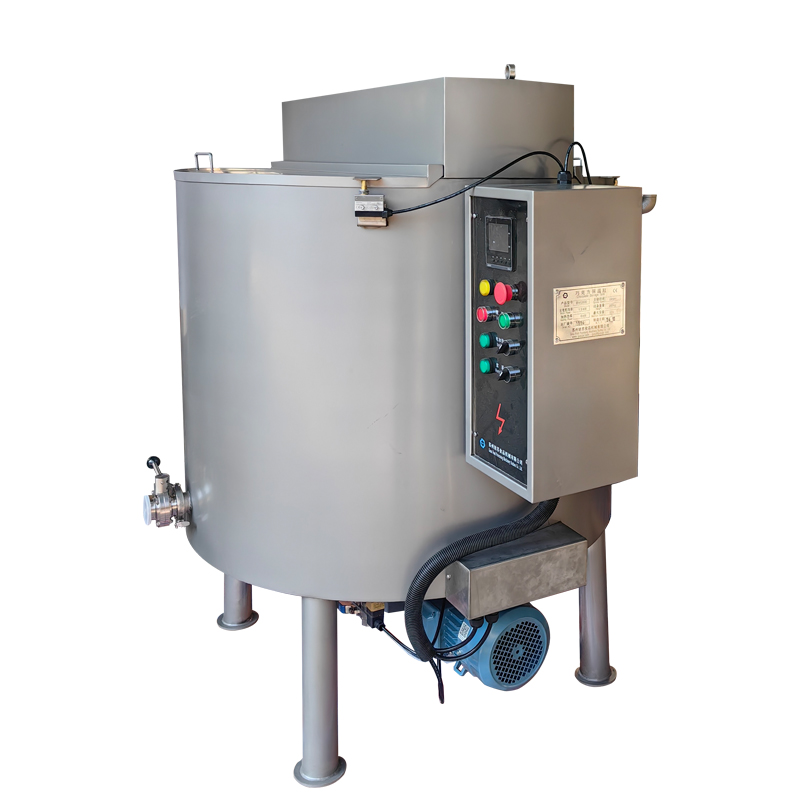
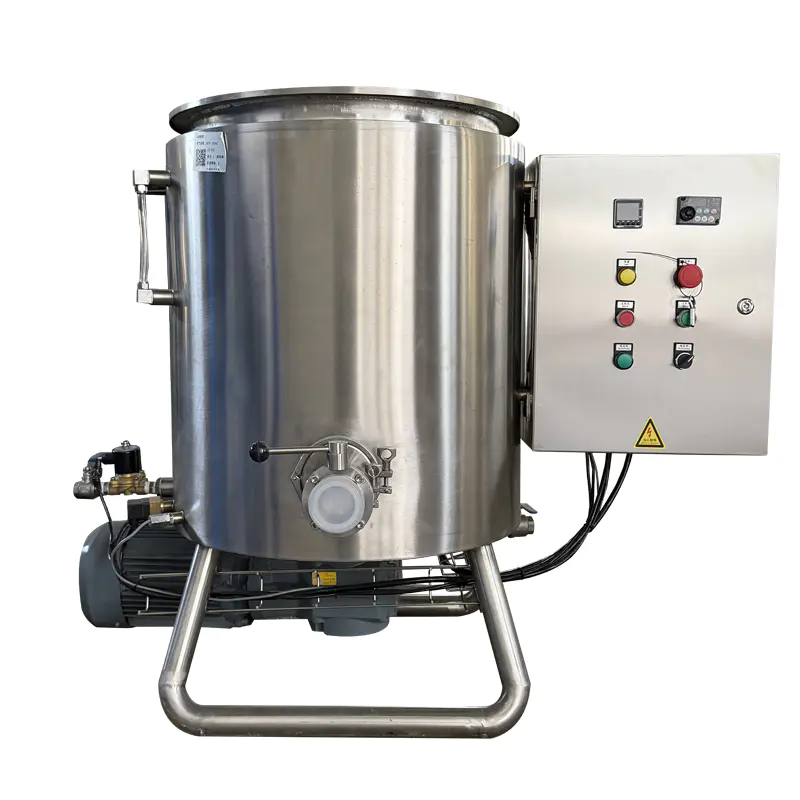
The working principle of a ball mill machine for chocolate involves grinding media — typically steel balls — that tumble and collide with chocolate mass as it circulates through the grinding chamber. The mechanical action reduces particles progressively and, importantly, does so across the entire batch in a relatively uniform way. The continuous circulation ensures that no portion of the mass escapes the grinding zone.
The outcome is a narrower particle size distribution compared to many conventional refining methods. Narrow distribution means fewer coarse outliers, which is the direct path to eliminating the gritty mouthfeel that drives consumer complaints.
Fat Separation: A Stability Problem Rooted in Processing
What Causes Fat to Migrate or Separate
Fat separation in chocolate — where cocoa butter or other fats pool visibly or create a greasy surface — often starts during production rather than storage. When emulsification is incomplete, fat and non-fat particles are not bonded tightly enough. Heat cycling during distribution then accelerates the separation that was already structurally present.
Incomplete mixing during refining is a common contributor. If the mass does not achieve thorough contact between all ingredients at a particle level, the emulsification step cannot fully compensate.
The Role of Intensive Mixing in Fat Distribution
Ball milling combines size reduction with continuous mechanical mixing. As the grinding media work on the mass, they also drive constant recirculation and contact between fat and non-fat components. This sustained mechanical action supports more thorough fat distribution at a microscopic level compared to processes that separate size reduction from mixing.
For manufacturers dealing with fat separation complaints — whether in finished bars, coatings, or filled products — improving the homogeneity of the mass during refining often delivers more durable results than adjusting emulsifier levels alone.
Batch-to-Batch Inconsistency: A Production Management Problem
Why Inconsistency Persists Even With Skilled Operators
One of the more frustrating quality issues in chocolate manufacturing is inconsistency between batches. Two runs using identical recipes and the same raw materials come out differently — in viscosity, in color depth, in texture. This is not always an operator error. It often reflects variability built into the refining process itself.
Open-system or manual refining approaches are sensitive to small changes in temperature, humidity, load volume, and timing. These variables shift slightly from batch to batch, and those shifts accumulate into product differences that end customers notice.
Closed-System Processing Reduces Process Variables
A ball mill for chocolate making operates as a closed system with controlled temperature, consistent grinding media contact, and defined circulation patterns. The process conditions are more repeatable because fewer variables are left to chance. When the same mass volume runs through the same machine under the same parameters, the output is more predictable.
This repeatability is particularly valuable for manufacturers supplying retail customers or OEM buyers who expect product specifications to hold across deliveries. Reducing batch variation is not just a quality story — it directly reduces the cost of rework and rejected product.
Uneven Viscosity: A Processing Problem With Real Consequences
How Viscosity Inconsistency Affects Downstream Operations
Chocolate with inconsistent viscosity creates problems at every step downstream. Enrobing lines rely on a stable flow rate. Moulding operations depend on the mass filling cavities evenly. Coating applications require consistent coverage thickness. When viscosity shifts batch to batch or even within a batch, each of these processes requires constant manual adjustment — which introduces more variability, not less.
Uneven particle size is one root cause of viscosity inconsistency. Coarser particles increase apparent viscosity and behave differently under shear compared to finer ones. A mass with a broad particle size distribution behaves unpredictably across different flow conditions.
Particle Uniformity as a Viscosity Control Tool
Because ball milling produces a narrower particle size range, the resulting mass has a more predictable viscosity profile. Formulators and production engineers working with well-refined chocolate mass spend less time compensating for viscosity drift and more time holding parameters steady across runs. For high-throughput lines, that stability translates directly into reduced waste and more consistent output per shift.
Poor Flavor Development: What Refining Has to Do With Taste
The Connection Between Particle Contact and Flavor Release
Flavor in chocolate is not just about the quality of the cocoa. It is also about how efficiently flavor compounds are released during consumption. When particle surfaces are too coarse or inconsistently distributed, flavor release is uneven — some parts of the mass deliver intensity while others contribute dull background notes. The experience is less cohesive than it should be.
Fine, uniform particles have a larger collective surface area in contact with the palate. This affects not just texture but the rate and completeness of flavor release. Manufacturers investing heavily in high-quality cocoa sourcing sometimes find that processing limitations are preventing the full flavor potential from reaching the consumer.
Ball Milling as a Flavor Optimization Step
The intensive size reduction achieved through ball milling exposes more surface area across all flavor-carrying particles. This applies to cocoa solids, vanilla, and other flavor ingredients that may be included in the formula. A more uniformly refined mass delivers a more consistent flavor experience — not because the raw ingredients changed, but because the processing allowed them to perform as intended.
A Practical Comparison: Quality Problems and Processing Responses
| Quality Problem | Root Cause | How Ball Milling Addresses It |
|---|---|---|
| Grainy / gritty texture | Coarse or uneven particle size | Intensive grinding to narrow particle size distribution |
| Fat separation | Incomplete emulsification during refining | Continuous mixing action integrates fat uniformly |
| Batch inconsistency | Variable process conditions | Closed-system processing with repeatable parameters |
| Viscosity drift | Broad particle distribution | Uniform particle size stabilizes flow behavior |
| Uneven flavor release | Insufficient surface area exposure | Finer particles increase flavor compound availability |
| Coating application issues | Inconsistent mass density | Homogeneous mass supports stable enrobing and moulding |
Does Switching to Ball Milling Require a Full Line Overhaul?
Integration Into Existing Production Setups
A common concern among manufacturers evaluating equipment upgrades is whether a new refining approach requires rebuilding the surrounding line. In many cases, a ball mill machine for chocolate fits into existing workflows as a replacement for a conventional refiner or as an additional refining stage. The upstream and downstream connections — melting, tempering, moulding — do not necessarily change.
What does change is the quality of the mass entering those downstream steps. When the refined chocolate mass is more uniform and stable, the performance of the entire line tends to improve — not because the other machines changed, but because they are now working with a more consistent input.
Matching Machine Configuration to Product Type
Different chocolate products have different refining requirements. Dark chocolate formulas with high cocoa content behave differently from milk chocolate or compound coatings. Fillings and spreads have their own viscosity and texture targets. A ball mill for chocolate making can often be configured — through adjustment of grinding media, processing time, and temperature control — to accommodate multiple product types on the same equipment.
For manufacturers producing a range of products, this flexibility reduces the need for separate refining lines for each formulation. It is worth evaluating which product types are generating the most quality complaints and whether a single equipment change addresses multiple problems simultaneously.
Reducing Rework and Waste Through Better Refining
The Hidden Cost of Repeated Quality Failures
Quality defects in chocolate manufacturing do not just affect the product that gets rejected. They affect the labor spent catching and reworking defective batches, the material lost in batches that cannot be recovered, and the time spent investigating root causes rather than producing. These costs accumulate quietly and often go unattributed to the refining step because the connection is not always obvious.
When a production team consistently deals with texture complaints, fat separation reports, or viscosity problems, the refining process is a logical place to investigate before adjusting recipes or sourcing. Equipment-driven quality problems respond to equipment-level solutions.
Steps to Evaluate Whether Ball Milling Addresses Your Defects
Working through a structured evaluation helps avoid equipment investments that do not match the actual problem:
- Document the defects — categorize quality failures by type, frequency, and which products are affected.
- Trace the defect back through the process — identify at which stage the quality problem is introduced or locked in.
- Assess the current refining step — evaluate whether particle size distribution, mixing uniformity, and batch-to-batch consistency are being measured and controlled.
- Compare the defect types against ball milling capabilities — cross-reference the specific failures with what intensive grinding and closed-system processing actually address.
- Run a trial if possible — processing a known problem batch through a ball mill setup provides direct evidence before committing to a capital decision.
Application Scenarios Where Ball Milling Delivers Noticeable Improvement
Not every production environment benefits equally. The impact of switching to or adding ball milling tends to be most pronounced in specific scenarios:
- High-volume lines where batch-to-batch consistency is a contractual requirement
- OEM or private-label production where the buyer specifies texture and viscosity targets
- Manufacturers expanding from artisan to industrial scale, where manual process control can no longer hold quality steady
- Operations producing multiple product types who need flexibility without separate refining equipment for each
- Lines experiencing recurring rejection rates tied to texture, fat behavior, or coating performance
Moving From Quality Problems to Production Confidence
Refining is not the only variable in chocolate quality, but it is one of the more controllable ones. When particle size is managed with precision and the mixing process is thorough and repeatable, many of the quality complaints that seem difficult to trace — gritty texture, fat instability, unpredictable viscosity — become more manageable. The production team spends less time firefighting and more time holding steady parameters across runs.
For manufacturers at the point of evaluating equipment decisions, the question is not really whether ball milling works. The question is whether the specific defects showing up in your production match the problems this type of equipment is built to correct. If the answer is yes — and for many chocolate operations it is — then the evaluation shifts to finding a supplier who can configure the equipment to your product and volume requirements. Gusu Food Processing Machinery Suzhou Co.,Ltd. works with chocolate manufacturers across a range of production scales and product types, offering equipment and technical support tailored to actual production challenges. If recurring quality issues are pointing toward the refining step, reaching out to discuss your specific situation is a practical place to start.