

 English
 Español

Content
What Is a Chocolate Tempering Machine and Why Does Tempering Matter?
A chocolate tempering machine is a precision thermal processing device that guides melted chocolate through a controlled sequence of heating, cooling, and reheating stages to stabilize the cocoa butter crystal structure within the chocolate mass. The result is finished chocolate with a glossy surface, satisfying snap, smooth mouthfeel, and extended shelf life — the hallmarks of professionally produced chocolate that clearly distinguish it from improperly tempered product.
The science behind tempering centers on cocoa butter polymorphism. Cocoa butter can solidify into six distinct crystal forms (Forms I through VI), each with different melting points and physical characteristics. Only Form V (beta crystals) produces the desired combination of gloss, snap, and a melting point just below body temperature (33–34°C) that gives fine chocolate its characteristic sensory experience. A tempering machine creates the precise thermal conditions — typically cooling to 27°C to seed Form V crystals, then raising slightly to 31–32°C to melt out unstable lower forms — that cause cocoa butter to solidify exclusively in this optimal crystal structure.
Without proper tempering, chocolate sets with a dull, matte surface, develops fat bloom (the white streaking caused by unstable crystal migration to the surface), and breaks with a soft, crumbling fracture rather than a clean snap. For confectionery manufacturers and artisan chocolatiers alike, consistent tempering is not a refinement — it is a fundamental production requirement.
Types of Chocolate Tempering Machines
The market spans a wide range of machine architectures, from compact tabletop units for artisan chocolatiers to continuous industrial lines processing several tonnes per hour. Selecting the correct machine type requires matching capacity, automation level, and process flexibility to the production environment.
Tabletop Batch Tempering Machines
Tabletop tempering machines typically handle 1–15 kg of chocolate per batch, making them the standard choice for artisan chocolatiers, pastry kitchens, and small confectionery producers. Most use a heated bowl with an integrated auger or scraper that keeps chocolate in motion while a thermostatically controlled water jacket cycles through the tempering temperature sequence. Entry-level models operate on simple pre-programmed temperature profiles; higher-end tabletop units include viscosity compensation, chocolate-type selection (dark, milk, white), and digital temperature logging. Cycle time from fully melted to tempered chocolate is typically 15–30 minutes depending on batch size and ambient temperature.
Continuous Tempering Machines
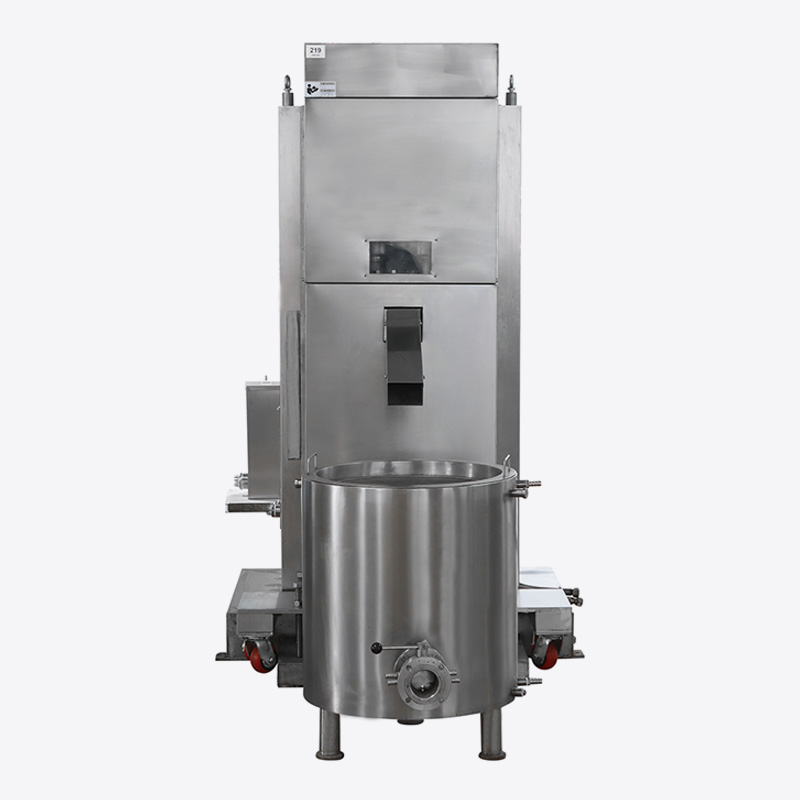
Continuous tempering machines process a steady, uninterrupted flow of chocolate rather than discrete batches, making them the standard for enrobing lines, moulding systems, and high-volume production environments. Chocolate passes through a series of temperature-controlled zones — typically three to five — in a helical or multi-pass flow path, emerging at the outlet in a continuously tempered state ready for immediate use. Throughput ranges from 50 kg/hr for small continuous units up to 5,000 kg/hr for large industrial installations. The primary advantage over batch systems is the elimination of downtime between batches and the ability to maintain consistent temper state throughout an extended production shift.
Seed Crystal (Injection) Tempering Systems
Seed crystal tempering introduces finely ground, pre-crystallized cocoa butter or chocolate powder (containing predominantly Form V crystals) directly into the chocolate mass, bypassing the traditional cooling stage. This approach — pioneered by systems such as Bühler's Seed Master — offers faster startup, reduced energy consumption, and greater process consistency, as the seed material provides a ready nucleation template for crystal growth. Seed tempering systems are particularly valued in high-output industrial settings where the traditional cooling-and-reheating cycle creates throughput bottlenecks.
Combined Tempering and Moulding Systems
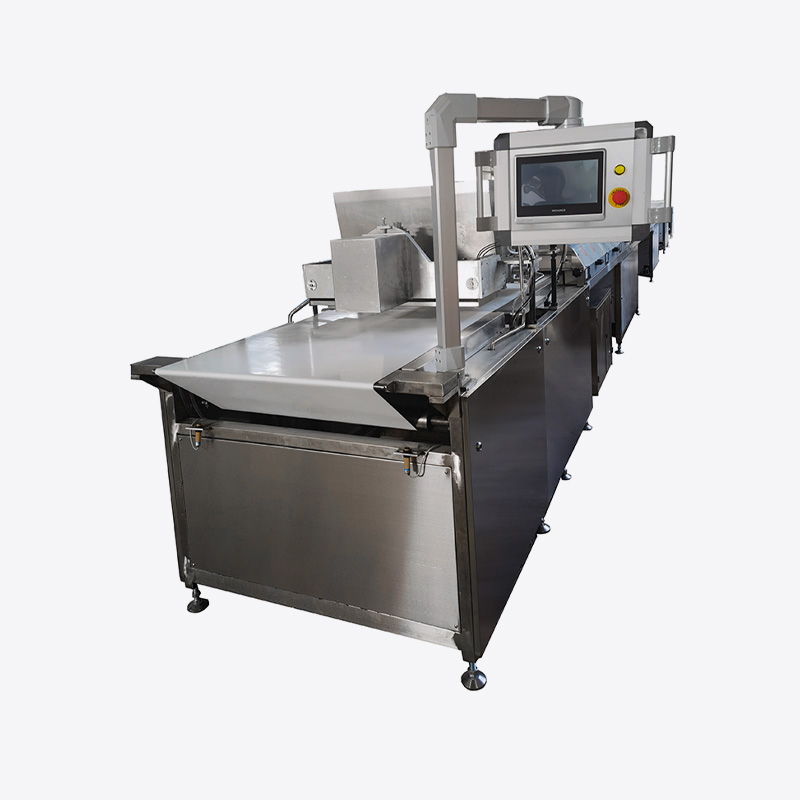
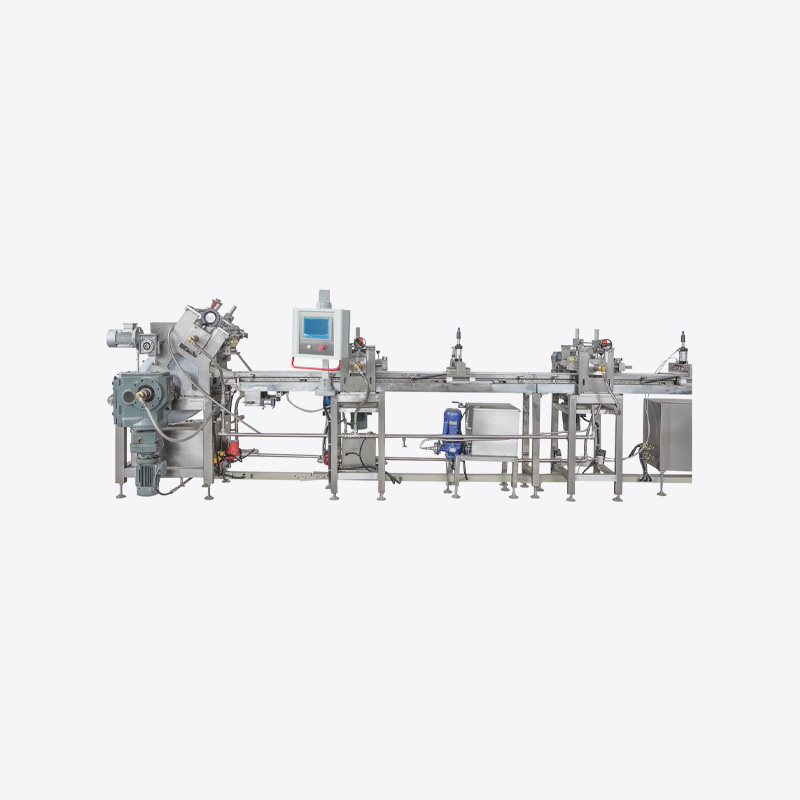
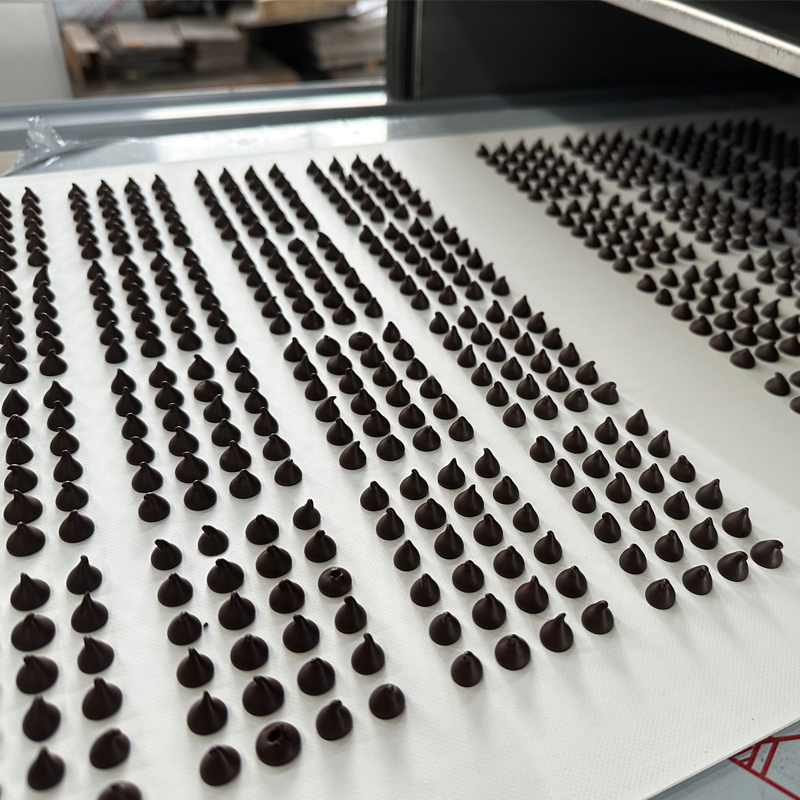
Integrated lines combine a continuous tempering unit with a chocolate depositor, mould vibration table, cooling tunnel, and demoulding station into a single automated production flow. These systems are the backbone of industrial tablet, praline, and shell-moulding production, with fully automated lines capable of producing tens of thousands of finished pieces per hour with minimal manual intervention. The tempering unit in these lines is typically specified for precise viscosity control in addition to temperature management, as depositing accuracy is highly sensitive to chocolate flow consistency.
Key Technical Specifications to Evaluate
Comparing chocolate tempering machines across manufacturers requires evaluating a consistent set of technical parameters. The following specifications have the greatest impact on production quality, efficiency, and total cost of ownership.
| Specification | Artisan / Small Batch | Mid-Scale Continuous | Industrial Continuous |
|---|---|---|---|
| Throughput | 1–15 kg/batch | 50–300 kg/hr | 500–5,000+ kg/hr |
| Temperature Control Accuracy | ±0.5°C | ±0.3°C | ±0.1°C |
| Tempering Index Measurement | Manual / optional | Integrated optional | Fully integrated |
| Chocolate Types Supported | Dark, milk, white | Dark, milk, white, compound | All incl. ruby, coloured |
| CIP (Clean-in-Place) System | No | Partial | Full automated CIP |
Tempering Index (TI) Measurement
The Tempering Index is a numerical measure of the degree of crystallization in tempered chocolate, derived from the cooling curve analysis of a small chocolate sample. A TI of 5–6 indicates optimal temper for most applications; below 4 indicates under-tempering (insufficient crystal nucleation); above 7 indicates over-tempering (excess crystal formation causing thickened, poorly flowing chocolate). Machines with integrated real-time TI measurement and automatic correction represent the current state of the art and are increasingly standard on mid-to-high-end continuous units, significantly reducing operator skill dependency and batch rejection rates.
Tempering Profiles for Different Chocolate Types
Dark, milk, and white chocolates require different tempering temperature profiles due to their varying cocoa butter, milk fat, and sugar content. Milk fat in particular interferes with cocoa butter crystallization, requiring lower processing temperatures to achieve the same crystal structure. Incorrect profile selection is one of the most common causes of tempering failure in multi-product production environments.
- Dark Chocolate: Melt to 50–55°C → cool to 27–28°C → raise to 31–32°C for working temperature. Higher working temperature reflects the absence of milk fat.
- Milk Chocolate: Melt to 45–50°C → cool to 26–27°C → raise to 29–30°C. Milk fat lowers the optimal working temperature and requires more careful control to avoid over-tempering.
- White Chocolate: Melt to 40–45°C → cool to 25–26°C → raise to 27–28°C. Contains no cocoa solids; highest milk fat proportion makes it the most sensitive to temperature variation and the most prone to over-tempering.
- Ruby Chocolate: Similar profile to milk chocolate but typically requires tighter temperature control (±0.2°C) to preserve the pink anthocyanin pigment stability that defines its visual identity.
Professional tempering machines store multiple product profiles that operators can recall instantly, eliminating manual reconfiguration when switching between chocolate types during a production shift. Premium units automatically adjust agitation speed and flow rate alongside temperature when profiles are changed, recognizing that viscosity — not just crystallization — differs significantly between chocolate types.
Hygiene, Food Safety, and Regulatory Requirements
Chocolate tempering machines operate as food-contact equipment and are subject to stringent hygiene design and regulatory compliance requirements. For equipment sold into professional and industrial markets, compliance with relevant standards is a baseline purchasing requirement, not an optional feature.
EHEDG and 3-A Design Principles
The European Hygienic Engineering and Design Group (EHEDG) and the 3-A Sanitary Standards (US) define the design principles for hygienic food processing equipment. Key requirements include elimination of dead zones and crevices where chocolate residue can accumulate, use of food-grade stainless steel (minimum 316L for product-contact surfaces), surface finishes of Ra ≤ 0.8 μm, and seal materials (EPDM, silicone) that are compatible with chocolate and cleaning agents. EHEDG-certified tempering machines command a significant price premium but are increasingly required by Tier 1 confectionery manufacturers and their auditors.
Allergen Management
Facilities producing multiple chocolate types — particularly those switching between milk-containing and dairy-free formulations — must demonstrate effective allergen removal between product runs. This requirement drives demand for machines with validated CIP or rapid manual cleaning protocols, and documented residue testing data. Equipment with stagnant zones or inaccessible internal surfaces that cannot be reliably cleaned between runs creates both food safety risk and regulatory liability.
CE Marking and Machinery Directive Compliance
Equipment sold into the EU market must carry CE marking demonstrating conformity with the EU Machinery Directive (2006/42/EC), covering electrical safety, mechanical guarding, and risk assessment documentation. Buyers in regulated markets should verify CE marking authenticity and request the Declaration of Conformity and technical file summary as part of their supplier qualification process.
Leading Manufacturers and Market Landscape
The chocolate tempering machine market is served by a concentrated group of specialist manufacturers alongside a broader base of general confectionery equipment suppliers. Understanding the competitive landscape helps buyers identify the right supplier tier for their application.
At the industrial end, Bühler Group (Switzerland), Sollich (Germany), and Aasted (Denmark) dominate large-scale continuous tempering and integrated line systems, with installed bases in major confectionery manufacturers globally. Their equipment is engineered for multi-decade service life, supported by global spare parts networks and process engineering teams. Mid-scale producers are well-served by manufacturers including Selmi (Italy), FBM (Italy), and Savage Bros (USA), who offer continuous and batch systems at more accessible price points with strong application support.
The artisan and small-batch segment has seen significant product development activity, with brands including ChocoVision, Hilliard's, and Mol d'Art offering tabletop machines with increasingly sophisticated temperature control and user interfaces at accessible price points. The fastest-growing segment is the mid-scale continuous market (50–500 kg/hr), driven by the expansion of craft chocolate production and the scaling of artisan confectionery brands that have outgrown batch equipment but do not yet require full industrial-scale investment.