

 English
 Español

A shell chocolate that cracks instead of snapping cleanly because the coating viscosity was never quite right coming out of the refining stage. A ganache or praline filling that separates on the shelf because the particle size reduction was uneven across the batch. A production line running below capacity because the refining and conching equipment was sized and specified for plain chocolate rather than the more demanding requirements of filled product manufacturing. These are the kinds of problems that surface when a chocolate refiner conche has not been matched carefully to the specific processing demands that filled chocolate products place on the equipment running them.
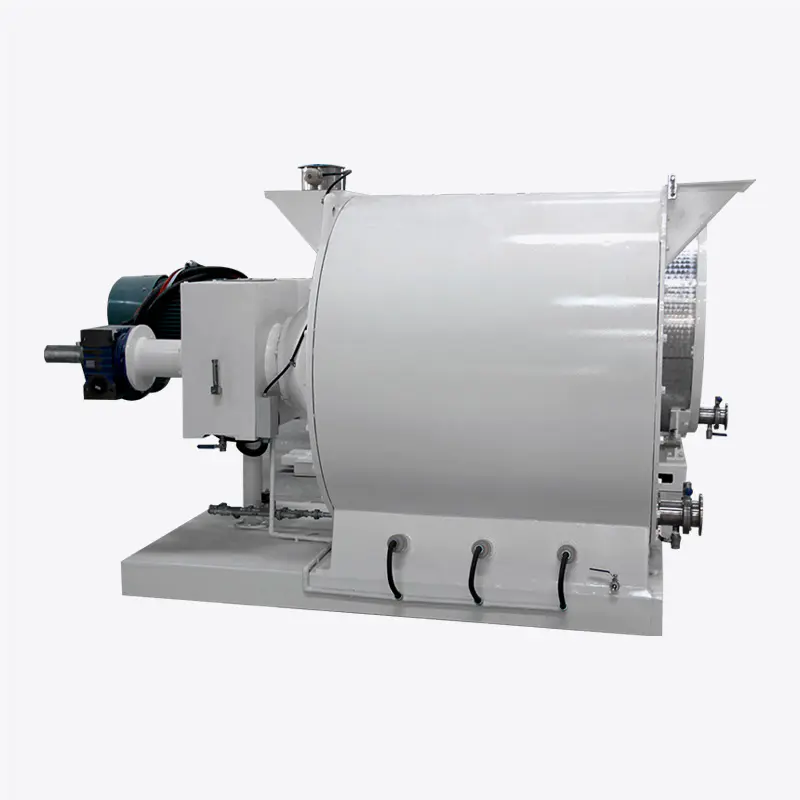
Filled chocolate production differs from solid chocolate production in ways that go beyond simply having more components in the finished product. The outer shell needs to hold its shape and snap consistently. The filling needs a specific viscosity profile that allows it to be deposited accurately and remain stable in the shell over the product's shelf life. Both the shell chocolate and certain filling types go through refining and conching stages whose outcomes directly affect whether the finished product meets quality standards or creates rework and waste. Equipment selection that does not account for these specific requirements tends to produce predictable problems at the quality control stage.
Content
- 1 Why Filled Chocolate Products Have Different Refining Requirements
- 2 The Refining Stage: What It Does and Why It Matters for Filled Products
- 3 The Conching Stage: Flavor Development and Rheology
- 4 Batch Versus Continuous Processing: Which Approach Fits Filled Chocolate Production?
- 5 Comparing Equipment Configurations for Filled Chocolate Applications
- 6 Key Equipment Features That Matter for Filled Product Lines
- 7 Nut Paste and Praline Filling: A Different Set of Processing Demands
- 8 Evaluating a Supplier for Filled Chocolate Processing Equipment
Why Filled Chocolate Products Have Different Refining Requirements
Shell Chocolate Needs a Tighter Particle Size Range Than Many Producers Expect
The chocolate used to form the outer shell of a filled product needs to flow predictably through enrobing or moulding equipment while setting to a firm, consistent structure. Particle size distribution from the refining stage has a direct effect on the viscosity behavior of tempered shell chocolate, and a wider-than-intended distribution creates shells that are either too thick in some areas or too thin in others, both of which affect the finished product's appearance and structural integrity.
Does the Filling Type Affect How the Refining Equipment Should Be Specified?
It often does, more than buyers initially account for when planning a production line. Nut-based fillings like praline or gianduja undergo their own milling and refining stages to achieve the smooth, flowing texture needed for depositing. Dark, milk, or white chocolate ganache fillings may need different viscosity targets than shell chocolate. Each filling type places specific demands on the processing equipment that runs it, which is why production lines handling multiple filled product types often need more flexibility from their equipment than single-product operations.
The Refining Stage: What It Does and Why It Matters for Filled Products
Particle Size Reduction Is the Core Function of Refining
Refining reduces the particle size of chocolate mass, breaking down cocoa and sugar particles until they fall below the threshold where the human palate perceives individual particles as gritty. For shell chocolate, the refining stage needs to achieve consistent results across the full batch, since variability in particle size creates variability in the finished shell's flow behavior during processing.
How Does Refining Fineness Affect Shell Performance Specifically?
Shell chocolate that has been refined to a finer particle size generally flows more predictably during enrobing and moulding, because the viscosity profile is more consistent and less sensitive to small temperature variations during processing. Coarser particle distributions create more variability in flow behavior, which tends to produce shell thickness inconsistencies that only become fully apparent after demoulding or after enrobing.
The Conching Stage: Flavor Development and Rheology
Conching Changes More Than Just Flavor
The conching stage is sometimes described purely in terms of flavor development, but it also plays a meaningful role in shaping the rheological properties of the finished chocolate. Extended conching reduces moisture content, drives off unwanted volatile compounds, and modifies how the fat phase interacts with other components, all of which affect how the chocolate flows and sets during production.
Why Does Conching Time Matter Differently for Shell Versus Filling Chocolate?
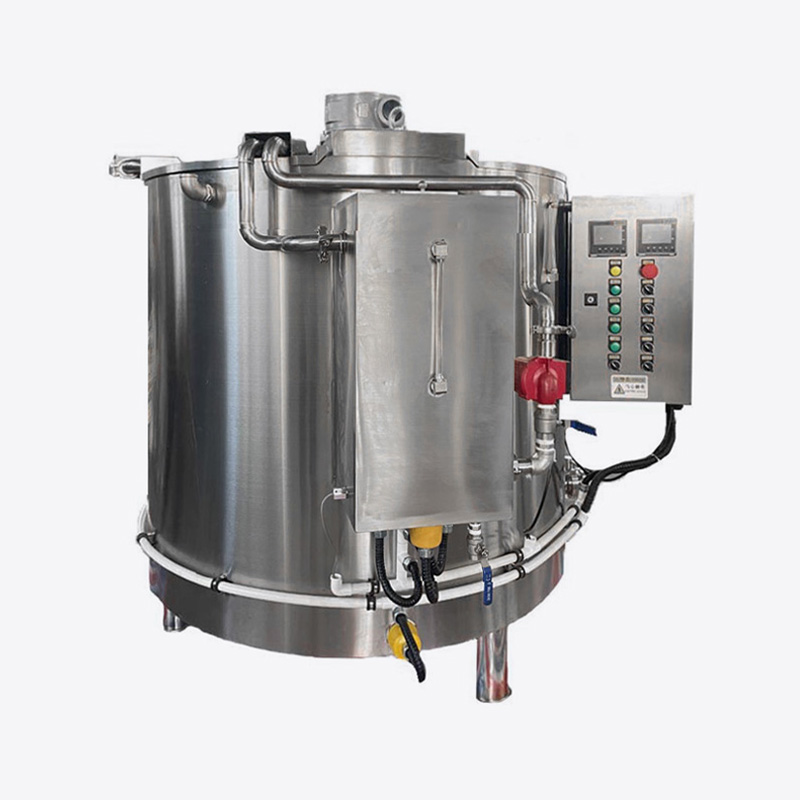
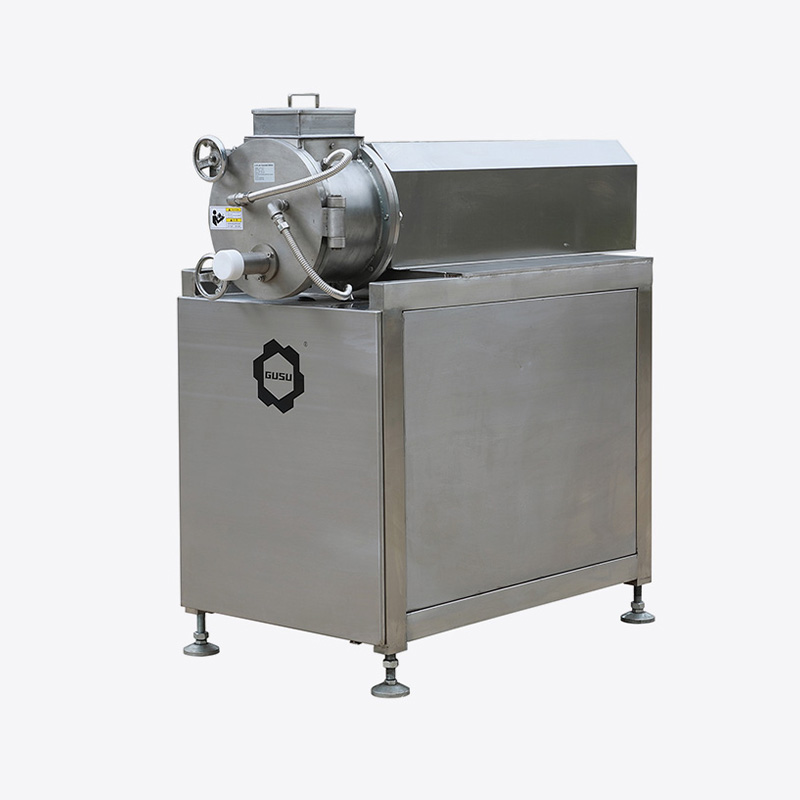
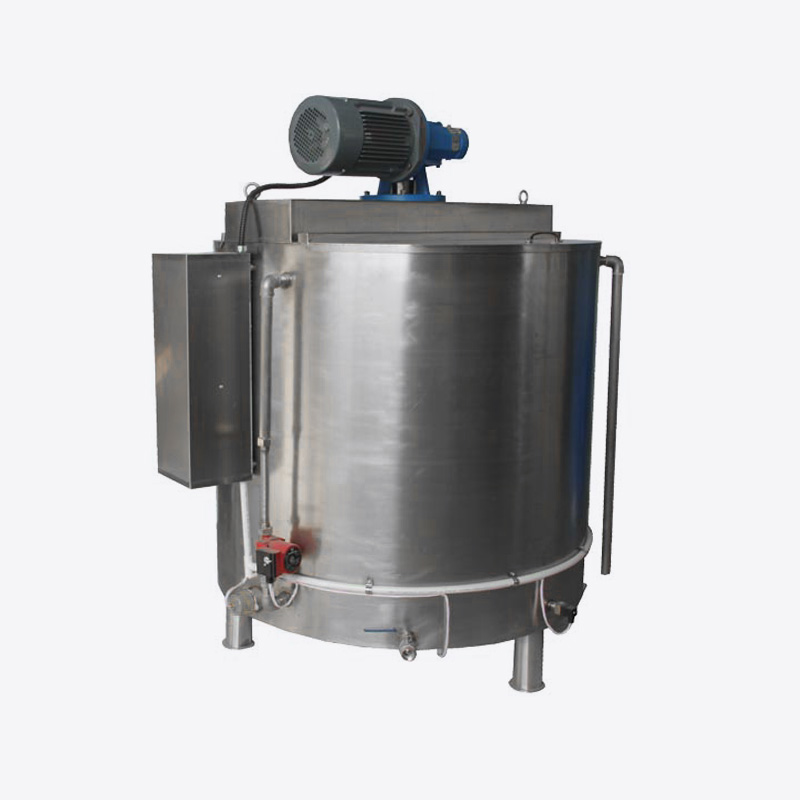
Shell chocolate typically benefits from a conching profile that develops a clean, well-rounded flavor while achieving the flow behavior needed for consistent shell formation. Chocolate used in certain filling types, particularly those where the chocolate flavor is meant to support other dominant notes like fruit, caramel, or nut, may need a different conching profile that preserves some of the chocolate's more pronounced notes rather than refining them into a smooth background flavor. A chocolate conching refining machine that allows flexible time and temperature programming supports this kind of product-specific tuning.
Batch Versus Continuous Processing: Which Approach Fits Filled Chocolate Production?
What Are the Practical Differences Between Batch and Continuous Refining?
Batch refining processes a defined quantity of chocolate mass through the full refining and conching cycle before the equipment is discharged and the next batch begins. Continuous refining moves material through the process in a steady flow without stopping between cycles. Each approach has implications for production flexibility, output capacity, and how easily the line can switch between different chocolate formulations or product types.
How Does Production Volume Influence This Choice?
For producers running high volumes of a relatively small number of formulations, continuous processing often makes more sense from a throughput and efficiency standpoint. For producers handling a broader range of filled product types, each with its own chocolate formulation and processing requirements, batch processing offers more flexibility to adjust settings between runs without the complication of flushing and recalibrating a continuous system between product changes.
Comparing Equipment Configurations for Filled Chocolate Applications
| Equipment Factor | Batch Chocolate Refiner Conche | Continuous Conching Refining Machine |
|---|---|---|
| Production Flexibility | High, easy to adjust between batches | Lower, formulation changes require line flushing |
| Throughput Capacity | Limited by batch size | Higher for consistent formulations |
| Particle Size Control | Strong, consistent within each batch | Good, depends on feed consistency |
| Suitable for Multiple Fill Types | Well suited | Less suited to frequent product switching |
| Temperature & Time Programming | Flexible, adjustable for each batch | Fixed profile for each product formulation |
| Maintenance Access | Generally straightforward | More complex due to continuous operation demands |
Key Equipment Features That Matter for Filled Product Lines
Temperature Control Precision Affects Both Shell and Filling Quality
Precise temperature management throughout the refining and conching cycle affects the rheological outcome of the finished chocolate in ways that matter specifically for filled product applications. Shell chocolate that exits the conche at inconsistent temperatures affects tempering behavior downstream, which in turn affects shell formation. Equipment with stable, programmable temperature control reduces this source of variability.
Is Automation Level a Factor Worth Evaluating at the Equipment Selection Stage?
For filled chocolate production lines handling multiple product types, automation capabilities in the refining and conching equipment affect how consistently operators can reproduce a defined processing profile across different batches and production shifts. Manual control leaves more room for operator-to-operator variation, while automated systems support tighter consistency across longer production periods.
Discharge Behavior Affects Integration With the Rest of the Production Line
How a refiner conche discharges finished chocolate affects how smoothly it integrates with downstream tempering, moulding, and enrobing equipment. Equipment that discharges in a controlled, steady flow integrates more easily with continuous downstream processes than equipment requiring manual transfer at the end of each batch.
Nut Paste and Praline Filling: A Different Set of Processing Demands
Does Nut Paste Refining Require Dedicated Equipment?
Nut-based fillings like praline and gianduja involve milling roasted nuts into a paste and then refining that paste, often in combination with sugar and chocolate, to achieve the particle size and texture needed for depositing. This differs meaningfully from cocoa-based chocolate refining, and in many production environments these processes run on different equipment rather than sharing the same refiner.
How Fine Does a Nut-Based Filling Need to Be Refined?
The required particle size for a nut paste filling depends on the finished product's target texture. A crunchy praline filling may tolerate a coarser grind than a smooth, flowing praline center that needs to deposit cleanly into a moulded shell. Equipment that offers adjustable refining fineness, rather than a fixed output, supports a wider range of filling textures from the same production line.
Evaluating a Supplier for Filled Chocolate Processing Equipment
What Should Buyers Confirm Beyond Equipment Specifications?
Equipment specifications describe what a machine can do under defined conditions. For filled chocolate production, where the interaction between shell chocolate quality, filling viscosity, and downstream processing matters considerably, buyers benefit from confirming:
- Whether the supplier has direct experience with filled chocolate production lines rather than general chocolate processing alone
- Whether application support is available to help tune processing profiles for specific shell and filling formulations
- What after sales service and spare parts availability look like once equipment is running in production
Whether the supplier can provide or facilitate testing of the equipment with actual production formulations before full commitment
Does Line Integration Support Matter as Much as Equipment Performance?
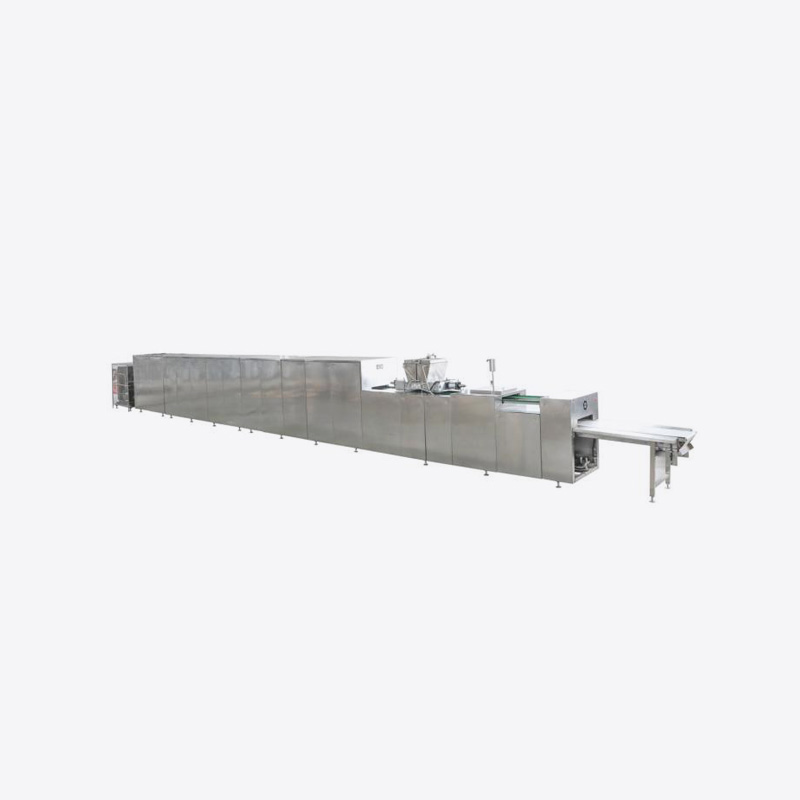
For buyers building or upgrading a filled chocolate production line rather than replacing a single piece of equipment, how well the refining and conching equipment integrates with tempering, depositing, moulding, and packaging stages affects overall line performance as much as the refiner's standalone specifications. Suppliers who understand the complete production context tend to provide more useful guidance than those who focus only on their own equipment's performance in isolation.
Selecting refining and conching equipment for filled chocolate production involves more variables than a straightforward capacity or output comparison suggests. Shell chocolate quality, filling viscosity requirements, product range flexibility, and downstream integration all shape which equipment configuration actually fits a given production environment, and working through these considerations carefully before specifying equipment tends to prevent the kind of performance gaps that only surface after installation. Batch processing supports flexibility across multiple formulations, while continuous configurations suit high-volume consistent production, and the right choice depends on the specific product mix and volume profile of each operation rather than any general preference for one approach over the other. Gusu Food Processing Machinery Suzhou Co.,Ltd. develops chocolate refining and conching equipment for a range of production scales and filled product applications, supporting buyers through the equipment selection process with application knowledge that goes beyond published specifications. Reaching out to discuss specific shell chocolate and filling processing requirements is a practical next step for any producer ready to match refining equipment to the actual demands of their filled chocolate product line.