

 English
 Español

Energy costs in chocolate production tend to be treated as fixed — just part of doing business. But a significant share of what a Chocolate Ball Mill draws from the grid is recoverable through process adjustments that do not require rebuilding the line or buying new equipment. A substantial reduction, while ambitious, can be achieved by addressing several areas simultaneously. No single measure suffices, but combined efforts create a compounding effect that makes the goal attainable.
Content
- 1 Understanding Where the Power Actually Goes
- 2 Feed Viscosity: The Variable People Overlook
- 3 Grinding Media: Most Facilities Never Revisit This
- 4 Variable Speed Control Changes the Economics of Grinding
- 5 Maintenance and Energy Draw: A Direct Relationship
- 6 Production Scheduling as an Energy Lever
- 7 Monitoring Consumption So You Can See What Is Changing
- 8 How the Thirty Percent Target Actually Adds Up
Understanding Where the Power Actually Goes
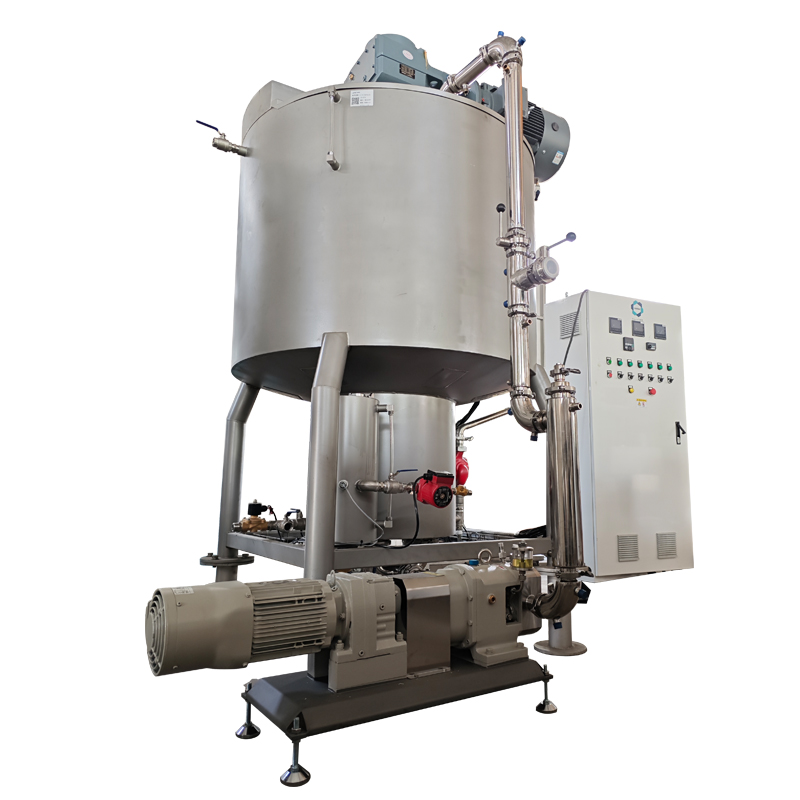
A Chocolate Ball Mill is fundamentally a friction machine. Steel or ceramic beads rotate against each other and the chocolate mass continuously, and that physical contact is what reduces particle size. It is also what drives up your electricity bill.
The drive motor accounts for the largest share of consumption during active grinding. Heating or cooling the jacket, running the recirculation pump, and powering auxiliary controls split the rest. This matters because it tells you where intervention will have the most impact: the motor and the grinding process itself.
Idle Running Is a Quiet Drain
One pattern that shows up in many facilities is machines that keep running after the chocolate has already reached target fineness. Operators extend cycles as a precaution — understandable, but expensive. A particle size check protocol or a basic inline sensor can close that gap. Cutting unnecessary runtime changes the monthly energy picture noticeably.
Feed Viscosity: The Variable People Overlook
When chocolate paste enters the ball mill too thick, the motor works harder against greater resistance — without actually improving how fast the particles break down. You are spending energy on friction, not on grinding.
Running a pre-mixer or pre-refiner to bring viscosity into an appropriate range before the mass enters the ball mill changes the load profile from the start of each batch. The motor does less compensatory work, and cycle times often shorten as a side effect.
Temperature plays into this as well. Chocolate mass that enters at a consistent, process-appropriate temperature reduces the corrective work the jacket system has to do mid-cycle. A stable pre-heating stage upstream of the ball mill saves energy downstream.
Grinding Media: Most Facilities Never Revisit This
The size and fill level of the grinding beads inside a Chocolate Ball Mill have a direct relationship with how much energy the process consumes. Beads that are too large require more energy to achieve fine particle reduction. An overfilled chamber forces the motor to push harder than the process actually demands.
What to Review in Your Current Setup
- Bead diameter relative to the target particle size in your finished product
- Fill ratio of the grinding chamber — the working reference leaves enough space for the mass to circulate freely without overloading the motor
- Bead material — denser media can reduce the number of collisions needed to achieve the same grinding result, which changes the energy math
If the bead configuration has not been reviewed since the machine was installed, a short trial with modified parameters is worth running. Even a modest change in bead size has shown measurable reductions in motor draw in production settings.
Variable Speed Control Changes the Economics of Grinding
Running a ball mill motor at full speed throughout every phase of a batch is rarely necessary. The load at the start — when the chocolate mass is coarser and resistance is higher — is different from the load near the end of the cycle, when the product is nearly finished.
A variable frequency drive (VFD) lets the motor speed track the actual process requirement rather than running at a fixed rate regardless of what is happening inside the chamber. Facilities that add VFD controls to existing Chocolate Ball Mill equipment regularly report meaningful reductions in motor consumption alone.
A Secondary Benefit Worth Noting
Soft-start controls — whether built into a VFD or standalone — reduce the inrush current surge when the motor starts up. For facilities paying peak-demand pricing, startup surges can inflate electricity invoices beyond the actual energy used. Managing that surge is a low-cost change with a disproportionate effect on billing.
Maintenance and Energy Draw: A Direct Relationship
A machine running with worn bearings, a misaligned shaft, or degraded seals is fighting itself. The motor draws more power to maintain rotation against that added internal resistance, and that resistance produces no useful grinding work. The energy savings from a consistent maintenance schedule are essentially free — they come from work that should already be happening.
Maintenance Points with a Direct Effect on Consumption
- Lubricate drive components on the recommended schedule. Dry or under-lubricated bearings create friction losses that accumulate quietly over time.
- Check shaft alignment periodically — particularly after any mechanical work or equipment movement.
- Inspect seals and gaskets. Leaking chocolate paste causes the machine to compensate with increased motor effort.
- Monitor bead wear and replace media when degradation affects grinding performance. Worn beads extend cycle times to achieve the same particle size, burning more energy in the process.
Production Scheduling as an Energy Lever
Heating a Chocolate Ball Mill from cold to operating temperature each morning consumes energy that produces nothing. In facilities that run multiple cycles per day with full shutdowns between them, it is worth asking whether a low-energy hold mode could maintain temperature overnight or between batches.
Batch consolidation also matters. Two shorter runs with a full cool-down and reheat cycle between them use considerably more energy than a single longer campaign producing the same total output. Where your production mix allows flexibility, consolidating run time into longer blocks reduces thermal waste with no capital cost at all.
Monitoring Consumption So You Can See What Is Changing
Energy use in a Chocolate Ball Mill tends to drift upward gradually — worn components, small process changes, shifts in raw material viscosity. Without active measurement, these increases go unnoticed until the electricity bill becomes harder to explain.
An energy meter on the ball mill circuit, logging consumption per batch, gives you a baseline to work from. When per-batch draw starts rising above that baseline, something has changed and the data points you toward where to look.
Figures Worth Tracking Regularly
- Energy consumed per unit weight of chocolate processed
- Average motor amperage draw during steady-state grinding
- Cycle time from start to target particle size at consistent feed conditions
Together, these figures give a clear read on whether the ball mill is running efficiently — and whether the changes you make are actually having the effect you expect.
How the Thirty Percent Target Actually Adds Up
Achieving such a reduction does not rely on a single change. The result comes from multiple, connected improvements—each contributes a portion, and together they combine to reach the overall goal.
- Reducing idle runtime through process monitoring contributes a meaningful share on its own
- VFD installation or adjustment adds another layer of savings on motor draw
- Grinding media reconfiguration reduces the mechanical load the motor works against
- Maintenance improvements and scheduling changes close the remaining gap
Applied consistently across all four areas, the cumulative effect brings total consumption down substantially. The order in which you address them matters less than actually working through each one.
Equipment sizing and motor configuration have a long-term effect on energy efficiency that is often underestimated at the point of purchase. A Chocolate Ball Mill that is matched to your actual throughput, built to support VFD control, and configured for continuous industrial use will have lower operating costs across its service life than one selected primarily on upfront price. Gusu Food Processing Machinery Suzhou Co., Ltd. manufactures Chocolate Ball Mill equipment for industrial production environments. If you have questions about equipment specifications, process compatibility, or energy performance for your production setup, contact the team directly for a technical discussion.