

 English
 Español

Content
- 1 Why Equipment Defines Chocolate Quality
- 2 What Is a Chocolate Grinder Machine and How Does It Work
- 3 What Is a Tempering Chocolate Machine and Why It Matters
- 4 Choosing the Right Chocolate Grinder: Capacity and Use Cases
- 5 Choosing the Right Tempering Machine: From Tabletop to Industrial
- 6 How the Two Machines Work Together in the Production Line
- 7 Key Features to Look for Before Buying
Why Equipment Defines Chocolate Quality
Behind every bar of premium chocolate with a mirror-like gloss and satisfying snap lies a carefully controlled manufacturing process — one that depends on two categories of machines more than any other: the chocolate grinder machine and the tempering chocolate machine. These two pieces of equipment are not optional extras for serious chocolate makers; they are the foundation of consistent, professional-grade output.
Whether you are launching a bean-to-bar startup, scaling an artisan chocolatier brand, or upgrading an industrial production line, understanding how each machine works — and how they interact — will directly determine the texture, flavor, and appearance of your final product. This guide breaks down both machines in practical detail, from core mechanics to smart purchasing decisions.
What Is a Chocolate Grinder Machine and How Does It Work
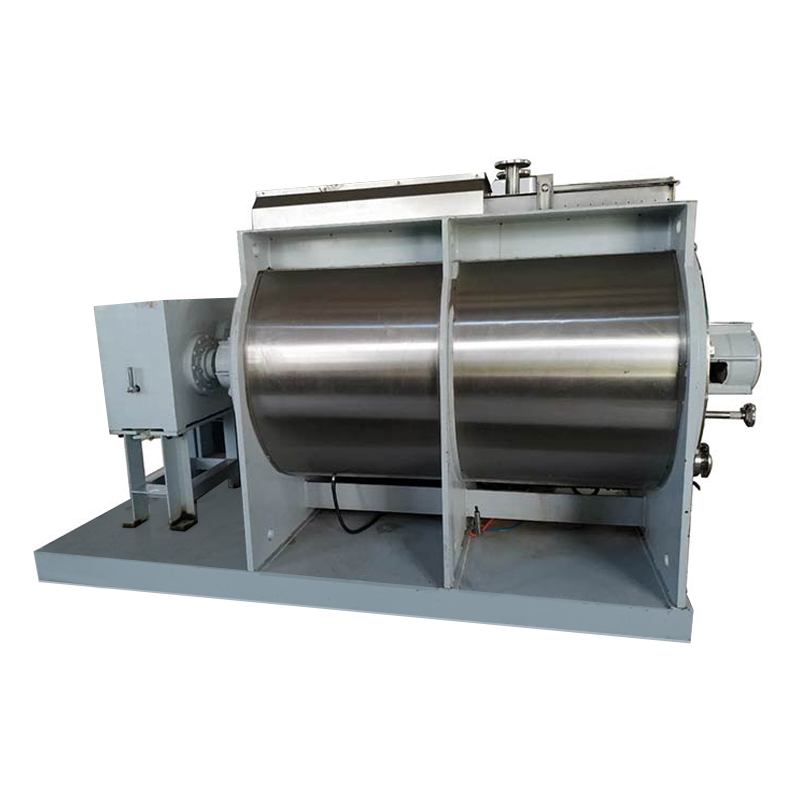
A chocolate grinder machine — also known as a melanger or chocolate refiner — is the starting point of the bean-to-bar chocolate making process. Its primary job is to transform roasted cocoa nibs into a smooth, fluid chocolate paste by breaking down solid particles to a size the human palate cannot detect.
The working mechanism is deceptively simple: two heavy granite stone rollers rotate continuously over a granite base, crushing and shearing cocoa nibs, sugar, and other ingredients under their own weight. Heat generated by friction liquefies the cocoa butter naturally present in the nibs, turning a coarse, gritty mixture into a progressively smoother liquid. Professional-grade machines refine particle size down to below 20 microns — the threshold at which chocolate feels genuinely silky rather than gritty on the tongue.
Beyond grinding, melangers also perform a secondary function called conching: the continuous agitation aerates the chocolate mass, driving off volatile acids and developing rounder, more complex flavor profiles. This dual role — refining and conching simultaneously — makes the chocolate grinder machine an extraordinarily efficient tool for small and mid-scale producers.
The resulting product at the end of a grinding cycle is called chocolate paste or chocolate liquor, which is then ready for tempering, molding, or further processing.
What Is a Tempering Chocolate Machine and Why It Matters
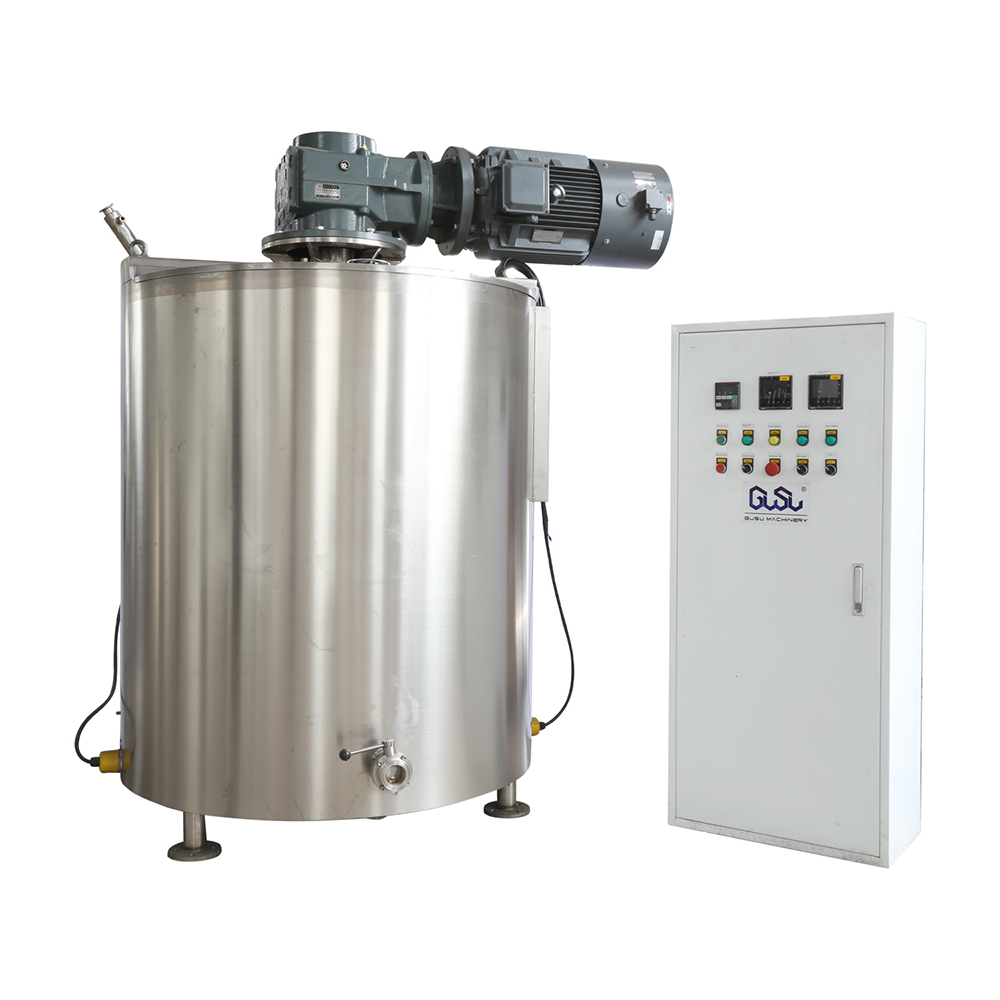
A tempering chocolate machine is a precision thermal device that guides melted chocolate through a specific heating and cooling sequence in order to produce stable cocoa butter crystals — specifically the polymorph known as Type V (Form V). This crystal structure is the only one that gives chocolate its prized characteristics: a high-gloss surface, clean snap, smooth mouthfeel, and the ability to contract slightly during cooling for easy demolding.
When chocolate is simply melted and allowed to cool at room temperature without controlled tempering, the cocoa butter solidifies into a mixture of unstable crystal forms. The result is dull, streaky chocolate with a soft, waxy texture — commercially unacceptable and visually unappealing.
A tempering machine eliminates this problem by automating the three-stage temperature curve:
- Melting phase — chocolate is fully melted at around 45°C to destroy all existing crystal structures.
- Cooling phase — temperature is lowered to approximately 27–28°C, allowing pre-stable and stable crystals to begin forming together.
- Working phase — temperature is raised slightly to around 29–31°C (depending on chocolate type), melting out the unstable crystals while leaving only the desired Type V structure intact.
High-end tempering machines maintain the chocolate in this working state continuously — many models sustain perfect temper for up to 12 consecutive hours without operator intervention — making them ideal for high-throughput production environments.
Choosing the Right Chocolate Grinder: Capacity and Use Cases
Chocolate grinder machines are available across a wide range of capacities, and matching the machine to your actual production volume is critical for both efficiency and product consistency.
| Scale | Typical Batch Capacity | Best For | Key Consideration |
|---|---|---|---|
| Home / Hobbyist | 2–5 kg | Enthusiasts, recipe development | Countertop footprint, ease of cleaning |
| Artisan / Startup | 8–20 kg | Bean-to-bar brands, small bakeries | Motor endurance (continuous 48–72 hrs), granite quality |
| Commercial | 50–120 kg | Mid-scale chocolate manufacturers | Stainless steel construction, speed controller, CE certification |
Beyond capacity, pay close attention to the quality of the granite rollers. Natural granite stone is preferred over composite alternatives because it delivers gentler, more even shear forces that preserve the delicate aromatic compounds in fine cacao. Also look for machines with a built-in speed controller, which allows you to adjust grinding time and pace according to the specific bean origin and desired flavor profile.
Tilt-release mechanisms are an increasingly common feature on mid-range models, allowing the drum to pour the finished chocolate paste directly into molds or downstream equipment without manual scooping — a significant time-saver at scale.
Choosing the Right Tempering Machine: From Tabletop to Industrial
The tempering chocolate machine market spans an equally wide range of formats, and the right choice depends on your daily chocolate volume, the variety of products you make, and how much automation your workflow requires.
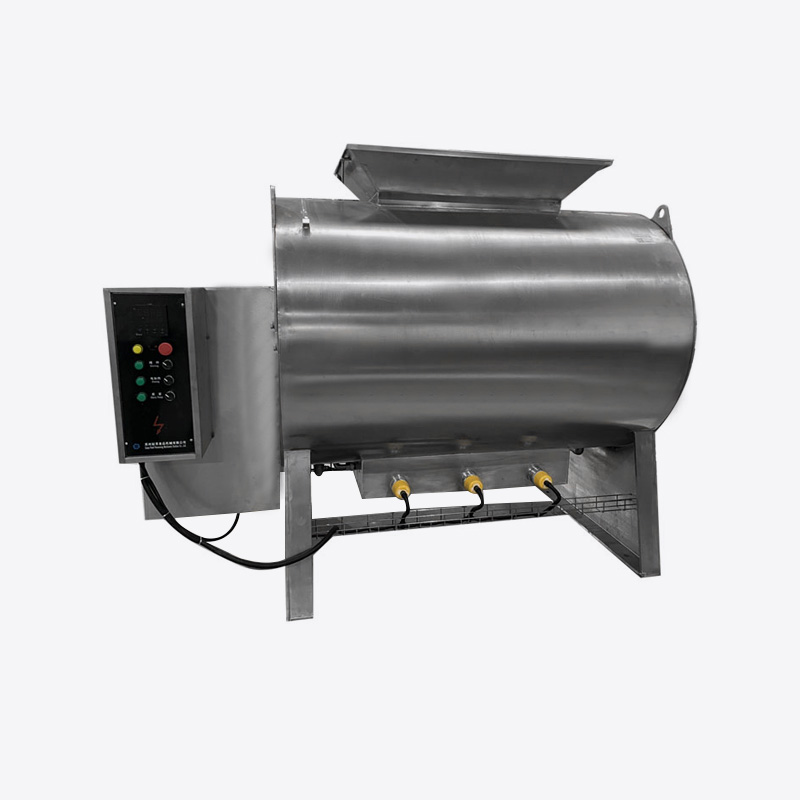
Tabletop semi-automatic models typically handle between 4 kg and 10 kg of chocolate and are well suited to small chocolatier workshops. They feature thermostat-controlled heating elements, cooling fans, and removable stainless steel bowls for easy cleaning. Some compact models come pre-programmed for dark, milk, white, and ruby chocolate, removing the need for manual temperature adjustment.
Mid-range continuous tempering machines — the workhorses of most professional operations — typically handle 15 kg to 50 kg and are designed to run without interruption through an entire working day. The ability to maintain temper for up to 12 hours is a defining feature at this tier, as it allows chocolatiers to focus on molding, enrobing, and decoration without pausing to re-temper.
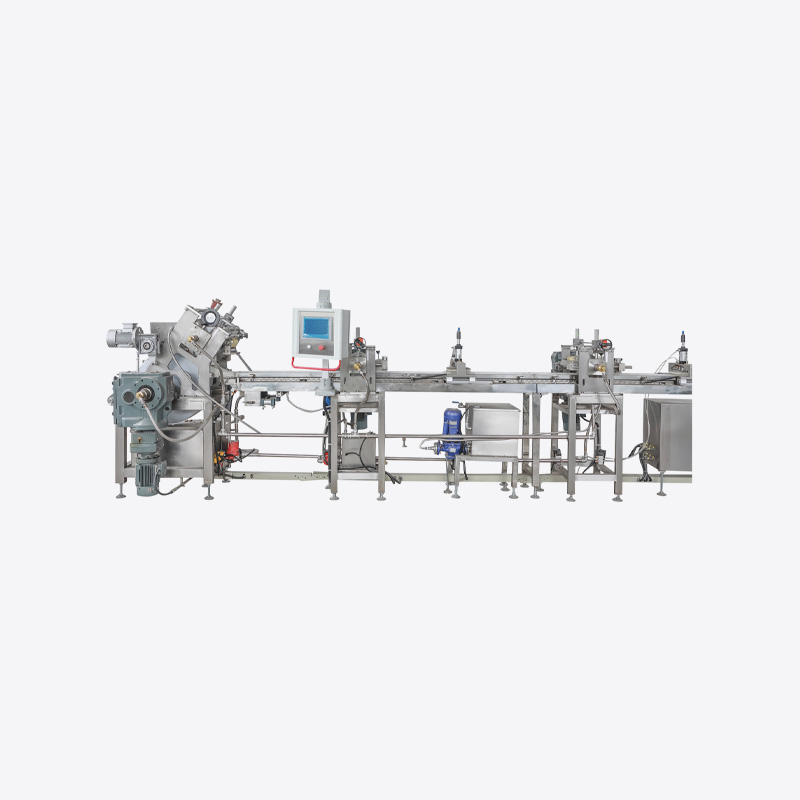
At the industrial end of the spectrum, fully automatic water-cooled systems with capacities of 75 kg to over 170 kg provide computer-controlled tempering curves, external transfer pump systems, and full stainless steel construction rated for 24/7 production environments. These machines are often integrated into complete enrobing and molding lines.
Key features to verify regardless of size: precise temperature accuracy (±0.5°C or better), compatibility with inclusions such as nuts or fruit pieces, ease of disassembly for cleaning, and availability of accessories like enrobing belts, vibration tables, and dosing systems.
How the Two Machines Work Together in the Production Line
In any complete bean-to-bar or craft chocolate operation, the grinder and the tempering machine represent two sequential but equally indispensable stages of the production workflow. Understanding how they connect is essential for designing an efficient, scalable process.
The chocolate grinder machine handles the upstream work: converting raw cacao nibs into a refined chocolate paste with optimal particle size and flavor development. This stage typically takes anywhere from 24 to 72 hours depending on batch size and desired smoothness. The finished paste is then cooled and stored as untempered couverture — essentially a raw material waiting for its next transformation.
The tempering chocolate machine takes over at the downstream stage. The untempered couverture is loaded, melted, guided through the precise temperature curve, and brought to a stable working state. Only at this point does the chocolate become ready for molding, enrobing, dipping, or decorating. The quality of the tempering directly determines whether weeks of careful grinding and flavor development are rewarded with a beautiful finished product — or wasted on a dull, unstable bar.
Producers who invest equally in both machines create a closed, quality-controlled loop: excellent raw material from the grinder, perfectly expressed in the final product through the tempering machine. Skimping on either stage introduces a bottleneck that no amount of expertise on the other end can fully compensate for.
Key Features to Look for Before Buying
Whether you are purchasing a chocolate grinder machine, a tempering chocolate machine, or both, a structured checklist of features will help you evaluate options objectively rather than on price alone.
- Certifications: Look for CE, UL, or equivalent safety and quality certifications — especially important for commercial use and in regulated markets.
- Material quality: All food-contact surfaces should be food-grade stainless steel or natural stone. Avoid plastic components in high-temperature zones.
- Motor durability: For grinders, confirm the motor is rated for continuous operation of at least 48–72 hours. For tempering machines, verify the pump and heating system are designed for all-day use.
- Ease of cleaning: Disassembly should be tool-free or minimal. Complex internal mechanisms that trap chocolate residue create hygiene risks and extend downtime between batches.
- Scalability: Consider whether the manufacturer offers larger models in the same product family. Upgrading within a known ecosystem is typically more cost-effective than switching brands entirely.
- Voltage compatibility: If sourcing internationally, confirm whether the machine ships in both 110V and 220V configurations to match your local power supply.
- After-sales support: Spare parts availability, technical support responsiveness, and warranty terms are critical for machines that must run reliably every production day.
Investing in the right combination of a chocolate grinder machine and a tempering chocolate machine is one of the highest-leverage decisions any chocolate maker can make. These two pieces of equipment, chosen carefully and used correctly, transform raw ingredients into finished products that can compete at the highest levels of the craft and specialty chocolate market.