

 English
 Español


Content
- 1 Consistent Material Flow Throughout Chocolate Processing Stages
- 2 Improved Production Efficiency Through Continuous Operation
- 3 More Stable Processing Conditions During Ongoing Production
- 4 Reduced Manual Intervention and Improved Production Management
- 5 Better Coordination Between Forming and Cooling Processes
- 6 Flexible Production Planning for Different Chocolate Chunk Requirements
- 7 Continuous Processing Benefits Linked to Line Practice
- 8 Practical Limits of Continuous Chocolate Lines
- 9 Flow, Stability and Coordination in Continuous Chunk Production
Consistent Material Flow Throughout Chocolate Processing Stages
Continuous processing equipment is arranged so that chocolate mass moves from one stage to the next without being fully emptied into tubs and re-fed by hand at every boundary. Preparation, holding, forming and cooling sit in a planned sequence. Coordinated feeding reduces the stops that appear when a batch finishes at one machine while the next machine waits empty.
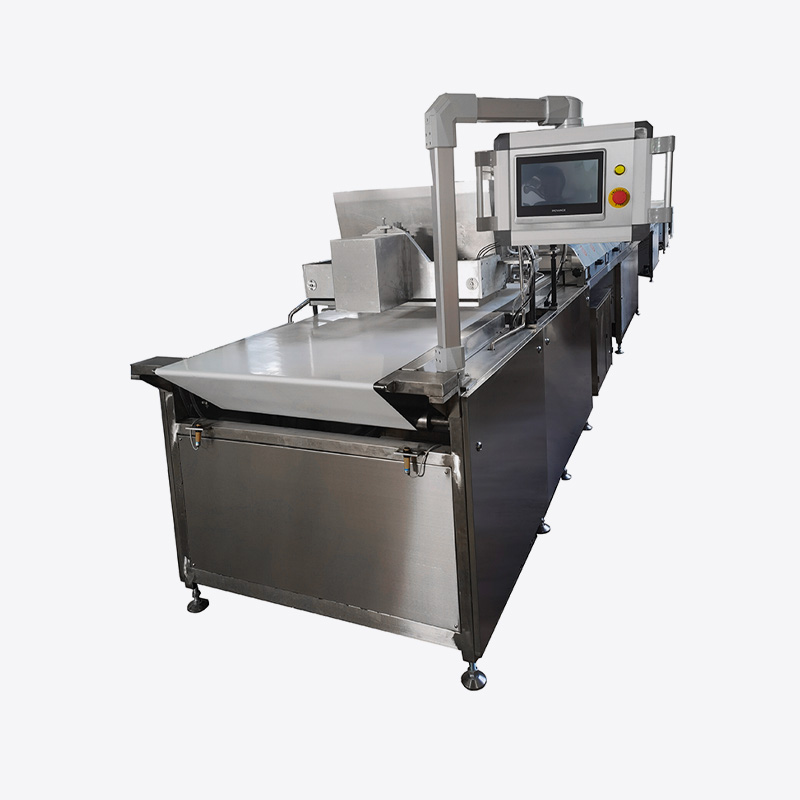
A steady material supply matters most at the former: gaps in flow create start–stop deposits, weight scatter and extra scrap at the edges of a run. A Chocolate Chunks Production Line with a coordinated processing arrangement supports continuous chocolate material transfer throughout production when pumps, pipes and intermediate buffers are sized to the former's appetite. Consistency of flow is a layout and control problem as much as a recipe problem.
Improved Production Efficiency Through Continuous Operation
Batch-wise transfer multiplies handling: fill, move, empty, clean edges, refill. Continuous operation cuts many of those repeated manual transfers by keeping stages connected. Workflows simplify because product has a defined path and staff spend less time ferrying bowls or wheeled tanks across the room.
Equipment operating capacity still sets the ceiling for overall output; a fast former cannot outrun a small melter indefinitely. Production line design helps manufacturers organise processing operations and improve production efficiency when each stage is balanced to the target rate and changeover work is planned rather than improvised. Efficiency here means fewer interruptions per tonne of chunks, not unbounded speed regardless of chocolate type.
More Stable Processing Conditions During Ongoing Production
Chocolate responds strongly to temperature. Viscosity, ability to flow through nozzles or over rollers and the way the mass fills a mould all shift when the mass cools or overheats. Stable processing conditions keep those behaviours inside a workable band so that settings chosen at the start of a run remain valid minutes later.
Temperature management along jackets, tanks and transfer lines influences that stability. Processing speed must stay coordinated with material temperature: pushing cold thick mass harder does not replace correct thermal conditioning. Professional Chocolate Making Equipment configured for process coordination and temperature management supports steadier conditions according to the installed system design. Stability reduces the need to chase the process with constant manual tweaks.
Reduced Manual Intervention and Improved Production Management
Automated or semi-automated transfer moves mass and formed pieces with fewer lifts and pours. Connected operations make procedures easier to organise because the sequence is built into the line rather than rewritten on a whiteboard each shift. Operators still oversee the process, but the routine physical transfers shrink.
Centralised operating controls, where the line includes them, help staff monitor different stages from fewer locations and respond to alarms without walking the whole plant for every check. An integrated equipment arrangement on a Chocolate Chunks Production Line helps simplify operator involvement and production management when responsibilities and checklists match the actual automation level. Less manual handling also supports hygiene goals by limiting open-vessel traffic in the process room.
Better Coordination Between Forming and Cooling Processes
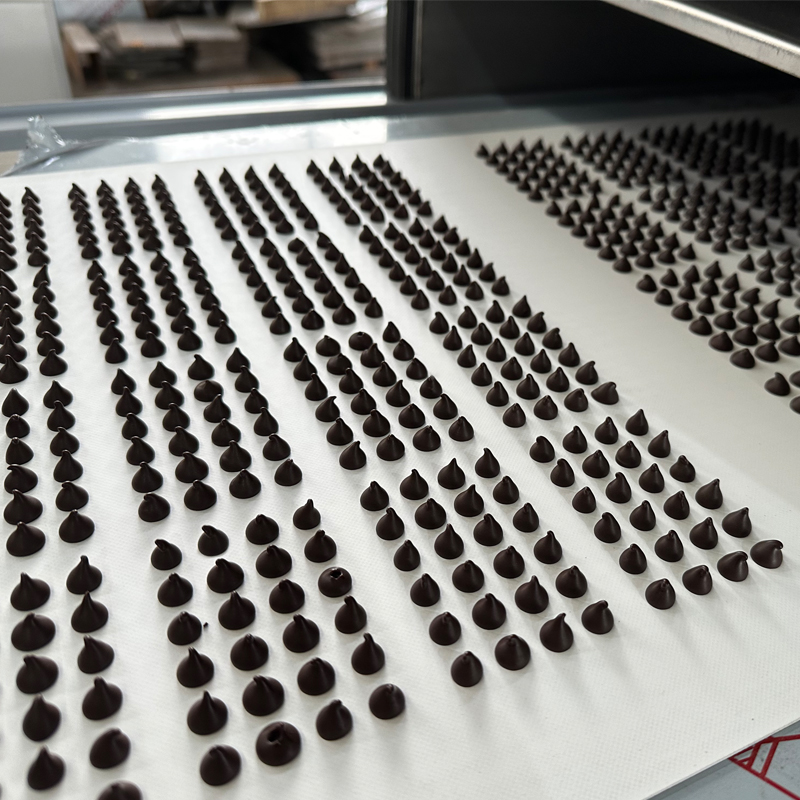
In continuous chunk production, forming and cooling must run as a pair. Chunks leave the former soft enough to mark or deform; the cooler must accept them at the rate they are made and remove heat before the next handling step. If the former outpaces the cooler, product stacks up warm. If the cooler is far oversized and the belt runs too fast for the recipe, pieces may not set as intended before discharge.
Coordinating chocolate chunk forming output with cooling capacity keeps solidification and handling predictable. Production line integration around a Chocolate Chunks Making Machine helps align those stages for consistent finished-product processing when belt speeds, zone temperatures and transfer points are set together rather than adjusted in isolation. Coordination is a daily operating task, not only an engineering drawing.
Flexible Production Planning for Different Chocolate Chunk Requirements
Commercial plants rarely make one chunk size forever. Retail bags, bakery inclusions and food-service bulk each may need different dimensions or counts per weight. Production parameters and equipment configurations—forming tools, deposit weights, belt loading—influence what the line can run and how quickly it can switch.
Selecting suitable operating settings for each requirement keeps quality inside the specification for that SKU. Configuration flexibility on a Chocolate Chunks Production Line helps manufacturers plan production according to different chocolate chunk specifications and capacity needs when tooling changes are practical and when recipes are validated on the same equipment. Flexibility is real only within the mechanical and thermal limits of the installed machines.
Continuous Processing Benefits Linked to Line Practice
| Benefit | What continuous equipment enables | Management focus |
|---|---|---|
| Steady material flow | Fewer gaps at the former | Balance upstream supply to forming rate |
| Higher operational efficiency | Less batch-wise manual transfer | Stage capacity matching |
| Stable process conditions | Narrower swings in viscosity and flow | Temperature and speed coordination |
| Lower routine manual handling | Clearer path; fewer open transfers | Hygiene and role design |
| Forming–cooling alignment | Set product without bottlenecks | Matched rates and residence time |
| Planning across SKUs | Parameter and tooling changes | Validated settings per chunk type |
Practical Limits of Continuous Chocolate Lines
Continuous design does not remove the need for cleaning, allergen control or scheduled maintenance. Linked machines can spread a fault: a stop upstream idles everything downstream until buffers empty. Spare parts for critical transfer and forming components, and staff who understand the whole path, protect the advantages continuous flow is meant to deliver. Industrial Chocolate Making Machine elements inside the line should be chosen with service access and cleaning time included in the evaluation, not only peak rate.
Flow, Stability and Coordination in Continuous Chunk Production
Continuous chocolate processing equipment benefits commercial production through steady material flow, improved efficiency, more stable process conditions, reduced routine manual handling, tighter forming–cooling coordination and clearer planning across chunk specifications. The Chocolate Chunks Production Line and Chocolate Chunks Making Machine focus on continuous processing design, stage linkage and chunk forming capability for industrial chocolate manufacture. Gusu Food Processing Machinery Suzhou Co.,Ltd. supplies chocolate processing systems including continuous chunk production configurations. Review of product mix, target output, hygiene rules and factory layout against line design options supports selection of continuous equipment suited to organised commercial chunk production.