

 English
 Español


A three-tier fountain can look perfect when it is first switched on and then turn slow and streaky an hour later if the chocolate is wrong. The practical answer is couverture chocolate: real chocolate with extra cocoa butter, a clean melt, and low enough viscosity to climb the tiers without pooling. Milk or dark couverture is the safest choice; white couverture can work but needs closer temperature control.
Use chocolate that tastes good on its own. A fountain concentrates texture and sweetness, and a waxy or overly sweet product becomes obvious after the second strawberry. For most setups, aim for a couverture with roughly 32–39% total fat and a working temperature near 40–45°C (104–113°F).
Content
- 1 Start With Couverture, Not Chips or Candy Melts
- 2 Milk, Dark, or White: Choose by Service and Flavor
- 3 Why Cocoa Butter Percentage and Tempering Matter
- 4 How to Melt and Thin Without Seizing
- 5 How Much Chocolate and What Temperature to Use
- 6 Scaling Up for Events and Production
- 7 Troubleshooting Flow at the Fountain
Start With Couverture, Not Chips or Candy Melts
Couverture is made with a higher proportion of cocoa butter than ordinary eating chocolate. That fat matters because it controls flow. When melted and tempered, couverture forms a smooth, glossy film that moves easily through a pump and curtain. Chocolate chips are formulated to hold their shape in cookies; they usually contain less cocoa butter and more stabilizers, so they tend to be thick in a fountain. Candy melts flow well, but they are not real chocolate and often leave a waxy finish.
| Chocolate type | Fat and texture | Fountain behavior | Best use |
|---|---|---|---|
| Couverture milk or dark | High cocoa butter, often 32–39% total fat | Smooth and stable when tempered | Best all-purpose choice |
| White couverture | High cocoa butter, no cocoa solids | Smooth but heat-sensitive | Dessert tables, fruit, short service |
| Chocolate chips | Lower cocoa butter, shape-holding | Thick; may clog small pumps | Not recommended |
| Candy melts | Vegetable fats, not cocoa butter | Very fluid | Visual-only, low cocoa flavor |
| Baking chocolate | Varies; often low fat or low sugar | Bitter and thick | Not suitable without reformulation |
Check the label for “couverture” and cocoa butter—not “chocolate flavoured coating” or “compound.” A compound coating can flow, but its fat system behaves differently and it may taste flat.
Milk, Dark, or White: Choose by Service and Flavor
Milk couverture is the most forgiving for a mixed crowd. Its cocoa solids and milk solids balance sweetness, and it usually holds a wide service window without turning bitter. Dark couverture gives a stronger flavor and less sweetness; choose a moderate cocoa percentage rather than the darkest bar on the shelf, because high-cocoa chocolate can become thick as it cools. White couverture is the most heat-sensitive and should be run slightly cooler; it also shows scorching and separated fat more readily.
How to judge sweetness
Fruit and marshmallows add their own sugar. If the dipping table is mostly fruit, milk or a 55–65% dark couverture usually feels balanced. If the table is mostly pretzels, biscuits, and pound cake, dark chocolate gives a cleaner contrast. Avoid very high sugar coatings for long service; they can become sticky around the fountain rim.
Why Cocoa Butter Percentage and Tempering Matter
Cocoa butter is the reason couverture flows. It is also the reason tempering matters. Poorly tempered chocolate may look dull, feel tacky, or set with streaks; in a fountain, those crystals can make the curtain uneven. A proper temper gives stable crystals, good gloss, and predictable viscosity. For a small event, careful stovetop or microwave melting can be enough. For repeated service, a tempering machine removes guesswork. If you want a deeper explanation of couverture and its production, see this couverture production guide.
Temperature control is not optional. Dark and milk chocolate usually run well at 40–45°C (104–113°F); white chocolate is often better at 38–40°C (100–104°F). If the chocolate is too cool, it thickens and the pump struggles. If it is too hot, fat separates and the fountain looks oily.
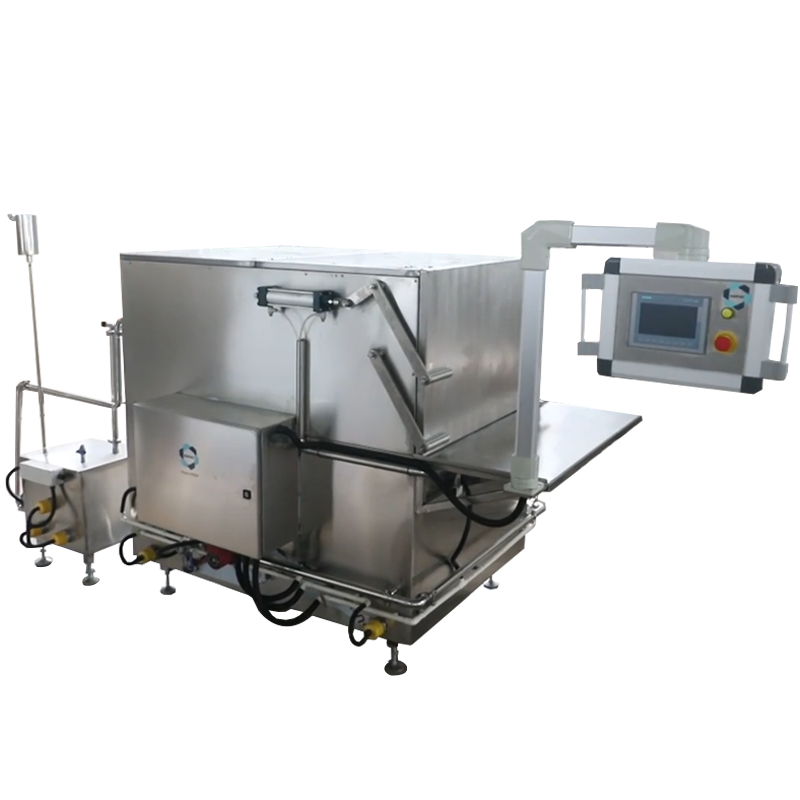
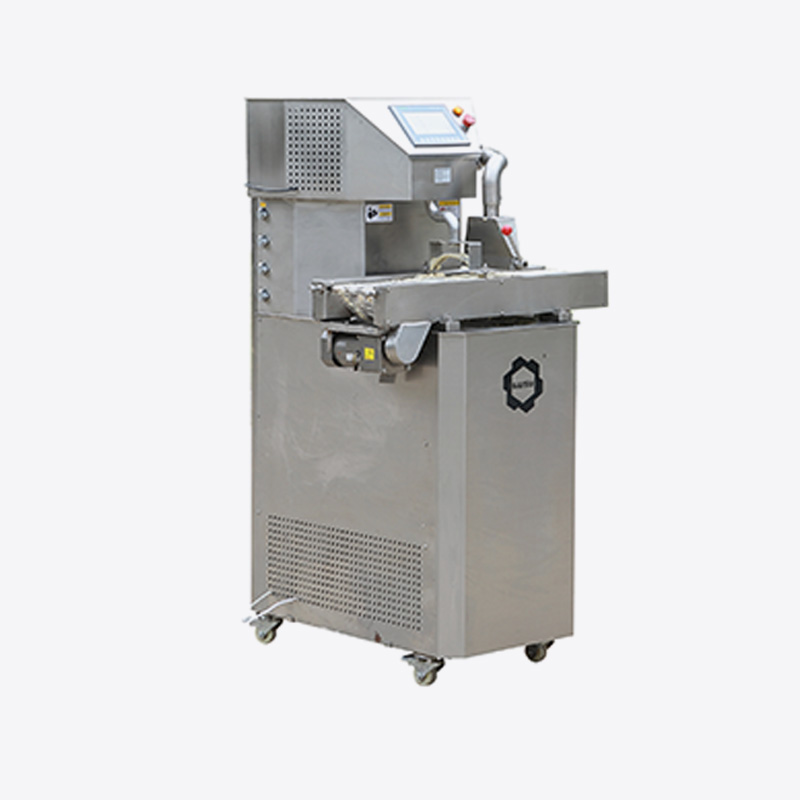
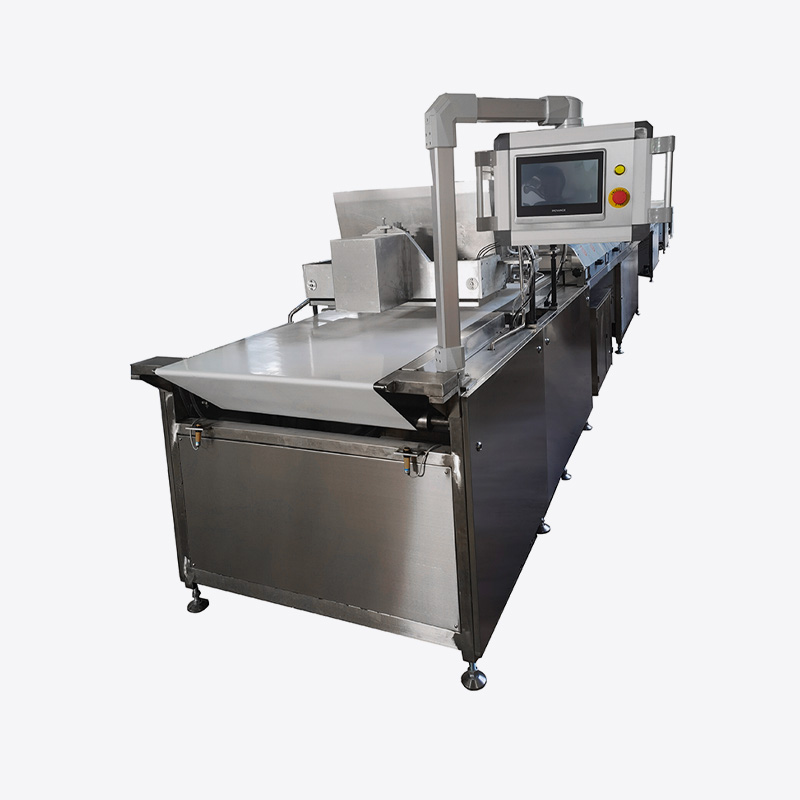
 QT Series Chocolate Tempering Machines with Automatic ControlPrecise tempering across five models supports consistent gloss and texture for bars, coating, molding, and enrobing.View Product →
How to Melt and Thin Without Seizing
Melt gently. Chocolate scorches easily, and a water droplet can turn a smooth batch into a grainy paste. Use a dry bowl, dry utensils, and gentle heat. If you thin chocolate for a fountain, add a neutral oil or cocoa butter in small amounts—about a teaspoon at a time per 500 g—rather than water, milk, or butter. Water is the enemy: even a small amount can make the cocoa particles clump and seize.
If the melted chocolate is already the right couverture and still too thick, first check the temperature. Warm it a little before adding fat. Over-thinning is harder to fix; the chocolate may coat fruit too thinly and drip constantly.
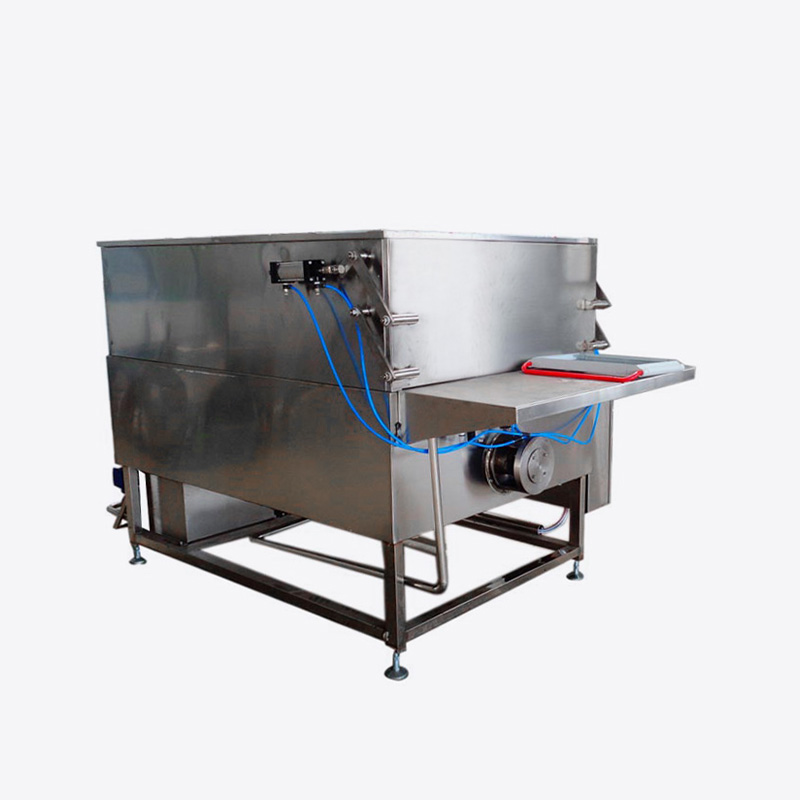
 RYG-3 Automatic Square Chocolate Fat MelterStainless-steel construction and independent heating support efficient melting of cocoa liquor, butter, or cocoa butter substitute.View Product →
How Much Chocolate and What Temperature to Use
A small three-tier fountain usually needs about 1–1.5 kg (2.2–3.3 lb) to prime the bowl and tiers; a large commercial fountain may take 4–8 kg (9–18 lb). Fill to the manufacturer’s mark, not to the rim. The pump needs enough volume to circulate, but an overfilled bowl can overflow when the chocolate expands with heat.
- Milk or dark couverture: 40–45°C (104–113°F).
- White couverture: 38–40°C (100–104°F), with short holding time.
- Room: keep the fountain away from draughts, direct sun, and hot lamps.
- Dippers: dry fruit and firm cake; wet fruit adds water and makes chocolate thicken.
Scaling Up for Events and Production
For a one-off party, a bowl over water and a thermometer are enough. For caterers, shops, and production kitchens, consistency is an equipment problem as much as a recipe problem. Batch size, holding time, and cleaning affect flow. A heated holding tank with gentle agitation keeps tempered chocolate in a usable range without local hot spots; a fat melter handles large blocks evenly; a tempering machine gives repeatable crystal structure. These details matter when one fountain runs for six hours or when fifty dessert tables need the same result.
Clean equipment also affects flavor. Chocolate picks up odors, and burnt residue from a previous batch can ruin a fresh one. Use food-grade stainless steel where possible and avoid narrow pipes that are hard to flush.
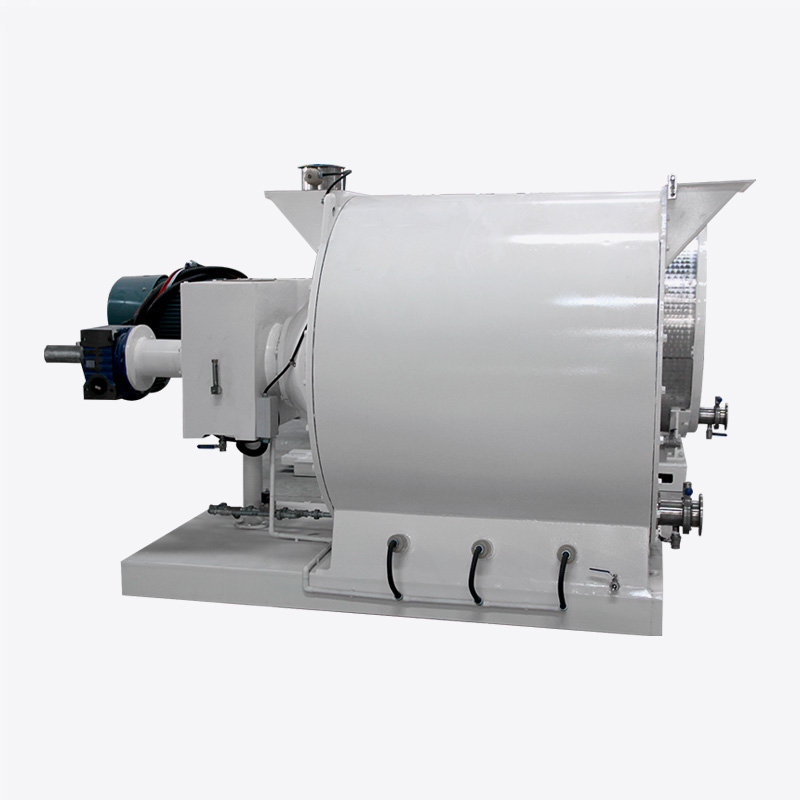
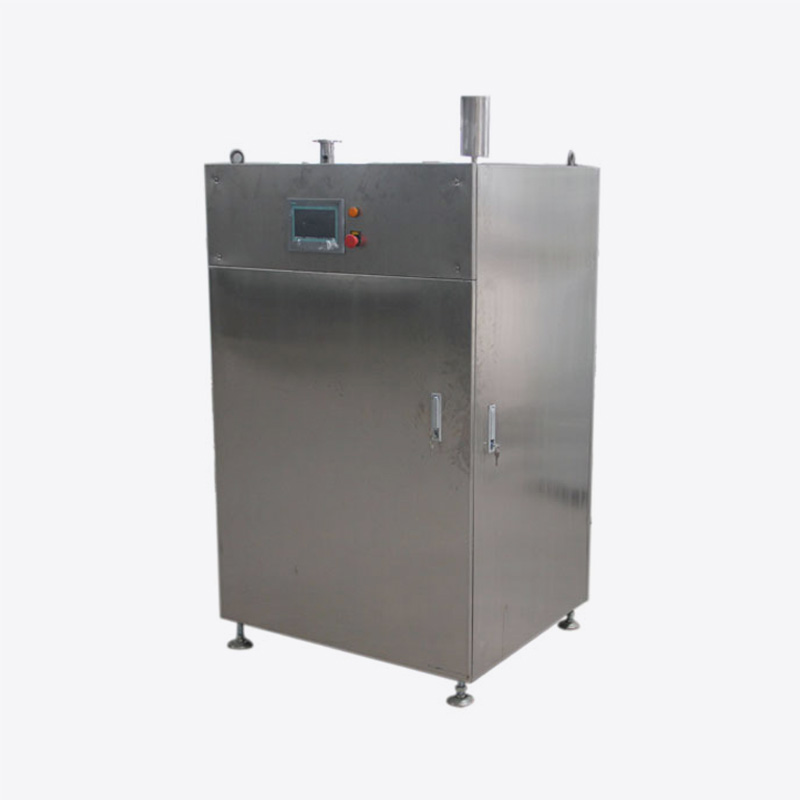
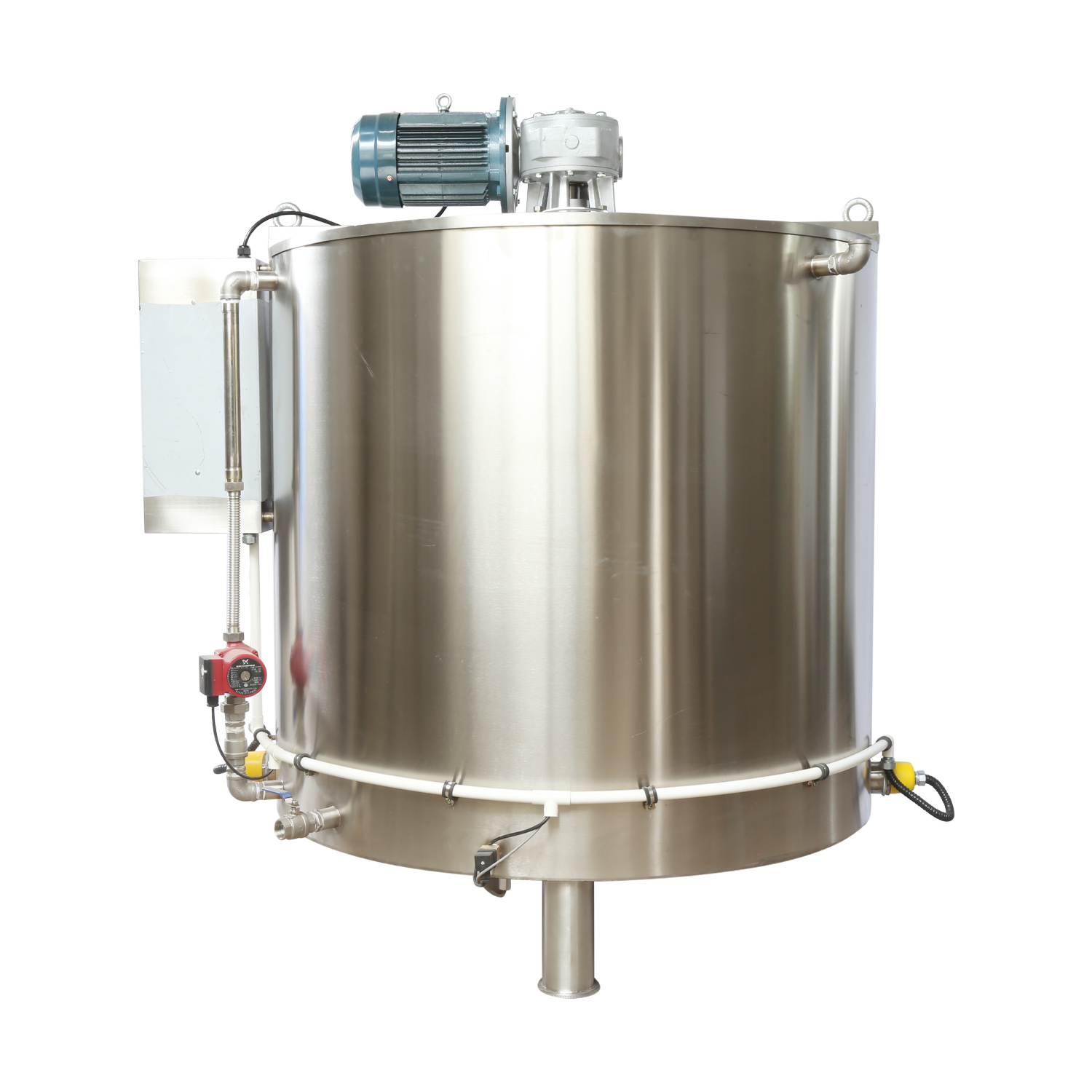
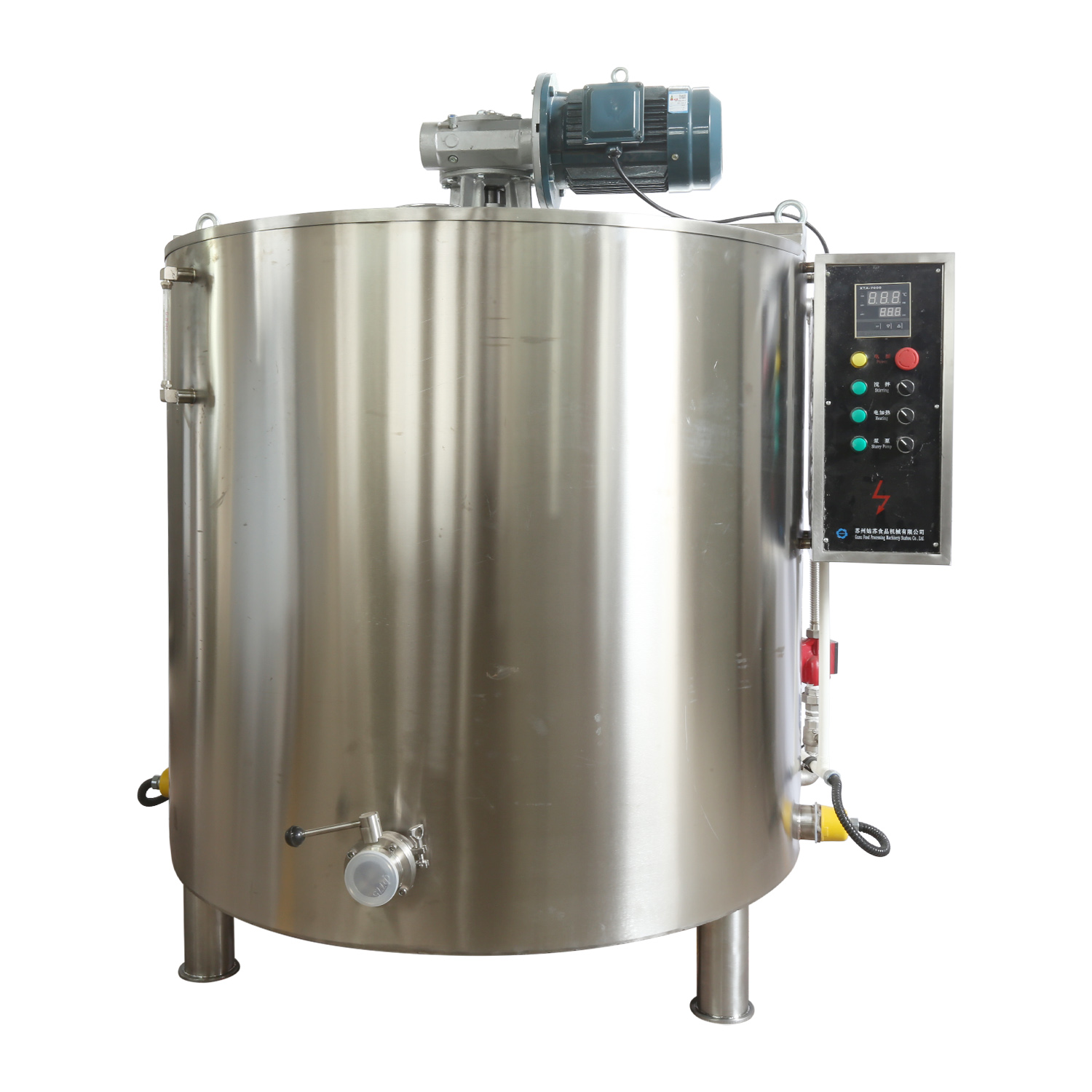 Stainless Steel Chocolate Storage and Holding TankJacketed temperature control and continuous stirring help hold milled chocolate paste, prevent oil separation, and support continuous production.View Product →
Troubleshooting Flow at the Fountain
Most fountain problems come back to fat, temperature, or water. A curtain that slows and thickens is usually too cool; warm the bowl gently and stir. A grainy, dull batch may have seized from moisture or scorched from direct heat. Oil on the surface points to overheating or over-thinning. White streaks after setting suggest poor tempering, not a bad flavor.
- Stop the pump before adjusting thickness.
- Check the temperature with a clean probe.
- Add warm couverture or a small amount of neutral oil, not water.
- Stir gently and restart; do not keep adding fat without measuring.
If the chocolate tastes burnt or has hard grains, start a fresh batch. A fountain is a visible service piece; a small rescue effort is better than serving a bitter or gritty curtain.
For a reliable fountain, choose couverture chocolate with enough cocoa butter to flow, temper it properly, and hold it near 40–45°C. Milk is the easiest crowd-pleaser; dark gives a cleaner contrast; white needs a cooler, shorter run. Skip chocolate chips and candy melts when flavor and texture matter. Buy a product you would eat on its own, melt it gently, and keep water away from the bowl. That combination gives you the glossy curtain and clean taste a fountain is supposed to deliver.