

 English
 Español

Pick up a bar of 70% dark chocolate and read the ingredient list. More often than not, "chocolate liquor" appears first or second. It is a term that confuses consumers and even some small-batch makers, largely because the word "liquor" suggests alcohol. It does not. Chocolate liquor contains no alcohol. It is the fundamental ingredient from which nearly all chocolate products are built, and understanding how it behaves is essential for anyone producing chocolate at commercial scale.
This guide explains what chocolate liquor is, how it is made, what it means for chocolate quality, and what processing equipment matters when you work with it.
Content
What Is Chocolate Liquor?
Chocolate liquor, also called cocoa mass, cocoa paste, or cocoa nib paste, is the pure ground form of roasted cocoa bean nibs. When cocoa nibs are ground, the heat generated by the milling process melts the cocoa butter inside them, producing a thick, brown, flowing paste. That paste is chocolate liquor.
In compositional terms, chocolate liquor is roughly 50 to 55 percent cocoa butter and 45 to 50 percent cocoa solids. It contains no added sugar, no milk powder, no lecithin, and no flavoring. It is, in short, chocolate in its most concentrated and unadulterated state.
The name can mislead. There is no ethanol or any other alcohol involved. The term "liquor" in this context refers to the fact that the ground cocoa nibs flow as a liquid because of their cocoa butter content.
Why Chocolate Liquor Is Not a Sign of Low Quality
A recurring question among chocolate consumers is whether seeing "chocolate liquor" on an ingredient label signals a low-grade product. The answer is no. Chocolate liquor is not a filler, a byproduct, or a cheap substitute. It is the defining component of real chocolate. The presence of chocolate liquor in an ingredient list actually confirms that the product contains genuine cocoa, rather than a cocoa-flavored compound coating that relies on vegetable fat and artificial flavoring.
What does affect quality is the origin and condition of the cocoa beans, the care taken during fermentation and roasting, the particle size achieved during refining, and the balance of ingredients added to the liquor. Two bars can list identical ingredients and taste completely different because of these variables.
In fact, premium and single-origin chocolates contain more chocolate liquor, not less. A 70 percent dark bar is primarily chocolate liquor with a small amount of sugar. A 35 percent milk bar contains far less liquor and more milk powder and sugar. Chocolate liquor is the reason a product can legally be called chocolate at all.
How Chocolate Liquor Is Made
The journey from cocoa pod to chocolate liquor follows a well-established sequence:
- Fermentation. Fresh cocoa beans are removed from pods and fermented for five to seven days. This develops the precursors of chocolate flavor.
- Drying. Fermented beans are sun-dried or mechanically dried to reduce moisture from about 60 percent to roughly 7 percent.
- Roasting. Beans are roasted at temperatures between 110°C and 150°C. Roasting deepens flavor, reduces acidity, and sterilizes the beans.
- Cracking and winnowing. The roasted beans are cracked into smaller pieces, and the brittle shells are separated from the heavier nibs through airflow.
- Grinding. The nibs are milled into a paste. This is the step where chocolate liquor is created.
Grinding is the critical step for producing chocolate liquor of consistent quality. The nibs pass through a series of grinding stages, each reducing particle size further. A typical target is a particle size where 90 percent of the solids are below 25 to 30 microns, below which the human palate detects grittiness. The heat generated during grinding melts the cocoa butter, and the paste emerges as a viscous liquid that solidifies at room temperature.
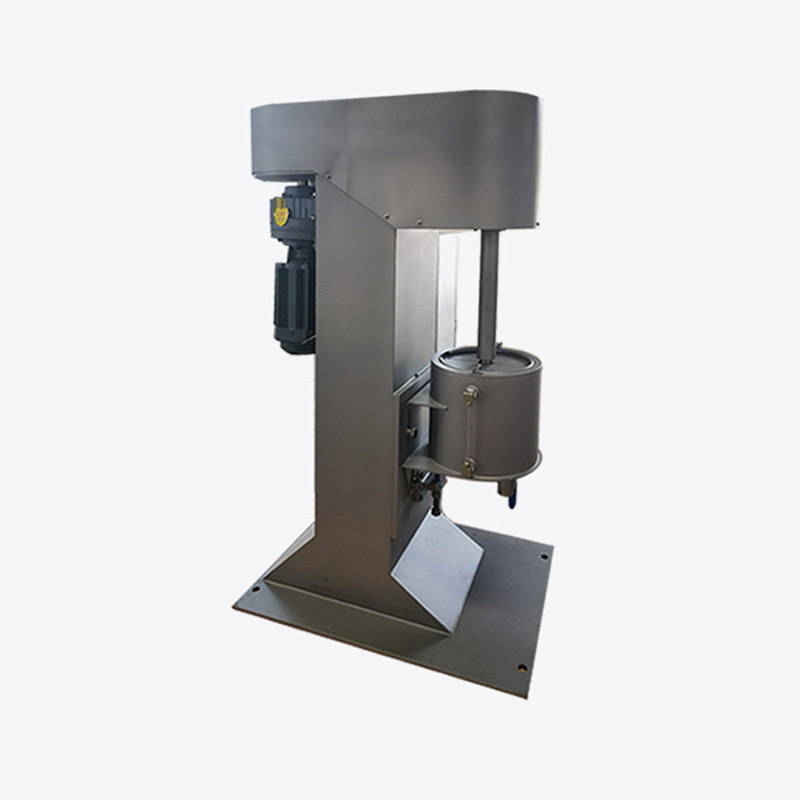
 Gusu Vertical Chocolate Ball Mill for Continuous RefiningThis stainless steel vertical ball mill processes chocolate mass to a fineness of 20-25 microns, with fast discharge and hygienic design. It pairs with a pump for circular grinding, making it ideal for bean-to-bar and nib-based production lines.View Product →
Industrial ball mills are commonly used to refine chocolate liquor to the required fineness. The vertical ball mill design from Gusu Food Processing Machinery, for example, is built to handle continuous refining of chocolate mass with stainless steel contact parts, making it suitable for both bean-to-bar operations and production lines that start from cocoa nibs.
Chocolate Liquor Content in Different Chocolate Types
Chocolate liquor content varies widely across product categories, and knowing the typical ranges helps buyers and producers evaluate formulations.
| Chocolate type | Chocolate liquor content | Other main components |
|---|---|---|
| Unsweetened baking chocolate | 100% | None |
| Dark chocolate (70-85%) | 70-85% | Sugar, lecithin, vanilla |
| Dark chocolate (50-69%) | 50-69% | Sugar, lecithin, vanilla |
| Milk chocolate | 10-40% | Sugar, milk powder, lecithin |
| White chocolate | 0% | Cocoa butter, sugar, milk powder |
Two practical conclusions follow from this table. First, chocolate liquor is the main carrier of cocoa flavor, so higher liquor content generally means deeper chocolate taste. Second, for compound coatings that replace chocolate liquor with cocoa powder and vegetable fat, the flavor profile and melting behavior are noticeably different. A line that is set up for real chocolate liquor will not produce the same results with compound substitutes.
Unsweetened baking chocolate is nothing more than chocolate liquor pressed into blocks. When a recipe calls for melted baking chocolate, the baker is working with pure chocolate liquor, which is why its melting behavior and moisture sensitivity directly affect the outcome of brownies, cakes, and ganache.
How Chocolate Liquor Affects Texture and Flavor
Chocolate liquor contributes both the solid cocoa particles and the cocoa butter that carries them. This dual role explains why texture and flavor are so tightly linked to how the liquor is processed.
Particle Size and Mouthfeel
When chocolate liquor is first ground, particle sizes are typically above 100 microns. At that size, the paste feels gritty on the tongue. Refining reduces particle size, and the product becomes smooth once the majority of particles fall below approximately 30 microns. Ball mills and refiners achieve this through mechanical shear and friction.
Flavor Development Through Conching
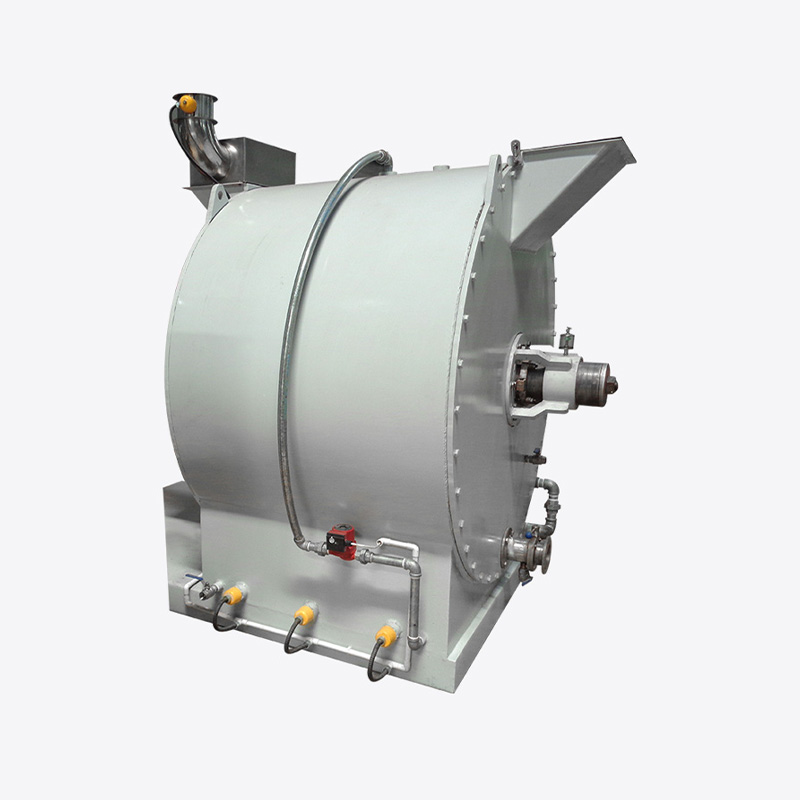
Freshly ground chocolate liquor has a harsh, acidic, and somewhat volatile flavor profile. Conching, a process in which the liquor is agitated and aerated at elevated temperatures for hours or even days, drives off unwanted acids and develops the rounded, mellow flavor associated with finished chocolate. The Gusu JMJ2000 Chocolate Grinding and Conching MachineThis industrial conche agitates and aerates chocolate liquor at controlled temperatures, driving off acids and developing a mellow flavor. It also refines texture, making it suitable for medium to large-scale production.View Product → is designed for this stage, providing controlled temperature and agitation to refine both flavor and texture.
Viscosity and Flow Behavior
Chocolate liquor is a non-Newtonian fluid. Its viscosity depends on temperature, shear rate, moisture content, and particle size distribution. Too much moisture causes the liquor to stiffen dramatically; even 0.3 percent additional water can turn a flowing mass into a thick paste. This is why equipment used for chocolate liquor must be completely dry and why jacketed heating is standard for tanks and pumps that handle the mass.
Practical Considerations for Processing Chocolate Liquor
Producers who work with chocolate liquor, whether they buy it from a supplier or produce it from beans, need to plan for three operational concerns.
Temperature Control
Chocolate liquor must be kept within a working temperature range, typically 45°C to 60°C, to maintain flow. Above 70°C, flavor degradation and accelerated browning occur. Below the melting point of cocoa butter, approximately 34°C, the liquor begins to solidify and becomes impossible to pump. Reliable heating and temperature monitoring are therefore basic requirements for storage and transfer systems.
Transfer and Pumping
Moving chocolate liquor between tanks, mills, and depositors requires positive displacement pumps that can handle a viscous, abrasive fluid without introducing air. SJB25 Chocolate Delivery Pump with Jacket InsulationThis positive displacement pump transfers viscous chocolate liquor between tanks and mills, featuring jacket insulation to keep the mass flowing. Its compact, easy-to-maintain design minimizes dead zones, ensuring safe and hygienic conveyance.View Product → is built for this purpose, with a design that minimizes dead zones where chocolate could stagnate and harden.
Cleaning Between Batches
Chocolate liquor leaves behind a high-fat residue that can turn rancid if it comes into contact with air and moisture. Production lines that switch between milk and dark chocolate must be thoroughly cleaned to avoid cross-contamination. Components that contact chocolate liquor should be removable or designed for easy access, and cleaning should follow a documented hot-water-and-caustic protocol.
The Bottom Line
Chocolate liquor is not a sign of low quality. It is the opposite: it is the essence of chocolate itself. Understanding what it is, how it is made, and how it behaves under processing conditions allows producers to make better formulation decisions and to select equipment that will handle the mass consistently.
For a deeper look at how cocoa beans become finished chocolate, including the role of each processing stage, see our complete guide from bean to bar. If you are evaluating refining options for chocolate liquor, the comparison of ball mill working principles and production efficiency is a useful starting point.